
Walk into any middle or high school classroom and you’ll see a paradox we rarely name out loud.
Yes—many adolescents can decode. Yes—many can pronounce words fluently enough to “sound okay.” But the truth is broader, deeper, and more urgent:
A significant number of middle and high school students still need systematic support in foundational reading skills—accurate word recognition (especially multisyllabic decoding of words) and fluency. These gaps don’t disappear after Grade 3. They follow students upward, often unnoticed, because secondary systems rarely screen, monitor, or explicitly teach them.
At the same time, students are asked to read highly complex disciplinary texts—lab reports, historical documents, mathematical proofs, literary analysis—without the skills needed to process them.
And that’s only one part of the comprehension story.
As Duke & Cartwright’s Active View of Reading (AVR) makes clear, constructing meaning emerges from multiple, interacting domains. Many adolescents struggle because of:
- Executive functioning demands (working memory, inhibitory control, and cognitive flexibility as well as skills such as attention and planning)
- Limited metacognitive strategy use and weak monitoring
- Background knowledge gaps that make disciplinary texts feel impenetrable
- Syntax and language processing demands, especially for multilingual learners
- Theory of mind challenges (understanding perspective and critiquing bias)
When these factors go unaddressed, we misinterpret comprehension difficulty as laziness or disengagement. But students aren’t “checked out”—they’re overwhelmed by demands they haven’t been taught to navigate.
Adolescent comprehension challenges are broad, multifaceted, and developmental—not a simple matter of effort.
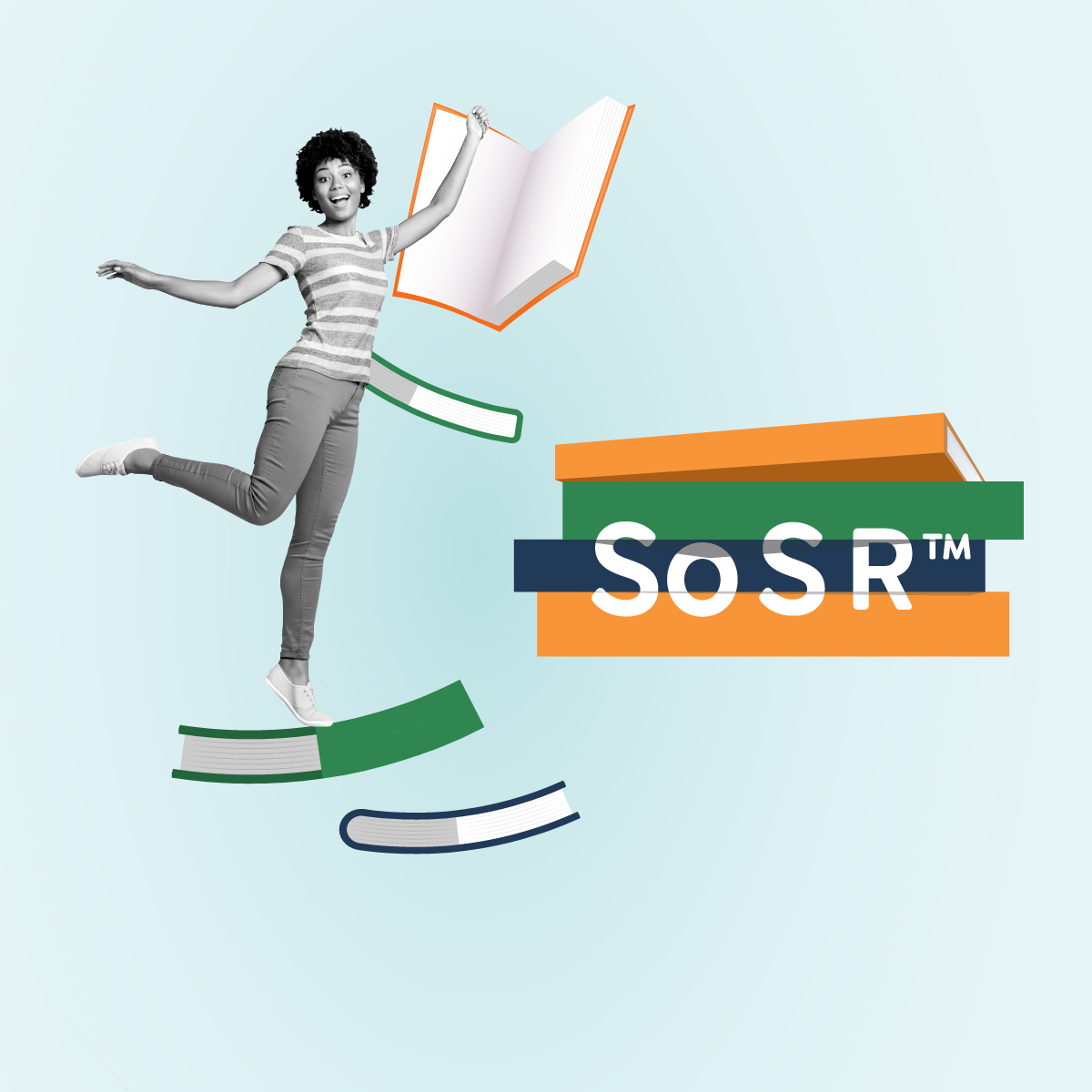
This is why the Secondary Science of Reading (SoSR™) is essential. It integrates foundational skills, linguistic and background knowledge, executive functioning and Theory of Mind, strategic reading, metacognition, and disciplinary reasoning.
Disciplinary literacy is one critical—and often missing—lever. It ensures that once students have access to text, they also have the tools to make sense of the unique ways historians, scientists, literary critics, and mathematicians build knowledge.
In secondary spaces, comprehension is not a generic skill.
It is discipline-specific—and our instruction must be, too.
 The Secondary Science of Reading (SoSR™): Our Framework
SoSR™ is being led by Erik Lepis, Kirsten Widmer, Dr. Paul J. Bloomberg, and their colleague Isaac Wells, who together are advancing a comprehensive, research‑aligned approach to adolescent literacy. (SoSR™): Our Framework SoSR™ aligns directly with the research captured in Duke & Cartwright’s Active View of Reading (AVR)—a model that expands the Simple View of Reading by showing that comprehension emerges from the interaction of multiple, mutually influential domains. According to AVR, reading is shaped by three major components:
- Active Self Regulation (Motivation and Engagement, Executive Function, Strategy Use)
- Word Recognition Skills (Phonological Awareness, Phonics, Decoding)
- Language & Knowledge (Background Knowledge, Syntax, Literacy Knowledge, Verbal Reasoning, Theory of Mind)
- Bridging Skills (Fluency, Vocabulary, Morphology, Graphophonological-Semantic Cognitive Flexibility)
All of these influence comprehension—and they interact dynamically.
This is especially crucial for adolescents, who often have:
- Gaps in foundational fluency that were never addressed
- Uneven background knowledge across disciplines
- Developing executive functioning that affects working memory and self-monitoring
- Growing but fragile Theory of Mind, impacting character analysis, author intent, and perspective taking
- Varied levels of engagement, identity, and confidence as readers
SoSR™ takes these AVR components and brings them into secondary disciplines, where the demands intensify.
Reading is Discipline-Specific
Historians read for perspective and sourcing. Scientists read for variables and patterns. Mathematicians read for structure. ELA readers read for theme, craft, and inference.
Adolescents Need Strategy Instruction + Apprenticeship into Each Discipline
Students learn best when teachers make their invisible thinking visible—then model, scaffold, and gradually release.
Literacy Growth Requires Purposeful Interaction:
Talk → Write → Revise
Secondary literacy improves when students wrestle with ideas, use evidence, talk about thinking, and produce short bursts of writing that mirror the discipline.
The goal of SoSR™ is simple: Help every student read, think, talk, and write like a historian, scientist, literary critic, and mathematician—not just complete assignments.
Put simply, SoSR™ bridges the gap between what the Active View of Reading tells us students need and what secondary classrooms actually require. It honors the full complexity of adolescent reading—foundations, language, cognition, identity, and strategy—while grounding literacy growth in the authentic ways each discipline makes meaning.
When schools adopt SoSR™, students don’t just get better at reading. They develop expertise, confidence, agency, and the disciplinary thinking needed to navigate a world where knowledge is complex, contested, and constantly evolving.
 High-Leverage Disciplinary Literacy Routines

Disciplinary literacy is where the Secondary Science of Reading becomes visible and actionable. These routines translate the complexity of AVR and SoSR™ into doable, high‑leverage practices that help students read, think, talk, and write in ways that mirror the work of real historians, scientists, mathematicians, and literary critics. Each routine is short, practical, and designed to strengthen comprehension, language, reasoning, and disciplinary habits of mind—starting tomorrow.
Light prep, high impact, works in every content area
1. Text → Task → Talk
Use for: ELA, SS, Science, Math
Purpose: Structure collaboration so students process complex texts meaningfully.
How it works:
Students read a short chunk of text.
Teacher assigns ONE task (annotate, summarize, find evidence).
Partners talk using evidence frames.
Frames:
- “The author shows ___ because ___.”
- “A key idea here is ___.”
2. Claim–Evidence–Reasoning (CER)
Use for: Science, History, Math, ELA
Purpose: Strengthen argumentation by grounding thinking in evidence.
Routine:
- Claim: Answer the question
- Evidence: Data, quotes, examples
- Reasoning: Explain how evidence supports the claim
3. Annotate for a Purpose
Use for: ALL subjects
Purpose: Focus reading through a single disciplinary lens.
Examples:
- ELA: character, conflict, theme
- Science: variables, cause/effect
- Social Studies: sourcing, bias
- Math: structure, steps
Direction: “Annotate only for cause/effect as you read.”
4. Sourcing, Corroboration, Contextualization
Use for: Social Studies, ELA
Purpose: Teach students to read like historians.
- Source: Who wrote it? Why?
- Corroborate: What do other documents say?
- Context: What was happening?
5. GIST Summary (12 Words or Less)
Use for: SS, Science, ELA
Students summarize a chunk of text in ≤12 words.
6. Numbered Head Strategy (Math Explanation Booster)
Use for: Math, Science
Purpose: Ensure all students can explain their thinking.
Routine:
- Teams solve a problem.
- Teacher calls a number: “#2 explain!”
- That student explains the strategy, not just the answer.
7. Read–Draw–Write
Use for: STEM, Math, ELA
Purpose: Convert text → model → explanation.
- Read: Identify key information
- Draw: Diagram, model, graph
- Write: Explain using disciplinary language
8. Evidence Sort
Use for: SS, ELA, Science
Routine:
- Sort mixed evidence intodddffcategories or claims
- Justify groupings
9. Think–Ink-Pair–Prepare–Share
Use for: ALL subjects
Purpose: Improve clarity + equity.
- Think alone
- Ink it
- Pair talk
- Prepare a group statement using a sentence frame
- Share out
10. “What’s the Pattern?”
Use for: Science, Math
Purpose: Build inductive reasoning before introducing rules.
Students answer:
- “What pattern do we notice?”
- “What evidence supports it?”
Bonus: Disciplinary Sentence Frames
Historians
- “This source suggests ___ because ___.”
- “Compared to Source B…”
Scientists
- “The data shows a trend that…”
- “If we change __, then __ will happen because…”
Mathematicians
- “The structure of the problem suggests…”
- “A more efficient strategy could be…”
Literary Critics
- “The author develops __ through __.”
- “This detail reveals…”
 Bringing SoSR™ to Life in Your Classroom
These routines are not “extras.” They are the bridge between what adolescents need as readers and what disciplines demand of them as thinkers. When implemented consistently, they:
- Strengthen comprehension across content areas,
- Build academic language for all learners (especially multilingual learners),
- Elevate student agency and confidence, and
- Make rigorous texts accessible without lowering expectations.
Every breakthrough in adolescent literacy begins with one intentional routine. Let’s build that momentum together.