It’s 10:30 p.m.
A teacher is sitting at the kitchen table, rereading feedback they received earlier that day. It wasn’t harsh. It wasn’t unkind. In fact, it was well-intentioned and technically accurate.
And still, nothing is moving.
Not because the feedback was wrong—but because it didn’t tell them what to do next.
That quiet moment captures what so many students, educators, and leaders experience every day: feedback that informs but doesn’t transform.
Feedback is one of the most powerful tools we have to grow learning—and one of the easiest to misuse. We know this intellectually. The research is clear: when feedback is done well, it accelerates learning, deepens engagement, and strengthens agency. And yet, in real classrooms, PLCs, and coaching conversations, feedback is often avoided, resisted, or quietly ignored.
This isn’t because educators—or students—don’t care about improvement.
It’s because feedback lives at the intersection of learning, identity, and biology.
When we understand that intersection, feedback stops being something people “can’t take” and starts becoming something people can use.
The goal of feedback isn’t compliance or correction—it’s clarity that invites the next courageous attempt.
What Science Says About Effective Feedback
 Feedback works when it’s designed as a learning loop—not a verdict
One of the most widely cited feedback frameworks identifies three essential questions that effective feedback must answer:
- Where am I going? (feed up)
- How am I doing? (feed back)
- Where to next? (feed forward)
When any one of these is missing, feedback loses its power. When feed forward is missing in particular, feedback becomes informational but not transformational—it tells people what happened, but not how to move (Hattie & Timperley, 2007).
In practice, this means feedback must:
- be anchored to a clear learning intention
- be grounded in evidence from the work
- point toward a specific, doable next step
Feedback without a next step isn’t guidance. It’s commentary.
Not All Feedback Helps—Some Actually Harms Learning
A large meta-analysis of feedback interventions found something uncomfortable but important: over one-third of feedback actually reduced performance (Kluger & DeNisi, 1996).
Why?
Because some feedback unintentionally shifts attention away from the task and toward:
- self-protection
- fear of judgment
- identity threat
When feedback pulls learners into “What does this say about me?” instead of “What can I do next?”, learning slows or stops.
This isn’t a failure of motivation. It’s a predictable human response.
Feedback Is Most Powerful When It Is Usable
Formative feedback—feedback intended to modify thinking or behavior during learning—has a stronger impact when it is:
- specific rather than general
- timely rather than delayed
- focused on improvement rather than evaluation
- credible and understandable to the learner
Most importantly, the learner must be able to act on it within a short window of time (Shute, 2008).
If the feedback can’t be used soon, it often isn’t used at all.
Grades Can Drown Out Feedback
Decades of research show that when grades dominate, learners attend to the score and ignore the guidance. In studies comparing grades-only, comments-only, and grades-plus-comments, the comments-only condition produced the strongest learning gains and motivation (Butler & Nisan, 1986).
This matters for classrooms and adult learning systems.
When the signal is judgment, the guidance gets lost.
Feedback doesn’t fail because people are defensive. It fails when it asks people to protect their identity instead of grow their practice.
Why Feedback Can Feel Threatening—Even When It’s Well Intentioned
Here’s the piece we often skip.
The more someone needs feedback to grow, the more threatening it can feel—because it touches identity.
This is not a weakness. It’s a signal that the work matters.
This is where we often misread the moment.
In schools and systems, we often label resistance to feedback as defensiveness. But more often, what we are seeing is investment.
Feedback doesn’t just land on skills—it lands on identity.
When someone is deeply invested in their work—as a teacher, a learner, or a leader—the work becomes intertwined with who they are.
So feedback isn’t just heard as:
- “Here’s a suggestion.”
It can be felt as:
- “This says something about my competence.”
- “This affects how I’m seen.”
- “This puts my belonging at risk.”
That’s not fragility. That’s professional care.
People who don’t care about their growth rarely feel threatened by feedback. People who care deeply often do.
The Brain Processes Feedback Through Threat and Safety First
Neuroscience helps explain why.
Research shows that social threat—being judged, corrected, or excluded—activates neural pathways similar to physical pain (Eisenberger & Lieberman, 2004). When feedback is perceived as threatening, stress responses increase, attention narrows, and the brain prioritizes protection over learning.
In those moments, people are more likely to:
- defend or explain
- comply without internalizing
- disengage or avoid future feedback
- intellectually agree but behaviorally stay the same
This is not resistance to growth. It’s biology doing its job.
Feedback Is Filtered Through Belonging, Status, and Autonomy
Feedback moments implicitly answer questions like:
- Am I safe here?
- Do I still belong?
- Is my expertise respected?
- Do I have agency in this process?
When feedback threatens status, autonomy, or fairness, the brain can shift into self-protection mode. A widely used neuroscience-informed organizing lens in leadership circles is the SCARF model (status, certainty, autonomy, relatedness, fairness), which is helpful for anticipating when feedback might inadvertently trigger threat responses (Rock, 2008). When feedback affirms belonging and agency, learning becomes possible.
This is why how feedback is given matters as much as what is said.
Design Failure vs. Design Success
Consider the difference.
Design failure:
- Feedback names multiple gaps
- No clear next step
- Learner leaves unsure what to try
Design success:
Feedback names the most important gap
Feed forward specifies one next move
Learner leaves knowing exactly what to attempt
Learner has a chance to revise
Same learner. Same goal.
Different design. Different outcome.
Feed Forward: The Asset-Based Bridge Between Insight and Action
This is the part of feedback that is most often implied—but rarely taught.
Feedback helps learners understand what happened and why it matters. Feed forward tells learners exactly what to do next. Without feed forward, learners are left to interpret feedback on their own—and that interpretation gap is where learning often stalls.
In plain talk:
- Feedback explains the gap.
- Feed forward names the move that helps close it.
Strong feed forward:
- names one high-leverage action, not everything that could be improved
- builds directly from what is already working
- invites the learner into agency rather than compliance
- makes revision feel possible, specific, and time-bound
A simple structure that works across classrooms, PLCs, and coaching conversations:
Next time, try ___ because ___. You’ll know it worked when ___.
Feed forward doesn’t lower expectations. It lowers threat while raising clarity.
Protecting the Biology of Learning: Why Timing Matters More Than Volume
There is a biological reality we don’t talk about enough in feedback conversations.
Feedback only works if it arrives while the learner can still think with it.
When feedback comes days—or weeks—after a performance, the task is already gone. The strategy has faded from working memory. The learner can no longer compare what they did with what they are being asked to do next.
In those moments, feedback doesn’t fuel revision.
It becomes commentary.
This matters because the deepest learning doesn’t happen when feedback is received—it happens when learners revise, retry, and rethink in close proximity to the original work. That metacognitive comparison—What did I do? What am I doing now? Why is this better?—is what strengthens learning in the brain.
When we delay feedback, we don’t just slow learning.
We rob learners of the revision process that makes learning durable and transferable.
This is where systems often break down—not because teachers don’t care, but because the time between evidence, feedback, and action has stretched too far.
This is where platforms like the AI-PLC Agent™ matter—but only if they protect this window.
The PLC Agent is not effective if it simply generates insights. It is only effective when it helps teachers and teams move quickly enough to:
- notice evidence while the work is still alive
- translate feedback into feed forward
- return feedback to learners in time for revision
- preserve the metacognitive window where learning actually grows
If feedback cannot be used to revise, it isn’t feedback. It’s a report.
And reports don’t change learning.
What Feed Forward Looks Like in Practice
Writing
- Feedback: “Your claim is clear, but the reasoning doesn’t yet explain how the evidence proves it.”Feed forward: “On your next paragraph, add one sentence after each quote that begins with
- This shows that… so the reader can follow your thinking.”
Reading
- Feedback: “You identified the central idea accurately, but most of your response summarizes.”
- Feed forward: “In your next response, choose one detail and explain why the author included it and how it develops the central idea.”
Math
- Feedback: “Your strategy worked, but your explanation doesn’t show why it works.”
- Feed forward: “On the next problem, name the property you used and write one sentence explaining how it applies here.”
PLCs / Adult Learning
- Feedback: “Our current strategy is helping students near proficiency, but not students in the lowest band.”
- Feed forward: “For the next two weeks, we’ll test one targeted small-group routine focused on this misconception and monitor exit tickets for evidence of change.”
Why Data, Evidence, and Formative Assessment Are Often Resisted
This same dynamic helps explain something many leaders name but struggle to address:
Teachers do not resist data, evidence, or formative assessment because they don’t care.
They resist because, in many systems, data has been designed as judgment rather than guidance.
For decades, teachers have been conditioned to experience data as:
- a proxy for evaluation
- a sorting mechanism
- a post-mortem after the instruction is already over
In that context, collaborative data analysis doesn’t feel like learning. It feels like exposure.
Add to that a system that prioritizes coverage of content over mastery of learning, and resistance becomes predictable.
When the goal is coverage:
- pacing matters more than understanding
- finishing units matters more than revising misconceptions
- grades matter more than growth
But when the goal is mastery, the work necessarily shifts.
Mastery requires:
- slowing down to examine evidence
- noticing patterns of misunderstanding
- adjusting instruction based on what learners actually need
- returning to ideas until they are secure and transferable
Mastery is not knowing something once. It is understanding something well enough to apply it flexibly in new contexts, over time, and without prompting.
That kind of work demands psychological safety, clarity of purpose, and a shared definition of success. Without those conditions, asking teachers to look at data together is not a neutral request—it is a threat.
Reframing the Purpose of Evidence
If the goal is mastery—not a grade, not a score, not coverage—then evidence serves a different role.
Evidence is not a verdict on teaching.
It is information that helps a team answer a better question:
What do learners understand well enough to transfer—and what still needs intentional teaching?
When evidence is framed this way:
- formative assessment becomes part of instruction, not an add-on
- collaboration becomes problem-solving, not compliance
- feedback becomes a tool for refinement, not a referendum on competence
This is why resistance fades in systems that are clear about purpose.
When teachers know that:
- the goal is mastery
- revision is expected
- evidence is used to guide next moves
Looking at data stops feeling like judgment and starts feeling like professional learning.
What This Means for Leaders and PLCs
If teachers resist data, evidence, or formative assessment, the issue is rarely mindset.
It is design.
Leaders don’t need teachers to care more. They already do.
They need to design systems where:
- evidence is explicitly separated from evaluation
- mastery—not coverage—defines success
- formative assessment is treated as instructional fuel
- feed forward drives collective action
Agency is not demanded. It is designed.
If feedback doesn’t change the next attempt, it isn’t finished.
Designing Feedback That People Can Actually Use
Asset-based feedback systems do three things simultaneously:
1. Reduce threat
anchor feedback to shared goals and criteria
separate the work from the worth
normalize revision as the work, not the fix
2. Increase clarity
- focus on task and process—not personal traits
- prioritize one next step over many
- make success visible and observable
3. Close the loop
- require action (revision, reflection, retry)
- schedule a check-back
- look for evidence of change in the work
Feedback is not complete until it shapes the next attempt.
And when feedback arrives too late for revision, we don’t just miss an instructional opportunity—we interrupt the biological process that turns experience into learning.
Final Thought
If feedback doesn’t change the next attempt, it isn’t finished. If it raises a threat without clarity, it isn’t ethical.
The work is not to make learners—or educators—“better at taking feedback.” The work is to design feedback that honors identity, aligns with how the brain learns, and makes growth feel possible.
That’s not lowering the bar. That’s building the conditions for real learning to occur.
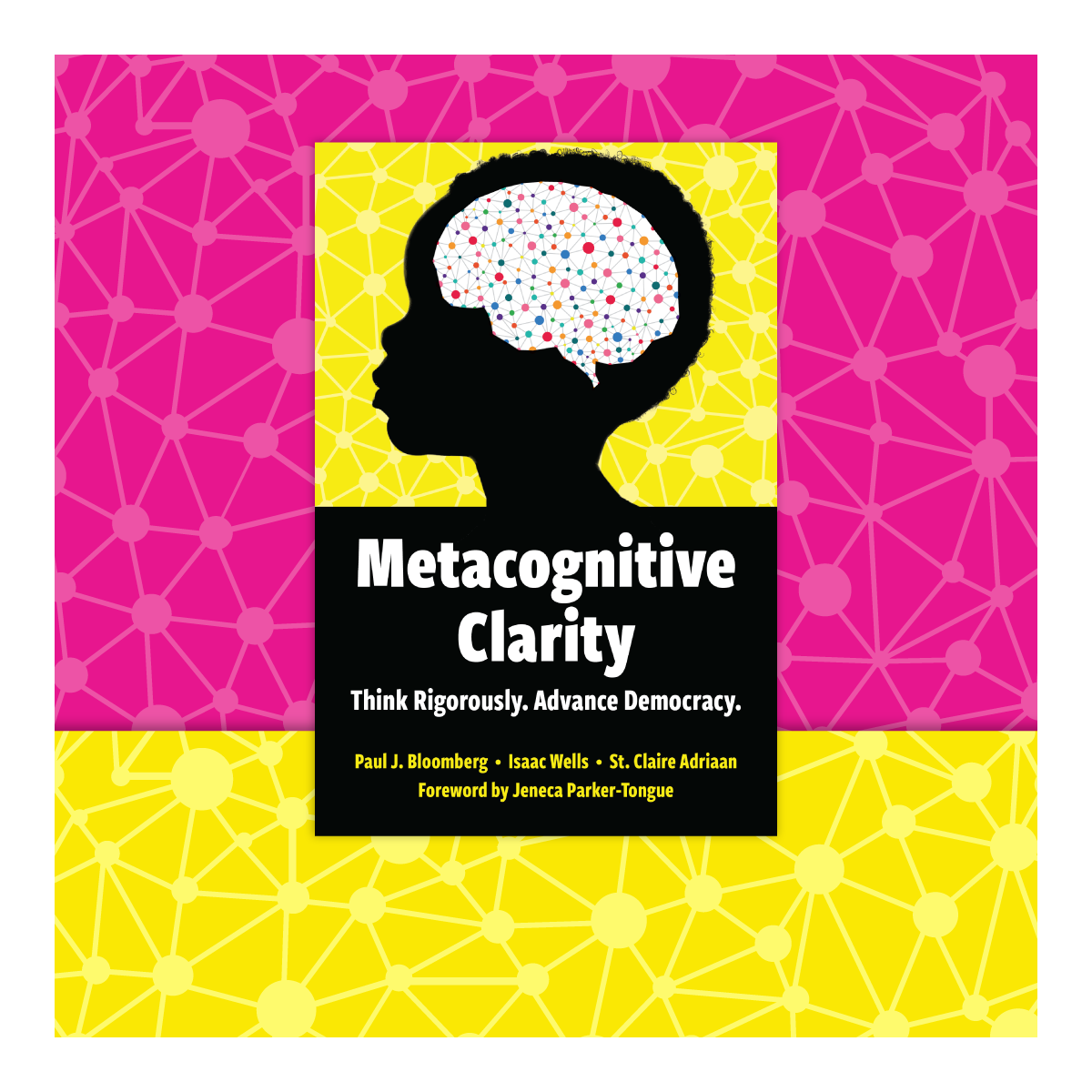
Metacognitive Clarity continues this discussion, providing classroom-ready tools, reflection prompts, protocols, and examples that show educators how to teach metacognition explicitly and embed the cycle into daily instruction, assessment, and, of course, meaningful feedback.
References
- Butler, R., & Nisan, M. (1986). Effects of no feedback, task-related comments, and grades on intrinsic motivation and performance. Journal of Educational Psychology, 78(3), 210–216.
- Eisenberger, N. I., & Lieberman, M. D. (2004). Why rejection hurts: A common neural alarm system for physical and social pain. Trends in Cognitive Sciences, 8(7), 294–300.
- Hattie, J., & Timperley, H. (2007). The power of feedback. Review of Educational Research, 77(1), 81–112.
- Kluger, A. N., & DeNisi, A. (1996). The effects of feedback interventions on performance: A historical review, a meta-analysis, and a preliminary feedback intervention theory. Psychological Bulletin, 119(2), 254–284.
- Rock, D. (2008). SCARF: A brain-based model for collaborating with and influencing others. NeuroLeadership Journal, 1, 44–52.
- Shute, V. J. (2008). Focus on formative feedback. Review of Educational Research, 78(1), 153–189.