

A Science of Secondary Reading™ three-part series on how students learn to analyze, reason, and make their thinking travel across disciplines. Thinking That Travels™ — Part 1
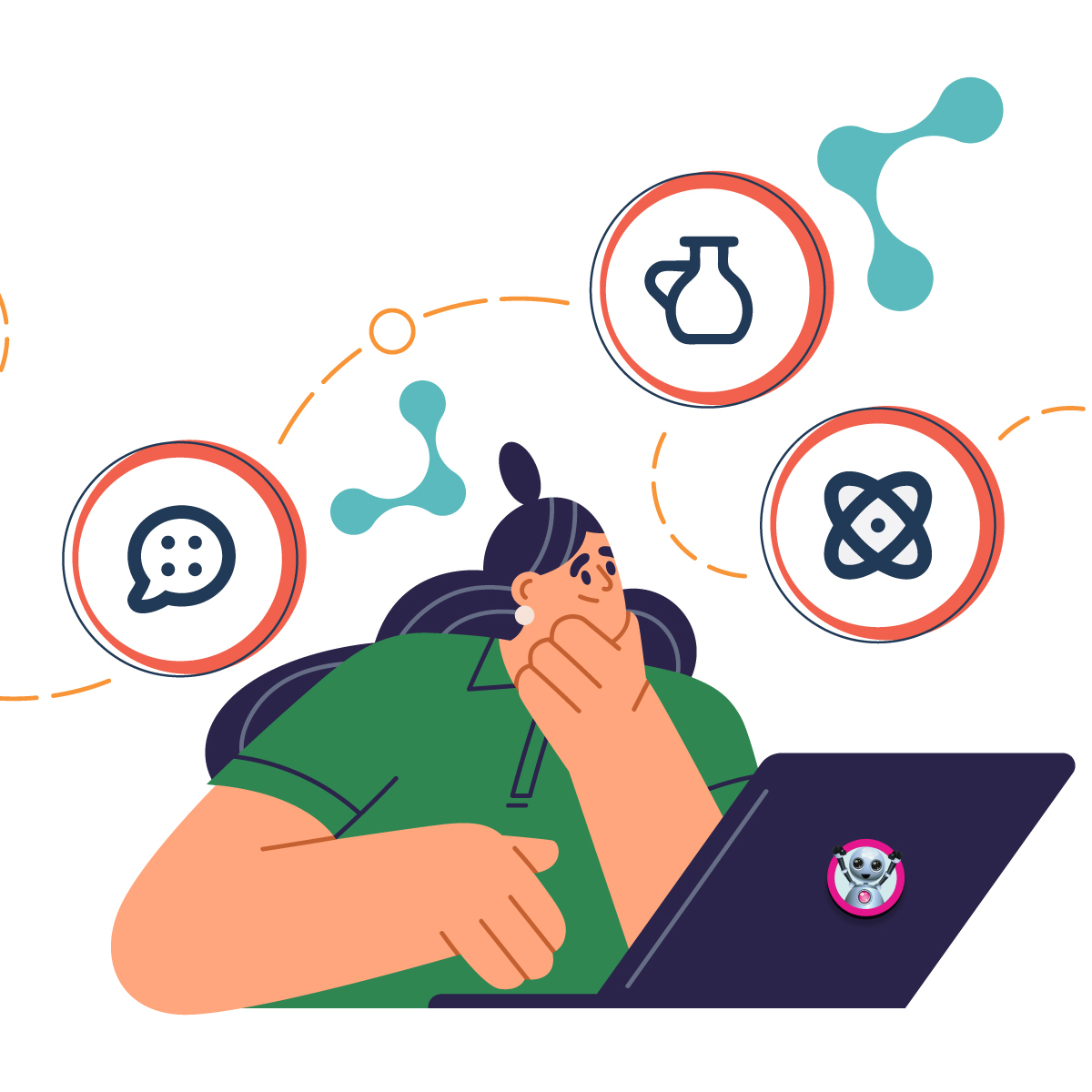
Most adolescents move through school believing they are “bad at analysis,” when in reality, they’re being asked to do something nearly impossible: switch between four completely different ways of thinking every 45 minutes without anyone naming the rules. A student might analyze a poem in second period, a primary source in third, a data table in fourth, and a pattern in an equation in fifth—all under the same verb.
They think the struggle is theirs. But the truth is simple: analysis isn’t one verb. It’s four different ways of knowing.
I learned this years ago when a 7th grader said to me, “If you just told us what good thinking looks like in each class, we wouldn’t feel so lost.” That moment changed everything about how I coached, taught, and wrote. I stopped trying to get students to “read harder” and started teaching them how each discipline thinks.
WHAT Analysis Really Is (Across Disciplines)
Analysis is not a universal skill. It’s a discipline’s way of making meaning—its own mental operating system.
Here’s what analysis actually looks like in the four core disciplines:
- ELA → Interpretation: themes, symbolism, craft, nuance.
- History → Perspective & Sourcing: bias, context, corroboration, power.
- Science → Patterns & Models: variables, trends, evidence-based explanations.
- Math → Structures & Justification: proofs, precision, generalization.
Students can’t transfer what they do in one class to another unless we explicitly show them these differences.
To make this concrete, here’s one teen-relevant topic seen through four disciplinary lenses:
 One Topic, Four Lenses

Topic: A viral TikTok claim (“clean your white shoes with toothpaste”).
- ELA: How does the creator use tone, music, and pacing to build trust?
- History: Does this echo past “miracle product” advertising trends? Who benefited from those narratives?
- Science: What chemical reaction would—or wouldn’t—actually occur? Were variables controlled?
- Math: What ratio or scale manipulation makes the before/after look exaggerated?
This side-by-side contrast unlocks what cognitive scientists call schema formation: the brain learns by noticing differences before it can generalize. When we show students these contrasts, transfer becomes possible.
WHY Students Struggle (Cognition + Justice)
Students aren’t resisting. Their brains are navigating rule-switching at a rapid pace.
Neuroscience tells us:
- The adolescent brain learns by contrast, not assumption (Bransford et al., 2000).
- The salience network needs cues about what matters in order to focus (Immordino-Yang, 2016).
- Hidden expectations increase cognitive load, leading to shutdown.
And justice-oriented educators know:
- As Paulo Freire wrote, “Reading the world precedes reading the word.”
- Students cannot challenge bias, analyze systems, or critique misinformation if they don’t understand how each discipline constructs truth.
- Clarity isn’t a soft skill. Clarity is a justice skill.
When we hide the disciplinary rules, we aren’t leveling the playing field—we’re steepening it.
HOW to Make Thinking Visible
One of the simplest and most powerful instructional moves is showing students the differences across disciplines using the same topic. Teachers can ask:
- “What counts as evidence in this discipline?”
- “What kinds of questions do experts ask here?”
- “How does reasoning sound in this field?”
When teachers use these lenses, students begin to understand what historians, scientists, mathematicians, and literary thinkers actually do. School begins to feel connected to the world they are entering, not the world of worksheets.
NOW: Co-Construct ‘What Analysts Do Here’ Charts
To help students build clarity—and belonging—create visible, student-generated success criteria for thinking in each discipline.
Here’s a simple routine:
- Show students two strong and one developing example of analysis in your subject.
- Ask: “What moves do strong thinkers make here?”
- Group ideas and draft 3–5 essential criteria.
- Rewrite them in student-friendly language.
- Post the chart as: “What Analysts Do Here.”
Students will use these criteria as a cognitive compass—helping them revise, self-assess, and navigate your discipline with confidence.
To support contrast and clarity, you can also use this prompt with the AI-PLC Agent™👍
Copy and paste the prompt in the AI Chat box of your choice.
“Give me four short examples—one each for ELA, History, Science, and Math—showing how different disciplines analyze the same topic. Use teen-relevant language. Label each example clearly.”
AI structures and generates.
Teachers humanize and elevate.
Students analyze and apply.
Series Context
This piece is Part 1 of a three-part SoSR™ series on how students build the clarity, agency, and cognitive architecture needed to think with power across disciplines.
Why This Matters
When students understand the thinking rules of each discipline, everything changes. They gain confidence. They revise more willingly. They push back on misinformation. They engage in critical literacy. They feel ownership of the learning space.
For me, this work is about dignity. Students deserve transparency about the cognitive expectations we place on them. They deserve a map before we ask them to navigate a city of disciplines.
Thinking is an act of liberation. Clarity returns power to kids.
Coming Next in the Series…
How Claim–Evidence–Reasoning becomes the mental architecture that helps students think clearly in ELA, History, Science, Math, and beyond.