Puzzle of Practice
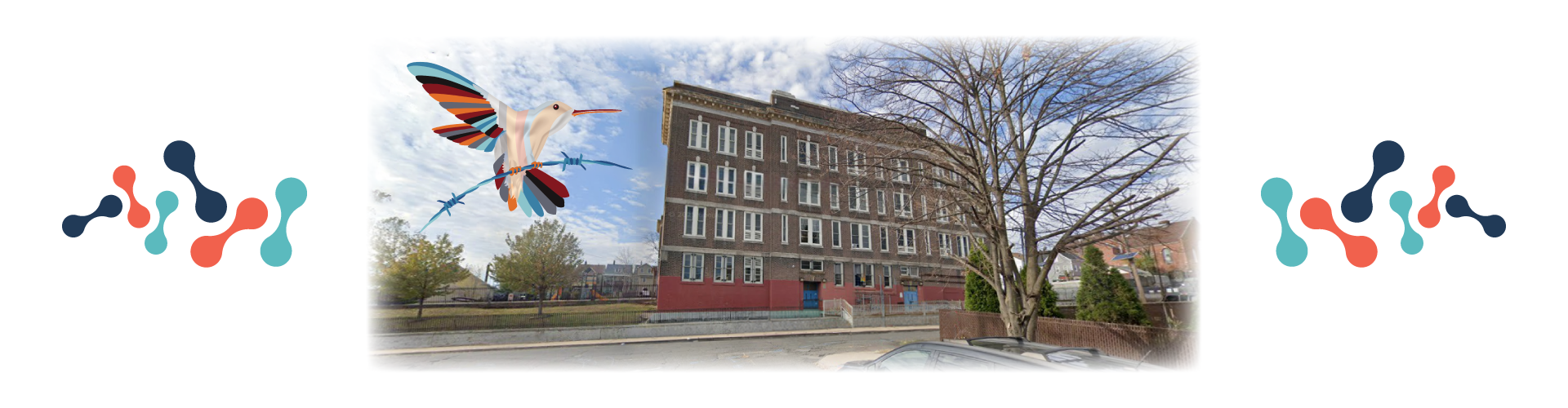
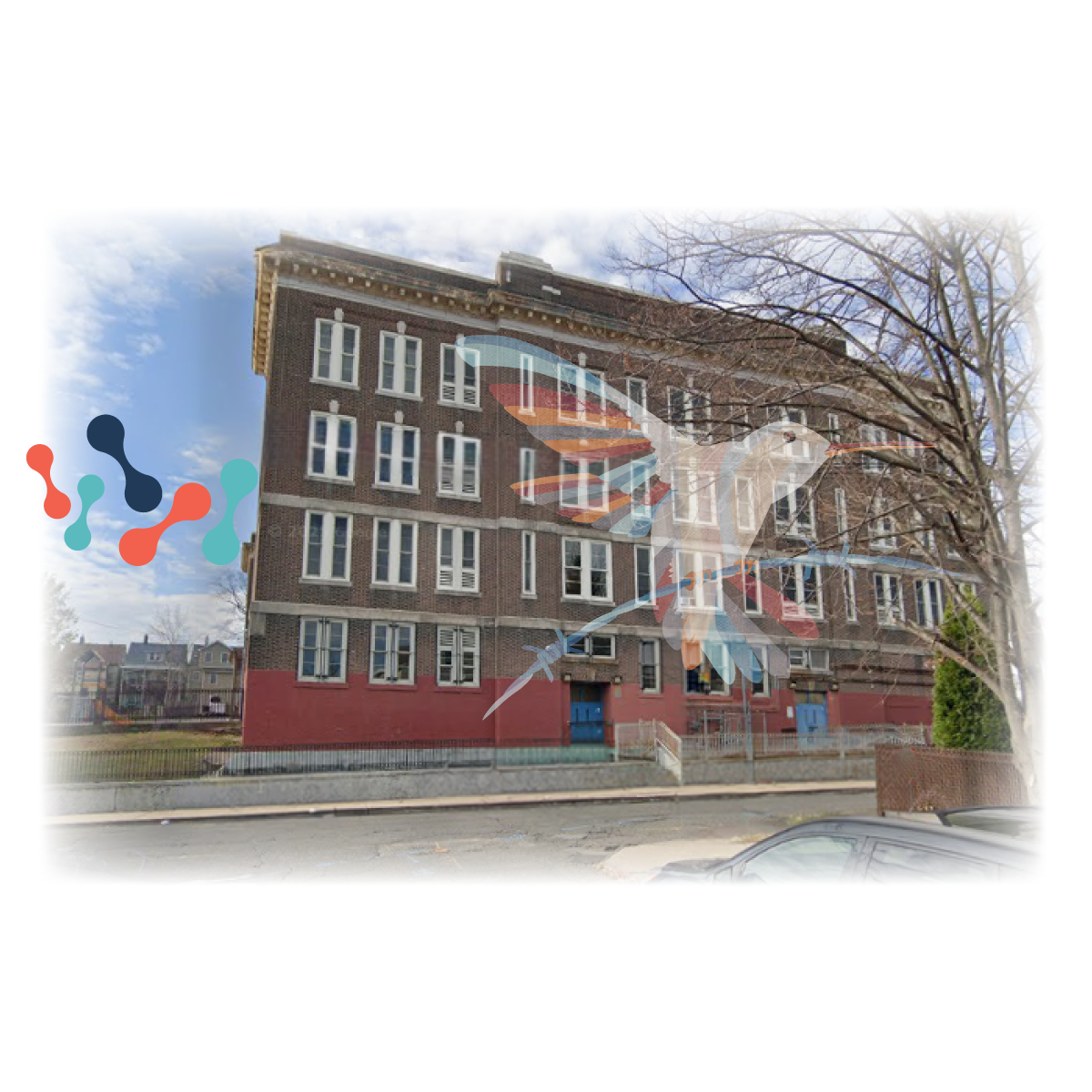
On a spring morning at Paterson Public School #12 in Paterson, NJ, something subtle, but powerful, was about to unfold.
I had the privilege of leading Student-Led Instructional Rounds alongside Assistant Superintendent Dr. Cicely Warren and Principal Dr. Boblyn Dobbs. Ten middle school students joined us that day, not as learners moving from class to class, but as observers of teaching and learning. Together, we set out to look closely at classrooms through a new lens shaped by the district’s ongoing work with the Youth Empowered Stewardship (YES) program.
This was not just a visit. It was an opportunity for students to see their school differently.
Collective Goal
Grounding the Work: The YES Lens
 Paterson Public School District has been engaged in the YES program for several years, building a culture rooted in authentic student–adult partnership. We centered our work on examining how YES commitments were showing up in classrooms, specifically:
- Engagement, Collaboration, and Belonging
- Purposeful Learning and Meaningful Work
- Social-Emotional Development and Resilience
Before we entered classrooms, I asked students to reflect on a time when they had a particularly meaningful experience at school and to describe what made it special. Their responses quickly revealed not just memorable moments, but the impact of what teachers had done to make those moments possible. One student spoke about “finding his voice” while preparing for a solo performance. He described how his teacher stayed with him through the process, practicing alongside him, encouraging him when he was unsure, and helping him feel ready to stand on his own. What struck me most was that he still carries that confidence today; he now believes that if he could do that, he can do anything! Another student explained that school feels most engaging when teachers bring energy into the classroom, when lessons feel exciting, when teachers are animated, and when they are actively involved with students throughout the learning. While he didn’t name it directly, what he was describing was the feeling students get when teachers are fully invested in their learning, moving around the room, asking questions, responding in the moment, and creating an environment where it is hard not to be drawn in. In both reflections, students were naming something essential: it is the everyday actions of teachers, their encouragement, presence, and responsiveness that turn school into a place where students feel confident, motivated, and ready to learn.
These reflections grounded our work. Students already knew what meaningful learning felt like; now, they would look for it.
Collective Action
Seeing Through a New Lens
We visited four classrooms: a 6th-grade math class, a 5th-grade classroom, a STEM lesson with 1st graders, and a bilingual art class. Equipped with a clear focus, students began capturing low-inference observations.
What they noticed was both affirming and revealing.
- “Students are working together… they explained very well what they are learning.”
- “The teacher is guiding the students; students are building confidence.”
- “The teacher goes around asking, ‘Do you need me?’”
- “All students are engaged… everyone showed positive emotions.”
- “Students can explain what and why they are learning.”
- “The art teacher is being so supportive by translating instructions into Spanish.”
Across classrooms, students saw evidence of strong relationships, clear instruction, and purposeful engagement. They noticed collaboration, encouragement, and a sense of belonging.
But perhaps the most powerful moment came between classrooms.
As we walked through the hallway, Angel, an eighth-grade student who had attended the school for years, turned to Dr. Warren and shared an unexpected realization:
I never realized how supportive our teachers are… They are mentors. They say, ‘If you need help, I’m here.’ They create a safe space for us to learn.”
In that moment, I was reminded of something essential. By shifting students from participants to observers, we give them the opportunity to see what has always been there, but perhaps never fully noticed.
Collective Impact
The Debrief: Evidence, Analysis, Action
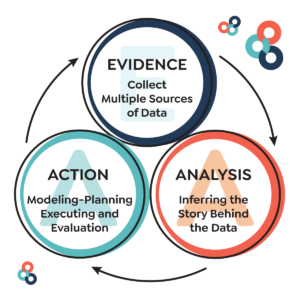 During our Evidence–Analysis–Action (EAA) debrief, students sat shoulder to shoulder with their teachers and school leaders, sharing what they had seen.
They highlighted:
- Strong collaboration and teamwork among students
- High levels of teacher engagement and encouragement
- Clear explanations and purposeful instruction
- Classrooms where students felt supported and confident
They also raised an important point: In some groups, a few students were hesitant to participate.
This led to a meaningful conversation. Students reflected on times when they themselves had chosen not to participate and explored why that happens. Together with their teachers, they discussed ways to address this. Principal Dobbs acknowledged this as an important opportunity for growth, noting that the school could intentionally look at how student leaders take a more active role in supporting their peers and encouraging participation.
The conversation was honest, respectful, and solution-oriented—the essence of Student-Led Rounds.
Reflections: Voice, Recognition, and Growth
At the end of the experience, the impact was clear.
Students shared:
It feels good to know you have the opportunity to talk to teachers in a leadership way.”
Teachers reflected with equal appreciation. One noted how powerful it was to see their “babies” so well spoken, adding that the experience encouraged them to keep doing what they were doing.
What struck me most was not just the feedback generated, but the shift in perspective.
Students began to see their teachers more clearly as mentors, supporters, and designers of meaningful learning experiences.
Teachers began to see their students differently, as articulate thinkers and partners in improvement.
And together, they experienced what it means to build a school where voice is not just invited, but truly valued.
What I Left With
The Student-Led Instructional Rounds at Paterson Public School #12 reaffirmed something I have come to believe deeply: sometimes, the most important learning happens when we pause and look again.
By repositioning students as observers and partners, the familiar becomes visible in new ways. Appreciation deepens. Insight grows. And the relationships that sustain strong schools become even stronger.
When students are given the opportunity to see and to be heard, they don’t just describe the learning environment.
They help elevate it.
Building on What’s Working: Instructional Next Steps
The next opportunity is to build on the school’s strong foundation of relationships, responsiveness, and student voice by deepening rigor across classrooms.
Two promising next steps emerged from the rounds:
- Anticipate student responses to strengthen task design. In the math classroom, students collected personal data to calculate the mean, median, and mode. The task created opportunities for students to connect culturally and learn about one another’s experiences. A next step is to anticipate likely responses and design questions that generate a wider range of data, creating richer opportunities for comparison, analysis, and mathematical discourse.
- Press for reasoning when student thinking shifts. In the STEM classroom, first-grade students discussed whether trees have an important job in the forest. When two students changed their responses after hearing classmates’ ideas, the moment created an opportunity to ask what changed their thinking and why. Pressing for reasoning in moments like this helps students make their thinking visible, justify ideas, and learn from multiple perspectives.
A third opportunity emerged from the strength students already demonstrated across grade levels. Middle school students interacted with younger students with confidence, patience, and care. This strength could be leveraged through structured peer-teaching opportunities, especially with Spanish-speaking upper middle school students supporting multilingual learners alongside the art teacher.
Together, these next steps build on what is already working at P.S. 12. Strong relationships, student voice, and responsive teaching can become even more powerful when paired with intentional task design, deeper questioning, and student leadership. This is where Student-Led Instructional Rounds connect directly to Impact Teams: students and adults use evidence together to strengthen learning.