Puzzle of Practice
On our very first call with Chesnee Elementary leaders, the biggest question that surfaced was, “Teachers are teaching the standards and planning so diligently, but why isn’t it translating into student achievement? What’s missing?”
Collective Goal
Whenever this question arises (and as often as it does), we always direct our attention towards the measuring tool being used first. Is student achievement measured by student outcomes or teacher actions? What questions are we asking the students and how are we consistently tracking success?
Our primary goal at Chesnee Elementary was to build learner clarity and to consistently track that clarity using student outcomes.
Collective Action
Our Steps to Success
Cycle I: Building Teacher Clarity
When teachers unpacked standards with the end in mind and planned for misconceptions before the learner experience, they felt prepared and aligned on rigorous, targeted assessments. PLCs became messier (in a good way) and strategically timed in the unit to where the work began flowing through a continuous cycle. Co-constructing success criteria as a team laid out the roadmap for teacher lessons and set clear expectations of student success.
Cycle II: Building Student Clarity:
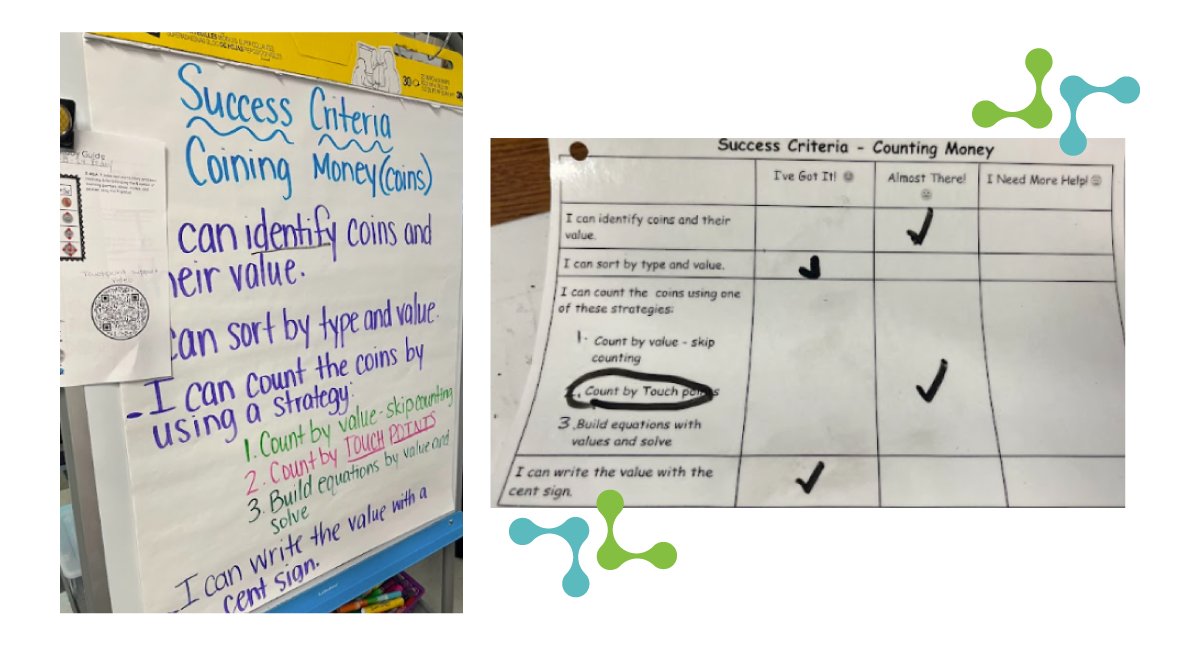
With the “answer key” in their hands, teachers then scaffolded students to create the same success criteria through co-construction – an experience that helped students internalize their own rubric/progression. This process organically lent itself to students setting goals for themselves and even providing peer feedback! If they own the keys to success, they can speak on their strengths and pitfalls with confidence! Check out this example of students self-assessing using co-constructed success criteria:
Cycle III: Feedback & Follow-Through
We referred to these 3 components as cycles instead of phases, because they very organically overlap and do not always occur in consecutive order – especially Cycle III.
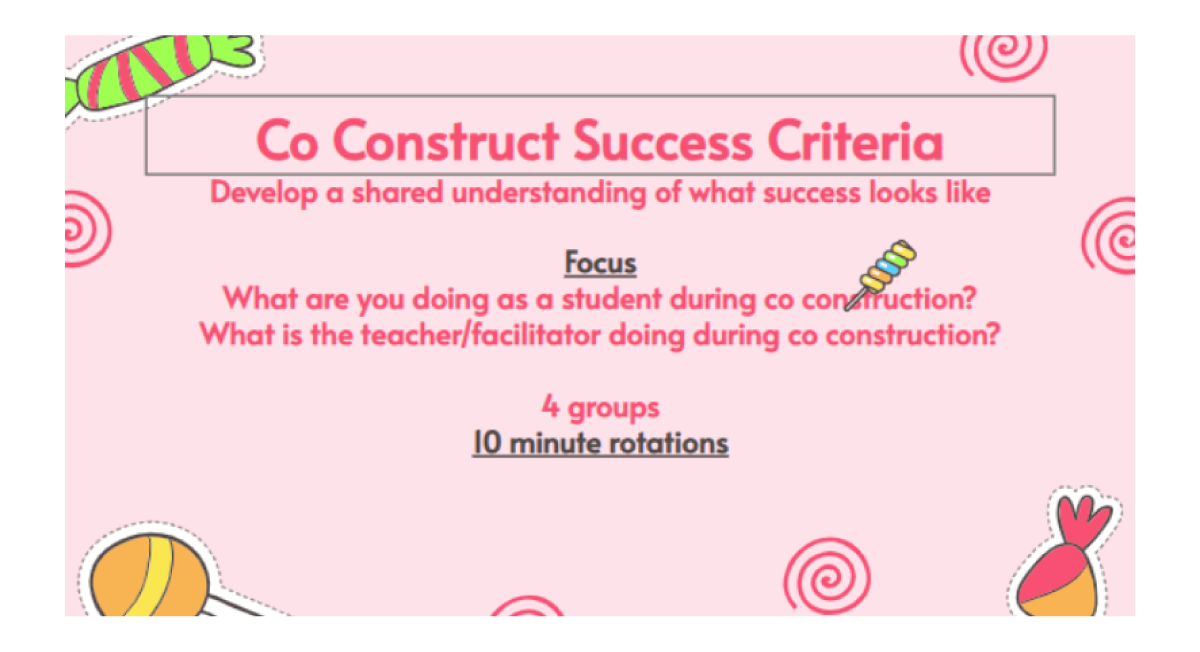
A major source of success that has set this campus apart is the coaches’ ability to maintain a consistent focus through a system of follow-up on follow-through. This didn’t look like “gotcha” moments or surprise observations of classrooms. It was planned out professional developments that continued the Impact Teams’ work, so it did not just live in isolation. Once the TCC consultant modeled co-construction or an evidence walk, coaches immediately engaged teachers in differentiated professional development where they co-constructed the co-construction of success criteria. Everything cycled back to our goal and trickled down to the entire staff. Teachers made commitments to feasible next steps that worked for them. Check out an example of one of their faculty meetings if you want to facilitate a similar session for your staff.
Collective Impact
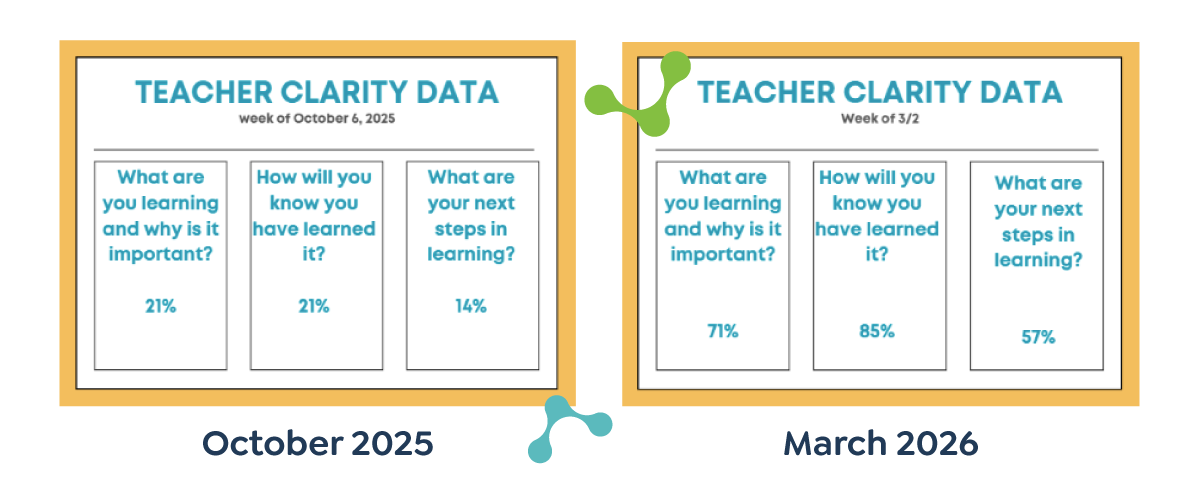
Now that the success criteria have been calibrated by teachers and students, the campus can measure their success using student outcomes with a lens on what students are learning rather than what the teachers are doing. The data on their evidence walks speaks for itself. They tracked data using a simple yes/no survey on whether students could answer these 3 essential questions correctly:
Wondering what’s next for Chesnee Elementary after the 3 questions? They will co-construct success criteria with their staff on feedback and goal-setting to utilize this teacher-led progression during their evidence walks. A rubric created by teachers to monitor teacher progress. Talk about student ownership!
Call to Action
Reach out to Sarah Stevens, Director of Quality Implementation at The Core Collaborative, to learn more about how to partner with our network.