

The Big Shift: PLCs used to hunt for evidence and hope feedback reached students in time. Now, with the AI‑PLC Agent™, we can generate, align, and deliver success‑criteria‑based feedback at scale and in real time—so inquiry cycles don’t just study learning; they teach learners to learn in the moment. That means every draft becomes coachable, every criterion becomes a lever, and every student interaction becomes a chance to rehearse the habits of democratic learning—planning aloud, monitoring with peers, and evaluating with integrity.
 The Meta-Cycle was born from a desire to move beyond compliance cycles (e.g., the classic 15‑day challenge). Its purpose isn’t to make the system look accountable; it’s to make learners metacognitively capable and democratically empowered.
At its core, the Meta-Cycle teaches students to learn how to learn. It helps them understand themselves as learners, build expertise, and develop the confidence to do the work independently and with others. This shift from compliance to agency is the heartbeat of Metacognitive Clarity: Think Rigorously. Advance Democracy. — where the purpose of schooling is to cultivate the mind, voice, and will of every learner.
Feedback, Transformed: Why This Moment Is Different
For decades, PLCs have known feedback is powerful—but five constraints blunted its impact: tradition, time, consistency, quality analysis, and student access. The AI‑PLC Agent™ removes those constraints so feedback becomes applied (used by learners right away), aligned (to shared success criteria), and equitable (available to every student, every draft). With friction lowered, precision and pace coexist: students get just‑in‑time cues that nudge strategy use, language clarity, and conceptual accuracy while confidence is still malleable.
What’s newly possible:
- Criteria‑tight feedback at scale: The AI‑PLC Agent™parses the rubric/success criteria and tags each student’s work to the exact steps—generating banded comments and student‑friendly versions instantly. This keeps the talk about quality coherent across classrooms and helps students internalize the ladder of improvement.
- Feedback → Action linkage: Each comment comes with a do‑next move (guided practice or strategy swap), so students don’t just receive feedback—they use it during the same block or the next WIN session, closing the knowing–doing gap.
- Consistent calibration: Teacher‑ and student‑facing exemplars are embedded, and the Agent cross‑checks language across classes, reducing drift while still honoring teacher voice and local context.
- Justice by design: Multilingual stems, UDL options, and dignity‑protecting peer protocols are baked in, so access isn’t an add‑on; it’s structural. Participation widens without watering down rigor.
- Real‑time reflection: Students attach SKILL–WILL–THRILL notes to each revision; the Agent summarizes patterns back to the PLC in minutes, so next lessons target misconceptions and motivation.
Result: Inquiry cycles stop being post‑hoc audits and become live coaching systems. Learners experience metacognition as a daily craft: noticing, naming, and nudging their own thinking while it’s still in play.
The Science: From Compliance to Metacognitive Clarity
Here’s the quick bridge from research to routine—why the Meta-Cycle’s habits (plan → monitor → evaluate) line up with what learning science says actually accelerates growth. Use this as the lead‑in, then the bullets below keep the receipts.
- Metacognition = two engines (Flavell): Know about your thinking (self, task, strategies) and regulate it (plan → monitor → evaluate). The MetaCycle makes both habitual.
- Self‑regulated learning, simplified (Zimmerman): Forethought → performance → reflection. Our Plan–Monitor–Evaluate rhythm is SRL—and it builds self‑efficacy through visible progress.
- Motivation matters (Pintrich): Goals, value, and expectancy drive persistence. We surface purpose and relevance, so the effort feels worth it.
- Feedback that moves learning (Nicol & Macfarlane‑Dick; Sadler): Clarify standards, compare current to desired, close the gap. Students use shared success criteria to give/receive feedback—not just get it.
- Formative assessment as a routine (Black & Wiliam): Evidence must be used by students and teachers. The MetaCycle schedules those evidence‑use moments every lap.
- Sense‑making is the fuel (Butler & Winne): Feedback helps only when learners process it. We embed quick reflections (e.g., SKILL–WILL–THRILL) so feedback turns into better strategy use.
- Go beyond passive (Chi & Wylie, ICAP): Best gains come from Interactive/Constructive work—co‑constructing criteria, peer dialogue, teaching others.
- Deliberate practice, not busywork (Ericsson): Targeted reps at the edge of competence with immediate cues. WIN/Guided Practice plans create those high‑yield reps.
- Mindset with receipts (Dweck): Celebrate strategy + effort + feedback → improvement to avoid empty “try harder” talk.
- Balanced learning environments (Bransford, Brown & Cocking): Learner‑, knowledge‑, assessment‑, and community‑centered. The MetaCycle keeps all four in view.
- Democratic purpose (Freire; Ladson‑Billings): Students name what matters, co‑set goals, and share responsibility—belonging and rigor rise together.
🤖 The AI‑PLC Agent™: Converting Evidence into Agency
The AI‑PLC Agent™ (from AI‑PLC Powered Protocols) automates the inquiry work that once consumed time and energy, turning the four essential PLC questions into metacognitive checkpoints for both teachers and students.
Metacognitive Checkpoints
| PLC Question | AI‑PLC Powered Protocol | Purpose in the MetaCycle |
|---|---|---|
| 1. What do we want students to learn? | AI‑Unpacking for Clarity | Establishes democratic clarity — teachers and students co‑construct goals, success criteria, exemplars, and key vocabulary. |
| 2. How will we know if they learned it? | AI‑Calibration | Builds shared understanding of quality; students learn to judge their own work accurately using criteria and exemplars. |
| 3. How will we respond when students haven’t learned it? | AI‑AOE (Analysis of Evidence) | Produces banded feedback, justice scaffolds, and WIN/Guided Practice plans aligned to surface→deep→transfer. |
| 4. How will we extend learning for those who already know it? | AI‑AOE + Summary Reports | Designs extension and joyful transfer opportunities that elevate mastery into contribution and leadership. |
The AI-PLC Agent also lets teams track mastery across classrooms and content areas—building transparency, collective responsibility, and momentum. Every educator and student can see where they are and where they’re growing next.
🌀 Why It’s Called the MetaCycle
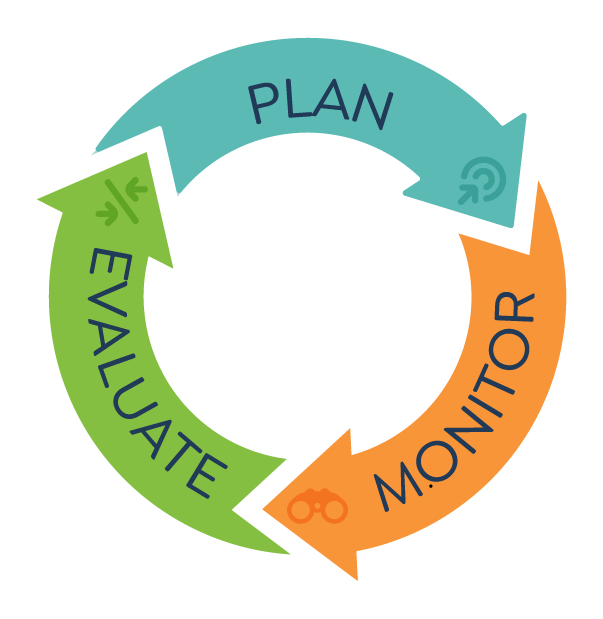 We call it the Meta-Cycle because it mirrors the Metacognitive Cycle—the continuous process of Planning → Monitoring → Evaluating that fuels expert thinking. It operates at two levels at once: within learners and within the PLC.
- Planning — Co‑set goals with learner‑friendly success criteria and exemplars. Anticipate likely confusions; choose strategies and justice scaffolds. Align tasks so that the evidence actually speaks to the criteria.
- Monitoring — Gather formative evidence (drafts, rehearsals, explanations). Use self/peer/AI feedback to check alignment to criteria; adjust strategies in real time. Schedule WIN/Guided Practice for deliberate reps at the edge of competence.
- Evaluating — Compare current work to criteria and exemplars; name growth; revise. Capture learning in a Summary Report with a new mastery goal and a plan for joyful transfer to authentic contexts.
Because this rhythm repeats, students encounter multiple opportunities to succeed and develop the durable habits of learning‑to‑learn. PLCs see the same rhythm in their own work: clarify, test, learn, adjust.
The Meta-Cycle is like a learning circle that helps you get better each time you go around it! You don’t just do something once and move on—you practice, get feedback, think about what worked, and try again. That’s how your brain gets stronger and smarter.
| Your Step | What Happens | What You’re Thinking About | Who Helps You |
|---|---|---|---|
| 1. Pre AI-AOE | You try something new for the first time. | What do I already know? What do I wonder? | Teacher + Friends |
| 2. Set Goals | You decide what you want to get better at and what success looks like. | What’s my goal? What does great work look like? | Teacher + You |
| 3. Teach & Practice | You learn new strategies and practice using them. | What strategy am I using? Is it helping me? | Teacher + Classmates |
| 4. Post 1: Checkpoint (AI-AOE; Coach) | You show what you’ve learned so far. | What’s getting better? What’s still tricky? | Teacher + Self |
| 5. Feedback (Check In) | You get ideas from your teacher, friends, and yourself about how to make your work stronger. | What can I fix or add? | Everyone! |
| 6. Reflect, Revise & WIN (Check In) | You think about your learning, make changes, and set a WIN goal — “What I Need.” | What do I need to do next? | You + Teacher |
| 7: Targeted Instruction (Coach) | You get ideas from your teacher, friends, and yourself about how to make your work stronger and work with teacher-partners to figure it out. | What do I need to practice? Why? | Everyone! |
| 8. Post 2: Checkpoint (AI-AOE: Celebrate!) | You try again, show improvement, and celebrate! 🎉 | How did I grow? How can I use this in real life? | Everyone! |
Why this works: Students get multiple chances, feedback from many people, and pride in their learning. It teaches them how to learn how to learn.
The Future of PLCs: Inquiry That Teaches Learning-to-Learn
The next generation of PLC work is continuous, student-visible, and grounded in how learning actually develops. Here is the future we are building and already running in pilot classrooms, where inquiry is not about preparing for meetings, but about improving what students do next.
1 . Always-on evidence to feedback cycles
Student work flows directly into structured Analysis of Evidence and Feedback Generation protocols. The Agent aligns evidence to transferable success criteria, calibrates performance bands, and generates asset-based, student-facing feedback tied to strategies rather than task completion. Students receive clear next steps within days, not weeks, and teachers see class-level patterns without spending hours sorting papers.
2. Clarity is co-built and reused, not reinvented.
Unpacking for Clarity produces a reusable Clarity Pack with learning intentions, success criteria, misconceptions, exemplars, and language supports. These packs live across units and classrooms, creating shared instructional language and continuity for students. Over time, classrooms shift from “What do I turn in?” to “Which success criterion am I strengthening and how will I know?”
3. Deliberate practice is designed, not left to chance.
Whole-Class Recommendations and UDL Unit Supports translate evidence patterns into a single guided practice focus, aligned scaffolds, and options for access and expression. WIN and small-group blocks are populated with criteria-aligned tasks across surface, deep, and transfer learning, so practice is purposeful and visibly connected to growth.
4. Mastery snapshots replace gradebook guessing.
PLC Mastery Pulse Reports roll up learning evidence into concise mastery snapshots that show strengths, emerging needs, and shifts over time. Teams see what is improving, what is stable, and what needs targeted support, without ranking students or reducing learning to percentages. The focus stays on learning progress, not point accumulation.
5. Teacher time shifts to high-impact instruction.
With evidence organization, calibration, and first-pass analysis automated, teachers spend more time modeling quality, facilitating academic discourse, conferring with students, and adjusting instruction in real time. The technology clears space for the human work that most accelerates learning.
6. Equity is built into the workflow.
Bias-aware language rules, multilingual learner supports, and UDL barriers-to-access framing are embedded in every protocol run. The system is designed to surface instructional needs, not label students, and to expand access while holding expectations high.
7. Privacy and professional trust are non-negotiable.
Student evidence is de-identified for collaborative analysis, views are role-appropriate, and teams control what aggregates to school or district dashboards. Families can see growth trends without exposing peers, and educators retain ownership of instructional decisions.
From Inquiry to Democratic Learning
Traditional inquiry cycles often keep progress tracking at the system level. The Meta-Cycle distributes it to everyone. It democratizes assessment by involving students as co‑designers, co‑assessors, and community contributors.
What shifts in practice?
- From teacher‑held goals to co‑constructed goals and criteria that are meaningful and culturally responsive.
- From feedback delivered to students to feedback generated by students (self/peer) with teacher/AI coaching.
- From one‑shot assessments to iterative evidence use (pre → WIN → post) with visible growth and reflection.
- From coverage to joyful transfer — learners applying knowledge/skills to authentic tasks that benefit others.
Justice Scaffolds inside the MetaCycle (for equity of access and participation):
- Multilingual stems and sentence frames; annotated exemplars at varied reading levels.
- Choice of modality (write/speak/draw/record) with shared criteria; UDL supports.
- Structured peer feedback protocols that protect dignity and reduce bias.
- Community‑connected problems that elevate local knowledge and identities.
🔄 The Meta-Cycle at a Glance (Student + PLC Alignment)
Here’s the through-line: every Meta-Cycle teaches students to plan, monitor, and evaluate their own learning with clarity. We start by co-writing a goal and success criteria so “quality” is visible and doable. Then, as work unfolds, learners gather evidence, compare it to the criteria, and adjust—using self/peer/AI feedback and targeted WIN/Guided Practice. Finally, they evaluate impact, document growth, and set the next mastery goal—turning each draft into a rehearsal for agency, precision, and public contribution.
1. Plan
• Co‑set a goal & success criteria (learner‑friendly).
• Predict challenges; select strategies.
• Identify what “quality” looks like (exemplars; non‑examples).
2. Monitor
• Gather evidence (checks for understanding, drafts, prototypes).
• Use self/peer/AI feedback; track progress vs. criteria.
• Adjust strategies; schedule WIN/Guided Practice.
3. Evaluate
• Compare current work to criteria; revise; reflect (What changed? Why?).
• Document growth (Summary Report); set next mastery goal.
• Share learning publicly (exhibition, tutorial, community contribution).
The Learning Science: The Mechanisms of Impact
Under the hood, the Meta-Cycle works because it blends how we think, why we try, and how we learn together. It makes success criteria visible, links goals to purpose, centers learning in dialogue, and builds skill through deliberate practice—all while widening access with justice-oriented scaffolds. The result: students who know what quality looks like, persist for reasons that matter, learn with and from peers, and grow mastery in ways that affirm identity.
- Cognitive: Students externalize criteria → internalize them → self‑correct (Flavell; Nicol & Macfarlane‑Dick).
- Motivational: Goals linked to purpose/value increase persistence (Pintrich; Dweck).
- Social: Dialogue and peer teaching drive ICAP “Interactive/Constructive” engagement (Chi & Wylie).
- Skill Growth: Deliberate practice in WIN blocks at the edge of competence (Ericsson).
- Equity: Justice scaffolds + culturally relevant tasks expand access and identity‑affirming participation (Ladson‑Billings; Freire).
What the AI‑PLC Agent™ Delivers in Each Cycle
 From feedback as a message to feedback as a mechanism: the AI-PLC Agent turns success criteria into immediate moves students can act on now—making thinking visible, effort purposeful, practice deliberate, and participation equitable. This is learning science operationalized, not summarized.
From feedback as a message → to feedback as a mechanism. Every output is designed to be used by students immediately, closing the knowing–doing gap.
- Clarity Pack: Targets, success criteria, exemplars, vocabulary (student‑facing).
- Evidence Snapshot: Whole‑class trends + misconceptions by performance band.
- Feedback Menu: Banded, copy‑pasteable comments + student‑friendly versions.
- Guided Practice (WIN): Deliberate practice tasks aligned to surface → deep → transfer.
- Justice Scaffolds: Access supports (multilingual stems, UDL options, equity notes).
- Mastery Goal + Summary Report: One‑pager capturing growth, next steps, and extension options.
- Roll‑Up Dashboards: Cross‑classroom mastery view for PLCs/ILTs.
The Future of PLCs
In the end, the promise is simple: when clarity is co-constructed, and feedback is usable now, agency shows up—every period, every draft, every learner. What we measure should mirror what we value; if we value thinking, we make it visible, and if we value equity, we make access structural. The MetaCycle teaches students to learn how to learn; the AI-PLC Agent™ gives teams the time and traction to make those habits universal—shifting PLCs from post-hoc audits to live coaching, from “Did they learn?” to “How will we help them learn next?” That’s not a new program; it’s a new practice of democracy in school: voice, responsibility, and evidence in motion.
Ready to turn evidence into agency this quarter?
1. Pick one focus.
2. Co-build a lean Clarity Pack with students.
3. Run one MetaCycle lap (plan → monitor → evaluate).
4. Use the AI-PLC Agent™ to generate banded feedback, WIN practice, justice scaffolds, and a Summary Report.
5. Share one joyful-transfer artifact with families or the community.
Small lap, big signal: every learner can show growth, name strategies, and contribute. This is Metacognitive Clarity—mind, voice, and will—practiced out loud. Let’s stop admiring data and start rehearsing the future: run the MetaCycle, and let the AI-PLC Agent™ turn feedback from a message into a mechanism for democratic learning.
Join our AI-Inspired PLC Movement—bring one team, one focus, and launch one Meta-Cycle with us this month.