

A Science of Secondary Reading™ three-part series on how students learn to analyze, reason, and make their thinking travel across disciplines.
The Moment Students Start Thinking Clearly
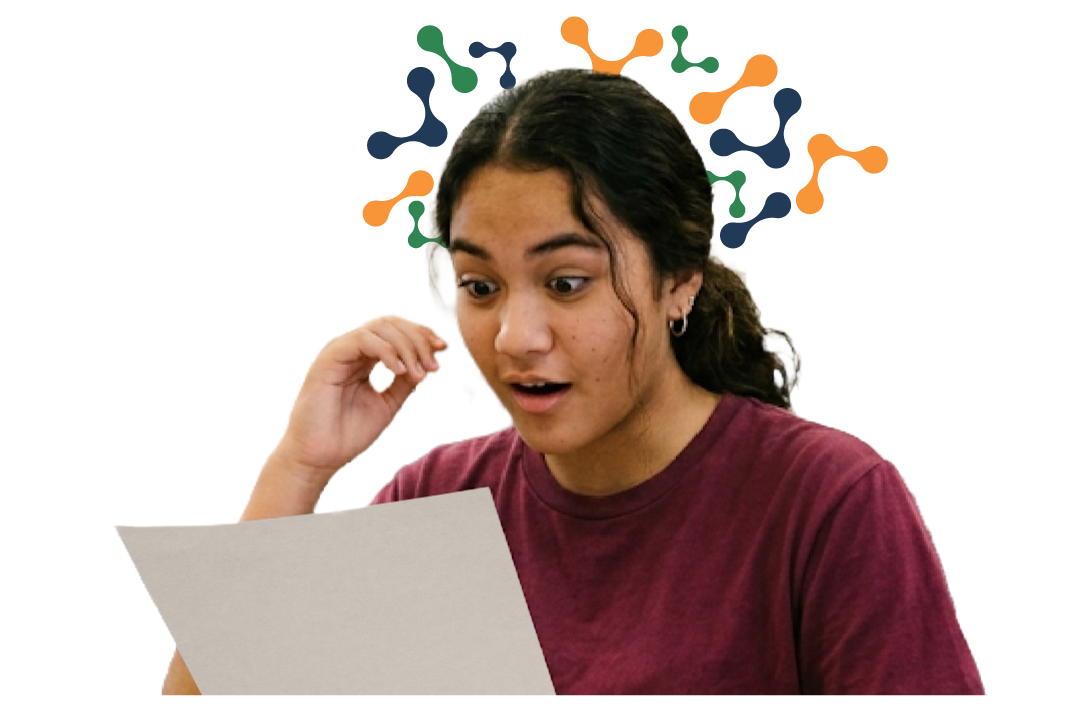
In a 9th‑grade classroom in Honolulu, a student leaned back in her chair, looked at her paper, and whispered:
“Ohhhh. I get it now. My idea… my proof… my why.”
She wasn’t reacting to a rubric.
She wasn’t reacting to a grade.
She was reacting to structure—three small anchors that finally made her thinking feel manageable.
That’s the power of CER: Claim → Evidence → Reasoning.
→ Not as a formula. Not as a writing frame.
→ But as a cognitive architecture—a mental scaffold that helps students explain anything across
→ ELA, History, Science, Math, and the world they’re inheriting.
If Part 1 gave students the map of the thinking neighborhoods, Part 2 gives them the GPS.
WHAT — What CER Actually Is (and Isn’t)
CER is often misunderstood as a writing strategy.
But in the Science of Secondary Reading™, CER is something deeper:
CER is a universal structure for explanation.
It gives students three simple cues:
- What do I think? (CLAIM)
- How do I know? (EVIDENCE)
- Why does it matter? (REASONING)
In other words:
Your idea → Your proof → Your logic.
It’s the thinking version of a deep breath. A predictable rhythm that the brain can trust. A cognitive routine that helps students slow down enough to understand their own thinking.
When CER becomes a habit, students can explain anything—a theme, a trend, a pattern, a perspective, a model, a function.
WHY — Why CER Unlocks Transfer
🧠 Cognitive Science: CER Lightens the Load
CER works because it aligns with how the adolescent brain manages complexity:
- Chunking: The brain handles information in 2–4 units. CER offers three.
- Working Memory Relief: CER offloads the “how do I start?” overwhelm.
- Salience: CER helps the brain prioritize what matters.
- Metacognition: CER creates a structure students can monitor and revise.
Students think more clearly because CER offers predictability. The brain relaxes. Ideas flow.
✊ Critical Literacy + Belonging + Justice
CER is also a tool for agency. It teaches students to:
- examine claims,
- evaluate evidence,
- question reasoning,
- critique bias,
- and construct arguments about their world.
It democratizes discourse.
It gives multilingual learners a stable linguistic structure.
It helps every student step into the role of thinker, not just receiver.
As we often say:
“CER doesn’t simplify thinking. It dignifies it.”

HOW — CER Across the Four Disciplines
To show the power of CER, here’s the same topic through four disciplinary lenses.
Topic: An AI-Generated Headline (“AI predicts 98% of future life events”)
ELA — Interpretation (Meaning & Craft)
- Claim: The headline exaggerates AI capability for emotional effect.
- Evidence: Words like “predicts 98%” oversimplify both uncertainty and nuance.
- Reasoning: Sensational language shapes reader perception and creates a sense of inevitability.
History — Sourcing & Perspective
- Claim: The headline echoes past technological moral panics.
- Evidence: Similar framing appeared during early internet and radio booms.
- Reasoning: Historical patterns show that new technologies often trigger exaggerated public fears.
Science — Data & Models
- Claim: The claim is scientifically misleading.
- Evidence: Accuracy rates depend on model type, training data, and context.
- Reasoning: Without controlled studies or peer‑reviewed methodology, such a high accuracy claim is invalid.
Math — Structure & Precision
- Claim: The percentage is statistically unreliable.
- Evidence: No sample size, variable control, or confidence interval is provided.
- Reasoning: Percentages without mathematical structure are meaningless.
These four CERs show students something essential:
CER stays the same. The thinking changes.
This is the essence of transfer.
HOW — Teacher Moves That Make CER Stick
Here’s how to help students internalize CER as mental architecture:
1. Model CER as a Think-Aloud
Show students your own idea → proof → logic.
2. Use the Same Topic Across Disciplines
Contrast builds schema.
3. Keep Reasoning at the Center
Reasoning is the bridge between evidence and discipline-specific thinking.
4. Validate Identity and Voice
Invite students to revise claims from their own lived experiences.
5. Ask Meta Questions
- “How did CER help you think more clearly?”
- “Which part was easiest? Which part was hardest?”
- “How did CER change your confidence?”
CER becomes a tool for internal clarity, not just external expression.

HOW — Ready-to-Use Topics for Teachers
Many teachers freeze when asked to “pick a topic.” To make CER across disciplines truly accessible, here are plug-and-play topics they can use immediately.
Copy and Paste Any Topic Below Into Your Lesson or the AI-PLC Agent™
Everyday + Teen-Relevant Topics:
- “A viral TikTok life hack claims it fixes ______.”
- “A new AI tool promises to predict ______.”
- “A sports highlight reel says this player is ‘the greatest ever.’”
- “A YouTuber claims drinking ______ improves health.”
- “A trending meme oversimplifies ______.”
Real-World + Community Topics:
- “Our city is experiencing record heat for the third year in a row.”
- “A local news article claims a new policy will fix ______.”
- “A community debate is happening about ______ (traffic, youth programs, safety).”
- “A public health flyer claims ______ reduces risk by 90%.”
STEM + Data Topics:
- “A graph shows an unexpected spike in ______.”
- “A study claims the new drug is 95% effective.”
- “A company reports a massive increase in users after launching ______.”
- “A science influencer says this experiment proves ______.”
Literacy + Media Topics:
- “A headline says a celebrity ‘destroyed’ their opponent in an interview.”
- “An op-ed claims technology is ruining childhood.”
- “A book blurb says the author ‘reinvented the genre.’”
- “A review claims the movie is the ‘best of the decade.’”
Math + Reasoning Topics:
- “A viral statistic claims 90% of people fail this quiz.”
- “A graph shows that sales doubled—but the scale starts at 95%.”
- “A money influencer says you can retire by 30 by doing ______.”
- “A trendline predicts massive growth without showing the data range.”
NOW — Co-Construct “What Analysts Do Here” Charts (+ AI Support)
Success clarity is the heart of this model. Students deserve to know: “What does success look like in this discipline?”
Human Routine:
- Show students two strong and one developing sample.
- Ask: “What moves do strong analysts make here?”
- Group ideas into 3–5 criteria.
- Rewrite in student-friendly language.
- Post the chart as “What Analysts Do Here.”
Here’s a lightweight way to bring this to life with your students:
“Analyze the same topic through ELA, History, Science, and Math lenses.”
This quick prompt builds instant contrast and gets students talking.

If you want the full classroom-ready routine — with model cross-disciplinary examples, teacher moves, and editable charts — the AI-PLC Agent™ includes a complete protocol that expands this prompt into a structured learning experience.
To help students understand what a strong CER looks like, co-construct criteria with them.
Here’s the routine:
- Show three CER samples (two strong, one developing)
- Ask: “What makes the strong examples strong?”
- Highlight the discipline-specific differences.
- Draft 3–5 criteria together.
- Post the chart as “What Strong CER Looks Like Here.”
To instantly generate samples, give teachers explicit instructions:
Copy + Paste This Into the AI-PLC Agent™:
“Use the topic: ________. Generate a CER for ELA, History, Science, and Math using the same topic. Keep each CER tight (3–4 sentences) and student-friendly. Label each discipline clearly.”
Or choose a ready-made option:
“Use a trending teen topic about TikTok, AI, or sports. Generate four CERs—one for each discipline—using that same topic.”
This builds clarity and contrast immediately. AI structures. Teachers humanize. Students think more powerfully.
To help students understand what a strong CER looks like, co-construct criteria with them.
Use this routine:
- Show three CER examples (two strong, one developing).
- Ask: “What makes the strong examples strong?”
- Highlight the discipline-specific differences.
- Draft 3–5 criteria together.
- Post the chart as “What Strong CER Looks Like Here.”
Try giving students this small CER challenge:
“Using the same topic, write a CER for ELA, History, Science, and Math.”
It’s simple. It’s powerful. And it reveals how reasoning shifts across disciplines.
If you want the full, classroom-ready, multi-discipline CER protocol — complete with sample CERs, reasoning stems, and student-facing rubrics — the AI-PLC Agent™ includes a polished version of this routine you can run with one click.
AI structures the task. Teachers humanize the thinking. Students make meaning. Teachers humanize. Students take it further.
Series Context
This is Part 2 of a three-part SoSR series on how students build the clarity, agency, and cognitive architecture needed to think with power across disciplines.
Why This Matters for Students and the Future of Learning
When CER becomes habitual, students gain:
- confidence in their thinking
- the ability to critique information,
- sharper academic writing,
- deeper civic reasoning,
- and clarity that fuels belonging.
CER isn’t just a strategy. It’s a cognitive technology for navigating complexity.
By giving students a structure that travels across disciplines, we give them something far more important: the power to make meaning—and to question the meanings handed to them.
Coming Next in the Series…
PART 3 — “Making the Invisible Visible: Success Criteria as the Engine of Agency, Belonging & Transfer.”