
Walk into two different schools, and you can feel the difference in seconds. In one, students move through the day quietly, completing tasks. In the other, you hear names at the door, see work shared with pride, and feel a hum of possibility. Youth Empowered Stewardship (YES) exists to build the second kind of school—on purpose. It’s a multigenerational practice that pairs identity (heart) with disciplined inquiry (head) so students and adults co-create a culture where learning—and equity—can thrive. That is the spirit of affirmation before reformation: belonging comes first, and structures follow. YES also activates the “head and heart” connection through arts, movement, and music, so culture shifts are felt and seen—not just written in plans. At the core is a simple truth the field has affirmed for decades: relationships precede learning.
What YES Is—and Why “Head + Heart” Matters
Imagine an advisory where students don’t just answer climate surveys; they co-design the next four weeks with adults. That’s YES in practice. It treats youth voice as shared power that shapes routines, expectations, and learning experiences in real time. The work is joyful and rigorous because it blends storytelling and the arts with clear processes for change, and it frames school as a democratic space where belonging and agency are the preconditions for improvement.
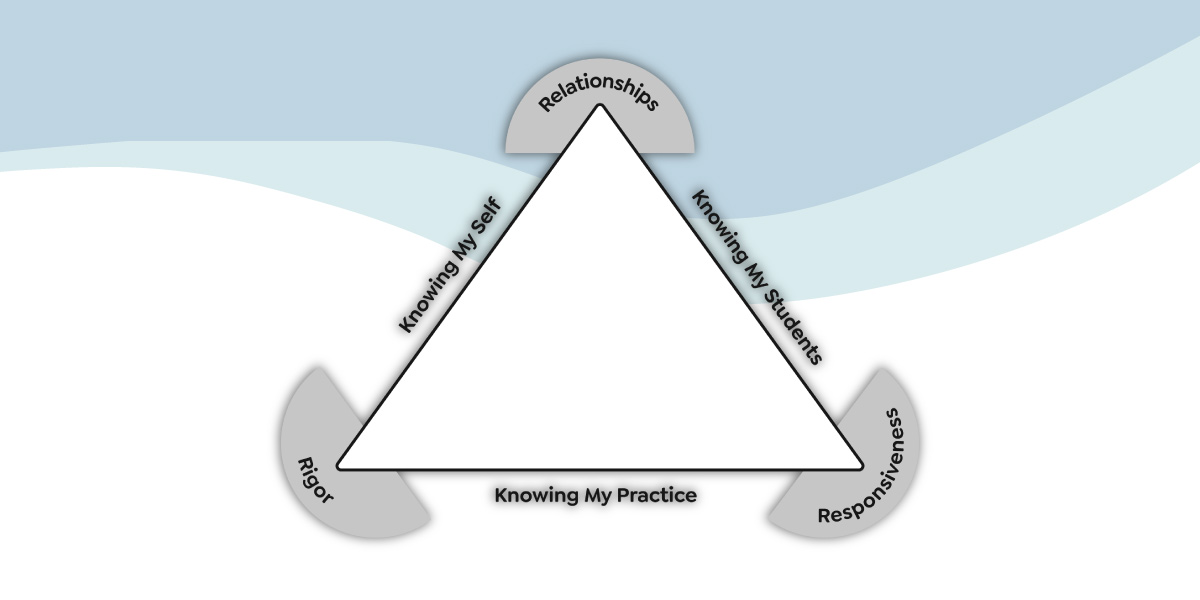
The Achievement Triangle: Know Self → Know Students → Know Practice
When improvement stalls, it’s usually a clarity problem, not a capacity problem. The Achievement Triangle restores clarity in a human order. First, we deepen knowledge of self—the values and stories that shape how we show up. Next, we deepen knowledge of students—their strengths, aspirations, and lived experiences. Only then do we refine knowledge of practice—the tasks, routines, and feedback that make learning visible. Grounded in cultural competence, the Triangle guides micro-steps for individual, team, and system growth—and keeps relationships at the center.
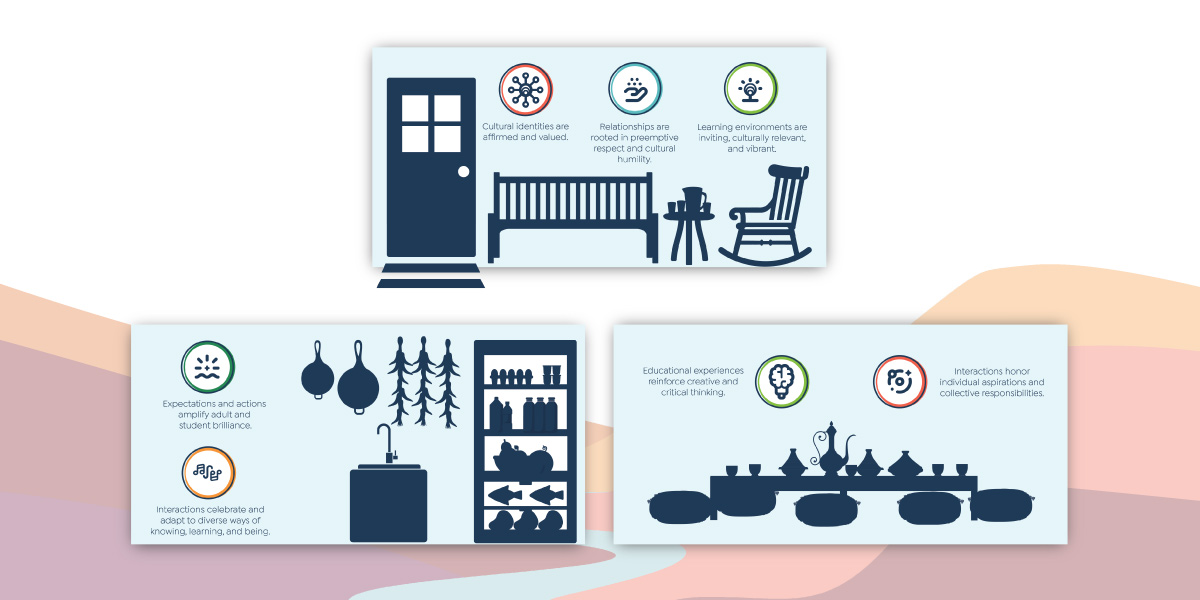
The House of Learning: Front Porch, Kitchen, and Table
Spend a day in a YES school and you’ll notice three dependable “rooms” where culture becomes teachable. The Front Porch is the invitation—welcomes, community agreements, and hallways that dignify who students are. The Kitchen is the engine room—mixed youth–adult teams analyze evidence, define puzzles of practice, and prototype solutions together. The Table is where learning becomes public—where the community gathers to consider what we learn, how we learn, and what it means to be educated in a democracy.
The Seven Stewardship Commitments
Culture changes because of small promises kept every day. YES names those promises so teams have a shared language for decisions and behavior across classrooms and meetings:
- Our cultural identities are affirmed and valued
- Our relationships are rooted in earned respect and cultural humility
- Our learning environments are inviting, culturally relevant, and vibrant
- Our expectations and actions amplify adult and student brilliance
- Our interactions celebrate and adapt to diverse ways of knowing, learning, and being
- Our educational experiences reinforce creative and critical thinking
- Our interactions honor individual aspirations and collective responsibilities
These commitments touch every “room” in the House of Learning—Porch (1–3), Kitchen (4–5), and Table (6–7)—and are adapted from foundational work on culturally responsive classrooms. (American Psychological Association)
Outcomes You Can Feel—and Measure
Before the numbers move, the temperature shifts: conversations deepen, trust rises, and students feel safer to take intellectual risks. Over time, those lived changes show up in data. In districts that have sustained YES, we see a common progression:
Level 1 – Trust & Safety: More honest, brave dialogue; clearer leadership focus on equity; families invited into the journey.
Level 2 – Belonging & Engagement: Climate improves; belonging and positive relationships rise; bullying/harassment declines.
Level 3 – Embedded Practice: Stewardship practices and the Seven Commitments are visible systemwide; diverse curriculum and shared decision-making expand.
Level 4 – Equity in Opportunity & Results: Disparities decrease; discipline and special education referrals are equitable; access and attainment increase.
 Quick Wins in the Next 30 Days
You don’t need a reorg to start—you need visible moves that build trust and momentum. In the next 30 days, pick one priority outcome, co-design two fast pilots with the people closest to the work, and publish a simple owner-and-date scorecard so everyone can see progress. Close the loop weekly—celebrate wins, remove blockers, and name the next small step—so progress becomes your culture.
- 1) Community Agreements in Every Room (Front Porch)
Co-create five statements about how we learn together, and keep them alive through rituals and accountability. - 2) Two Empathy Circles with Students (Kitchen)
Run 45-minute listening circles to gather experiential evidence and strengthen trust. Share themes back within 72 hours. - 3) One Public Share of Learning (Table)
Invite students to make learning visible—through poetry, performance, a gallery walk, or a data story—so the community can see progress and commit to next steps.
These moves prove change is possible now and prepare teams for deeper cycles of collaborative inquiry.
What Leaders Notice First
The earliest indicators aren’t flashy; they’re foundational. Staff language shifts from deficit to possibility; meetings preserve time for empathy and artifact study; advisory stops being the first thing cut. Students start co-authoring routines and rubrics; families help define “what good looks like.” These are the leading signals of durable gains—and they align with Level 1 outcomes observed across diverse sites.
Frequently Asked (Smart) Questions
→ Is this SEL or academics? Both. In YES, culture is the delivery system for deep learning; belonging expands access to rigorous tasks and feedback.
→ Will this add to initiative fatigue? No. YES provides a throughline—Achievement Triangle + Seven Commitments—so professional learning and youth engagement move in the same rhythm.
→ How fast will we see results? Relational wins often appear within weeks; practice
shifts within a quarter; opportunity and outcome shifts with sustained cycles.
Ready to Build “A School That Works for All of Us”?
With a clear process and a few well-chosen moves, your school can become a place where every learner belongs and excels. Start small, learn fast, and scale what works—with students as co-designers at every turn.
Explore the YES pathway, see student endorsements, and grab resources to map a 60–90 day pilot.
References
- Howard, B., McDonald, P., & Howard, G. R. (2025). Creating schools that work for all of us: A guide to empowered stewardship. Mimi & Todd Press.
- Shade, B. J., Kelly, C. A., & Oberg, M. (1997). Creating culturally responsive classrooms. American Psychological Association. (American Psychological Association, SCIRP)
- The Core Collaborative. (2025). Youth Empowered Stewardship (YES) [Landing page]. Retrieved August 21, 2025, from go.thecorecollaborative.com/youth-empowered-stewardship-info. (go.thecorecollaborative.com)
- Safir, S., & Dugan, J. (2021). Street data: A next-generation model for equity, pedagogy, and school transformation. Corwin.
- Gay, G. (2018). Culturally responsive teaching: Theory, research, and practice (3rd ed.). Teachers College Press.