The Whole Picture: Why Goal Setting Matters
At its core, learning is about more than acquiring knowledge—it’s about developing the capacity to learn how to learn. Goal setting is a critical part of this process. When learners set goals, they practice metacognition, the ability to think about their own thinking. Through goal setting, they learn to:
- Plan: Identify what they want to learn and how they will approach it.
- Monitor: Track progress and adjust strategies when needed.
- Evaluate: Reflect on outcomes and determine next steps.
This metacognitive cycle, Plan → Monitor → Evaluate, is the foundation of lifelong learning. It fosters self-efficacy (the belief “I can do this”), resilience, and motivation. Students who know how to set, track, and reflect on goals are better equipped not only for academic achievement but for navigating challenges in life and contributing meaningfully to society.
The Framework: Skill–Will–Thrill
While traditional goal setting often emphasizes performance outcomes (“get a better grade,” “finish the assignment”), the Skill–Will–Thrill Framework developed by John Hattie and Helen Timperley helps us expand the scope of what goals can achieve. It asks learners to consider three essential dimensions:
🧠 Skill: What knowledge, strategies, or competencies must I acquire or refine?
💪 Will: What dispositions, habits, or attitudes will help me persist and engage?
✨ Thrill: What sense of purpose, curiosity, or intrinsic motivation can energize my learning?
Balanced together, these three elements create powerful, holistic goals. Skill alone can lead to compliance. Will, without skill, can cause frustration. Thrill without grounding can be fleeting. But when Skill, Will, and Thrill intersect, learners experience clarity, purpose, and joy in learning.
The Tool: Skill–Will–Thrill Goal Setting Template
| 🧠 Skill (What I am learning) | 💪 Will (How I will approach it) | ✨ Thrill (Why it matters to me) |
|---|---|---|
| What new knowledge, process, or competency am I building? | What strategies, dispositions, or habits will help me? | What excites me or connects to my life, passions, or identity? |
Pro Tip: Print this as a one-pager for students, or make it digital so they can revisit and revise their Skill–Will–Thrill goals throughout the year.
You might be wondering what this looks like in practice. Here are examples across ages and content areas to show how the tool can be used.
Examples Across Ages and Content
Early Elementary (Reading)
🧠 Skill: “I can retell a story using beginning, middle, and end.”
💪 Will: “I will focus during read-aloud and ask my partner for help remembering.”
✨ Thrill: “I want to share the story with my family at bedtime.”
Middle School (Science)
🧠 Skill: “I can design an experiment that tests the effect of light on plant growth.”
💪 Will: “I will collaborate with my partner and write daily reflections.”
✨ Thrill: “I’m curious about how this connects to my grandmother’s garden.”
High School (History)
🧠 Skill: “I can analyze primary and secondary sources for bias.”
💪 Will: “I will push myself to ask deeper questions in group discussions.”
✨ Thrill: “I want to connect this to debates about democracy and justice.”
Adult Learners (PLC Teams)
🧠 Skill: “We can analyze evidence of student learning to determine misconceptions.”
💪 Will: “We will use protocols to ensure every voice is heard.”
✨ Thrill: “We know our students deserve clarity and access to rigorous learning.”
The Process: The Metacognitive Cycle
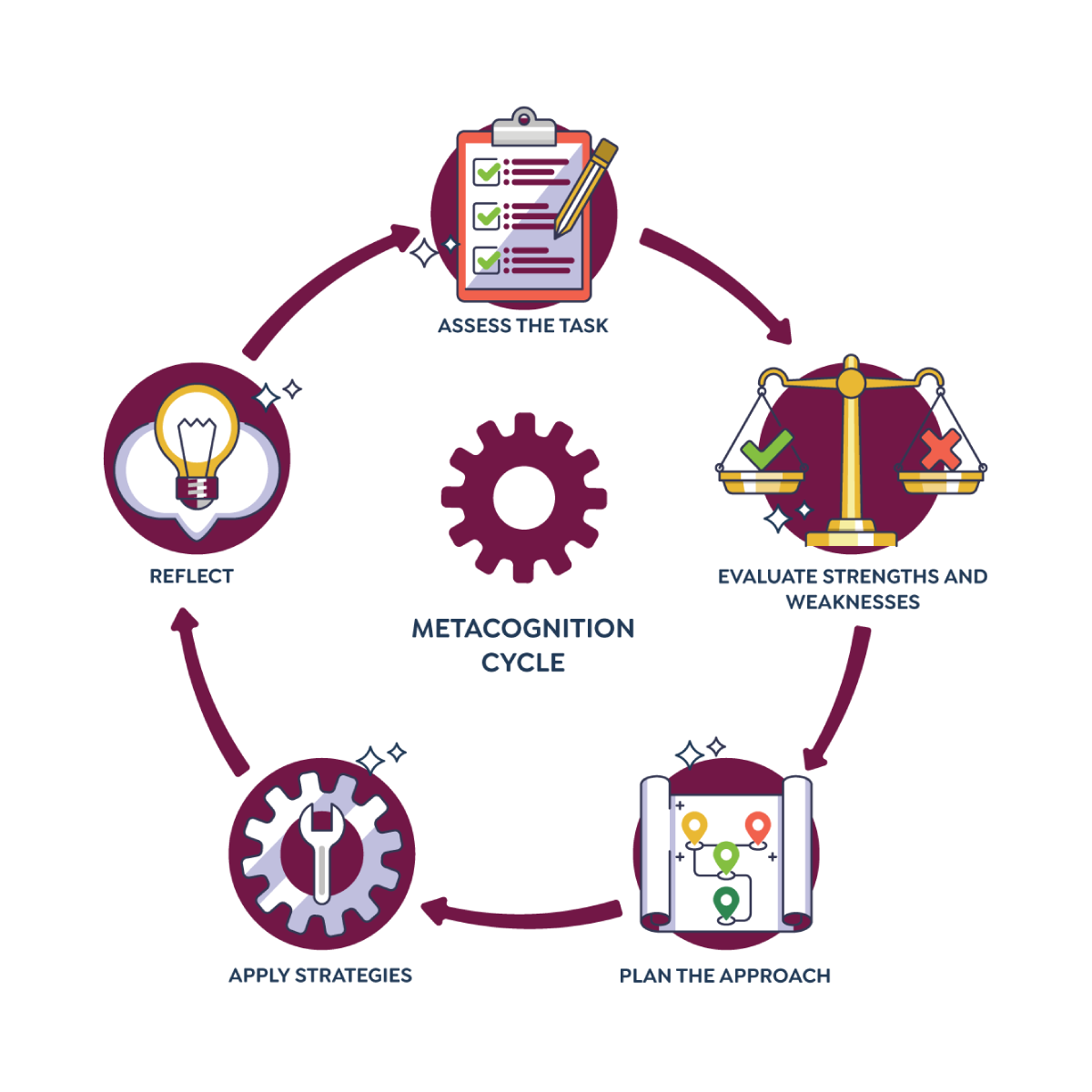 To truly harness the power of goal setting, learners must see it as part of the broader metacognitive cycle: Plan → Monitor → Evaluate. This cycle helps learners not just set goals, but also reflect, adapt, and carry learning forward.
1. Plan (Before Learning)
🧠 Skill: What am I trying to learn?
💪 Will: What strategies or dispositions will help me succeed?
✨ Thrill: Why is this meaningful or exciting to me?
2. Monitor (During Learning)
🧠 Skill: Am I making progress toward my goal?
💪 Will: How am I showing persistence, focus, or openness to feedback?
✨ Thrill: Am I staying motivated? How can I reignite curiosity if needed?
3. Evaluate (After Learning)
🧠 Skill: Did I achieve the knowledge or competency I set?
💪 Will: How did my dispositions support or hinder me?
✨ Thrill: What excites me about this learning? How does this connect to my future goals?
The Bigger Idea: Why This Works
The Skill–Will–Thrill Framework works so well for goal setting because it aligns perfectly with the metacognitive cycle. Learners move from the whole (understanding themselves as thinkers and doers) to the part (specific knowledge, strategies, and motivations that shape a goal). In doing so, they:
- Develop knowledge (Skill)
- Strengthen dispositions (Will)
- Sustain motivation (Thrill)
When learners can name what they are learning, how they are learning, and why it matters, they grow into self-directed learners ready for life, work, and participation in democracy. This is metacognitive clarity in action.
Take the Next Step
Invite your students or team to co-construct a Skill–Will–Thrill goal this week. Use the template, guide them through the metacognitive cycle, and watch as clarity, agency, and joy in learning expand.