

Personalized learning is often misunderstood as individualized pacing plans, playlists, or entirely separate tasks for every learner. In practice, that approach is rarely sustainable and often places the burden on teachers rather than empowering students.
In Metacognitive Clarity: Think Rigorously. Advance Democracy. by Dr. Paul J. Bloomberg, Isaac Wells, and St. Claire Adriaan, personalized learning is responsive to students’ thinking, feedback, and needs. As teachers, this means we intentionally study our learners-how they think, what they need, and what motivates them—so we can design opportunities, tools, and resources that support both content mastery and the development of learning-to-learn strategies.
When students learn to recognize what works for them, adjust their approaches, and reflect on their progress, they are engaging in responsive learning themselves. Two students may focus on the same goal, text, or problem, yet their experiences differ because each responds to the learning process in ways that align with their individual thinking, strategies, and insights.
This approach to personalization is:
- Learner-driven, as students actively notice, interpret, and respond to their own learning needs rather than relying on the teacher to manage every move.
- Grounded in clarity of purpose, so choice is anchored in meaningful goals rather than offered for its own sake.
- Focused on growth and transfer, emphasizing how learners apply strategies and insights in new contexts rather than simply completing tasks.
Personalized learning, then, is not about creating more paths. It is about helping students navigate the path they are on with intention and awareness, continually responding to what they are learning about themselves as learners.
Personalization Through Metacognition
Metacognition is what makes personalization possible at scale. Without it, personalization depends on constant teacher intervention; with it, students learn to regulate their own learning.
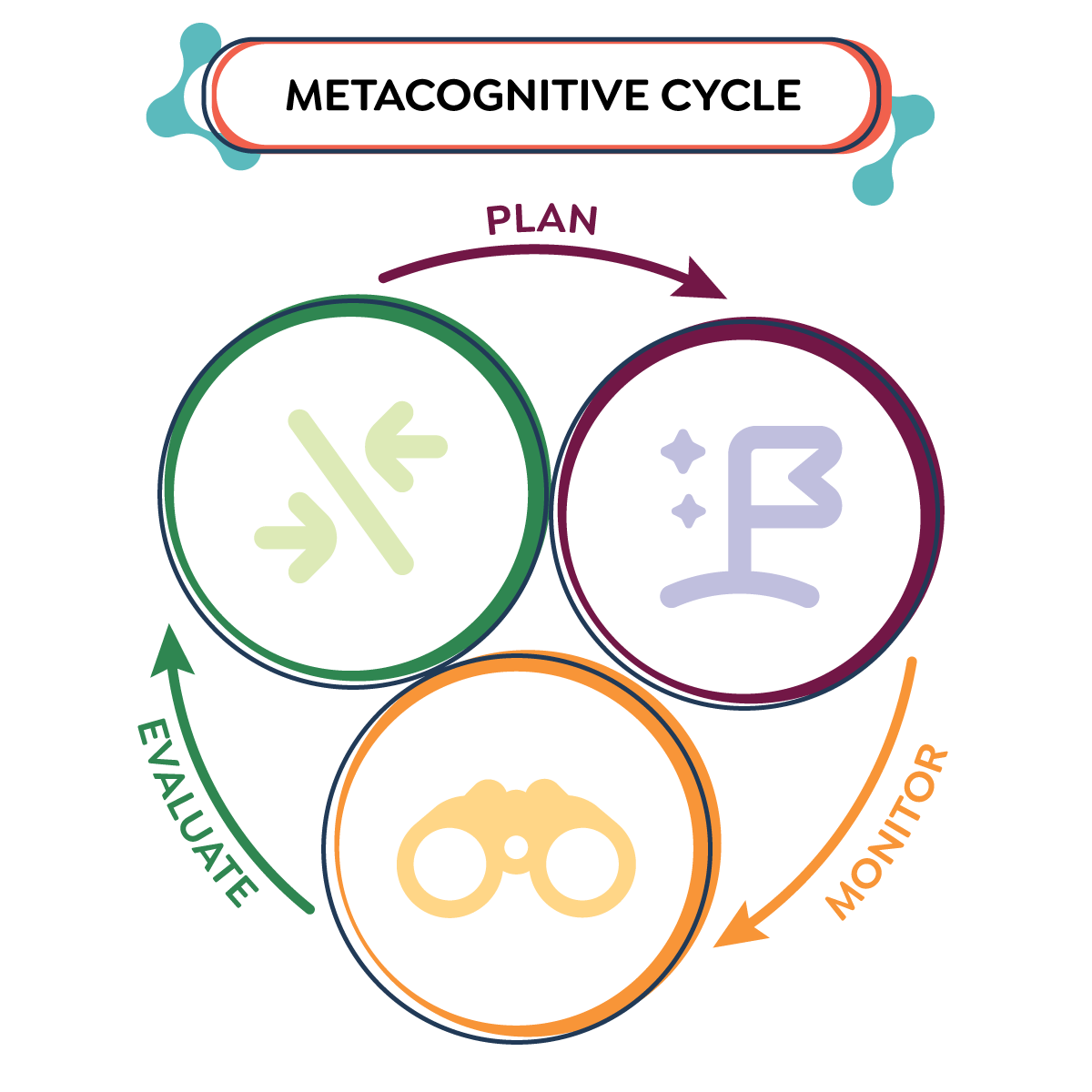 The metacognitive cycle of plan, monitor, and evaluate allows learners to:
- set goals that matter to them and align to shared expectations.
- recognize when learning is breaking down and why.
- adjust strategies, effort, or resources independently.
- use feedback as information rather than judgment.
Over time, these habits reduce dependence and increase confidence. Students become more capable of advocating for what they need, persisting through challenge, and transferring learning across contexts.
Metacognitive clarity invites all learners into the work of decision-making and sense-making. Multilingual learners, students with disabilities, and other students who have historically been positioned as passive recipients of instruction benefit in particular, as metacognitive tools make the processes of expert learning visible, shareable, and coachable.
Ready to get started?
Explore these metacognitive tools to support learner choice, agency, and personalized learning—and be sure to grab a copy of the book as soon as it’s released:
Student Planning Prompt Cards (Grades K–12)
These prompts help learners clarify their goals, choose effective strategies, anticipate potential challenges, and determine how they will approach a task before they begin. Personalization starts here, as students make proactive, informed choices aligned with their needs instead of following a single prescribed path.
Monitoring Check-In Cards (Grades 3–12)
These check-ins help learners pause during learning to assess progress, notice when strategies are not working, and adjust their approach in real time. Personalization becomes responsive as students learn how to adapt without waiting for teacher correction.