
 Are your teachers investing hours in professional development that never quite shows up in student work, discourse, or assessment results? The problem usually isn’t effort, commitment, or even the quality of the PD content. The problem is the missing bridge between learning about a practice and reliably using it with real students, real pacing guides, and real constraints.
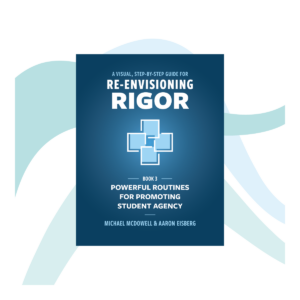
That bridge can be built, deliberately, simply, and consistently, through one powerful framework: Need It – See It – Start It – Show It, adapted from Michael McDowell and Aaron Eisberg’s Re-Envisioning Rigor work. It’s a deceptively simple structure that quietly transforms PD from “learning events” into classroom change.
Why PD so rarely makes it into classrooms
Most systems are not short on PD. They are short on transfer.
You may recognize some of these patterns:
- Teachers walk away with new language and slides, but not with a concrete plan for “Tuesday, 9:10 a.m., with Period 3.”
- Professional learning focuses on content (strategies, research, frameworks) but not on practice (when, where, and how it actually happens with their students).
- Follow-up consists of “check-ins” and emails rather than structured opportunities to share real student work, look at impact, and refine.
In other words, PD frequently lives in the realm of awareness and understanding. Classroom practice lives in the realm of action, evidence, and iteration. Without a clear routine that moves adults from one realm to the other, the system defaults to status quo.
Need It – See It – Start It – Show It is built for that gap.
Need It: Make the problem impossible to ignore
Change does not begin with strategies; it begins with discomfort.
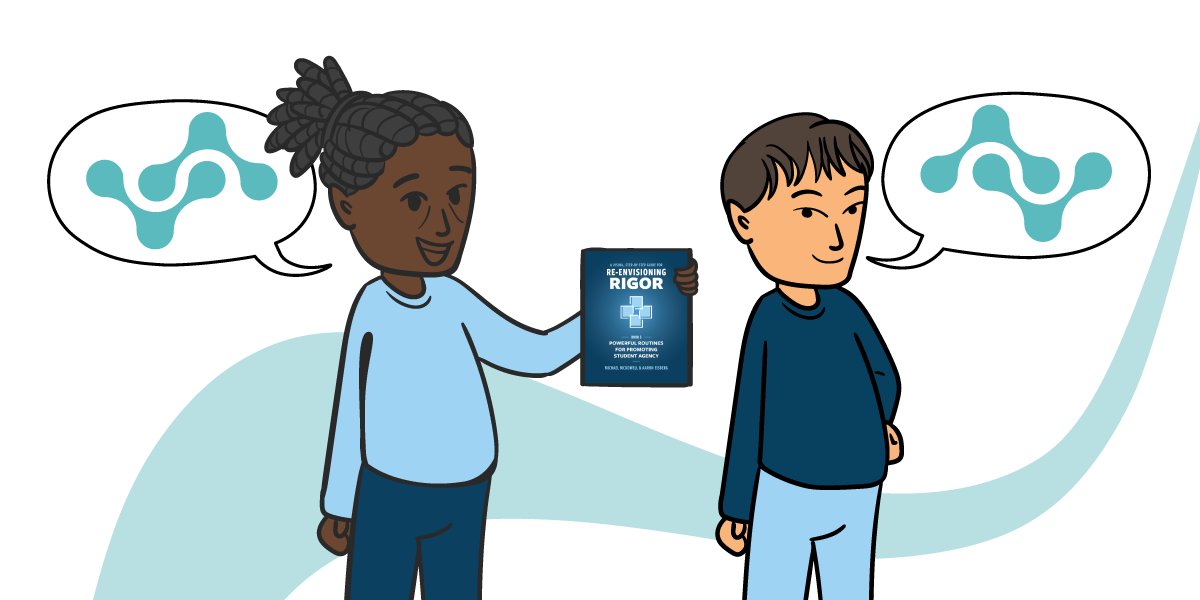
“Need It” asks a simple but powerful question: What problem are we actually trying to solve, and can teachers feel it in their own data?
Instead of launching a session with norms and objectives, you start with a shared look at:
- Student work that shows shallow thinking where deeper analysis is needed.
- Assessment items where students consistently miss the reasoning, not just the recall.
- Classroom tasks that unintentionally cap the level of rigor or agency.
When teachers surface these issues themselves (i.e. “Our students can summarize, but they are not yet interpreting, connecting, or justifying”), the strategy that follows is no longer one more thing. It becomes a response to a problem they own.
The result is a shift from compliance (“I have to be here”) to necessity (“We can’t keep getting these results”).
See It: Give a clear picture of what success looks like
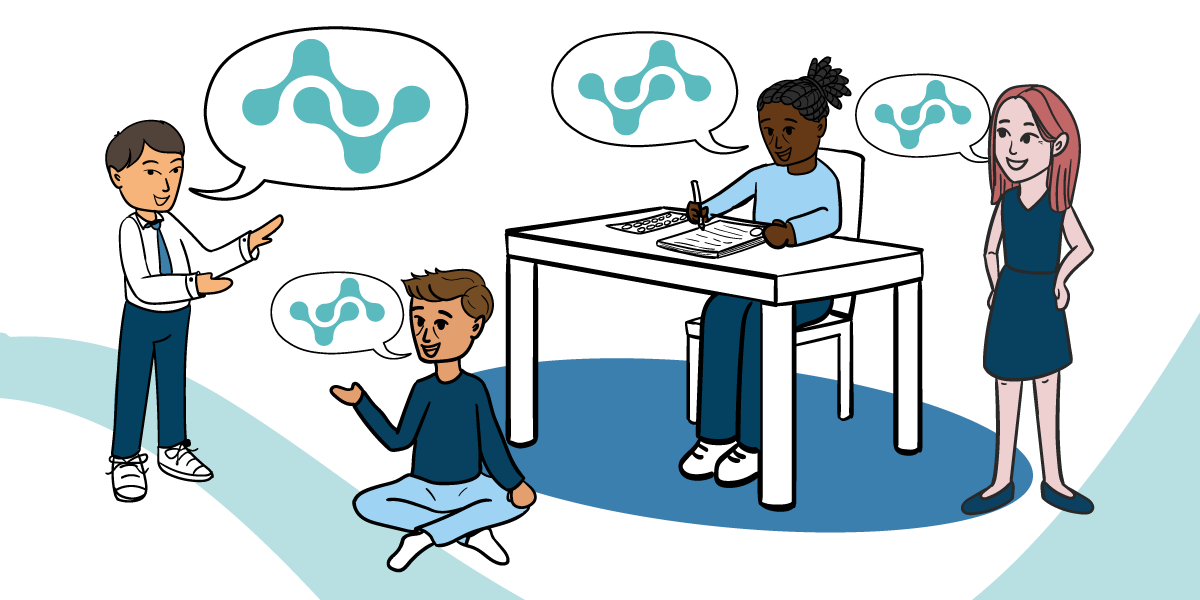
Once the need is undeniable, the next barrier is abstraction. Teachers have heard “increase rigor,” “promote student discourse,” and “build agency” many times. What they almost never get enough of is a vivid, concrete picture of what that looks like in a real classroom.
“See It” responds to this by making the target observable:
- A live modeled routine, where teachers experience the strategy as learners.
- Annotated snapshots of teacher moves, student prompts, and expected responses.
- Visual, step-by-step guides that show how the routine unfolds minute by minute.
Instead of hearing about a “higher-order discussion protocol,” teachers act like students wrestling with evidence, rebut one another, and revise claims.
This is where Re-Envisioning Rigor’s visual, stepwise approach shines. When educators can literally see the phases of a routine, the cognitive load drops. They are no longer trying to hold a complex description in their heads; they’re following a map.
Clarity accelerates confidence. Confidence accelerates action.
Start It: Move from idea to scheduled reality
Even with a clear picture, implementation often stalls at the threshold between “I get it” and “I’m doing it.” The school week fills up. The comfort of familiar routines pulls everyone back. Good intentions remain intentions.
“Start It” prevents that stall by turning intention into a scheduled, protected first attempt.
Instead of ending PD with “Who’s willing to try this?”, you build in time for every participant to:
- Choose a specific class, day, and lesson where the routine will be used.
- Identify the text, task, or problem they’ll anchor it to.
- Anticipate what students might say or do and how they’ll respond.
Build in brief peer planning time where teachers co-design their first attempt and identify the date of implementation. The key is that everyone leaves with an actionable micro-plan, not an abstract aspiration.
This doesn’t require a massive initiative or complicated coaching model. It’s a small structural shift in how PD ends. But the difference in classroom implementation is significant.
Show It: Let evidence drive the next step
The final and often missing step is accountability. Not accountability in the punitive sense, but in the sense of “accounting for what happened” when the new practice met real students.
“Show It” makes this tangible. In the following PLC, staff meeting, or coaching cycle, teachers bring back artifacts from their Start It attempt:
- Short clips of student talk or participation.
- Samples of student work before and after the routine.
- Quick reflections or exit tickets capturing students’ metacognition.
With a simple protocol, they answer three questions:
- What did I notice about student thinking?
- Where did the routine seem to work as intended?
- What might I tweak next time?
As colleagues listen and respond, the conversation shifts from theory to evidence. The new routine stops being “the district’s initiative” and starts becoming “our shared craft.”
Over time, this step normalizes a culture where teachers expect to return to the group not just with stories, but with concrete proof of what students can now do that they couldn’t do before.
A parallel structure for student learning
One of the most elegant features of Need It – See It – Start It – Show It is that it doesn’t just apply to adults. The same pattern can guide students as they encounter new routines and levels of rigor.
Imagine students experiencing:
- Need It: A perplexing problem or gap that makes the new routine feel necessary (“Our explanations keep getting marked as vague, but why?”).
- See It: A modeled example of how to annotate, discuss, or reason at a higher level.
- Start It: A low-stakes first try with built-in scaffolds.
- Show It: A chance to present their work, reflect on their growth, and see evidence of their own progress.
When teachers internalize this cycle through PD, it naturally migrates into their classroom design. The system becomes coherent: the way we learn as professionals mirrors the way students learn with us.
Quietly redesigning your PD ecosystem
Adopting Need It – See It – Start It – Show It doesn’t require a new platform, a yearlong initiative, or a complete rewrite of your strategic plan. It is a practical reframe of how you structure the learning you are already offering.
You can begin with moves as small as:
- Renaming sections of existing PD agendas around the four stages.
- Embedding five minutes of “Start It” planning at the end of every session.
- Establishing a brief, predictable “Show It” routine at the start of PLCs.
Over time, those small changes accumulate into a culture where professional learning is no longer measured by seat time or satisfaction, but by patterns of student work, student talk, and student thinking.
If you’re looking to reduce the gap between what your teachers know and what their students can do, this framework gives you a simple, repeatable way to close it without fanfare, without overload, and without adding yet another initiative to the list.