

Unpacking in math is not a paperwork task; it is the core intellectual work of a professional learning community. When a math PLC commits to unpacking together, they are choosing to understand the standards in their units so clearly that they can anticipate how students will think, where they will stumble, and how to make every lesson feel purposeful and relevant.
Why “Unpacking” Is the Heartbeat of a Math PLC
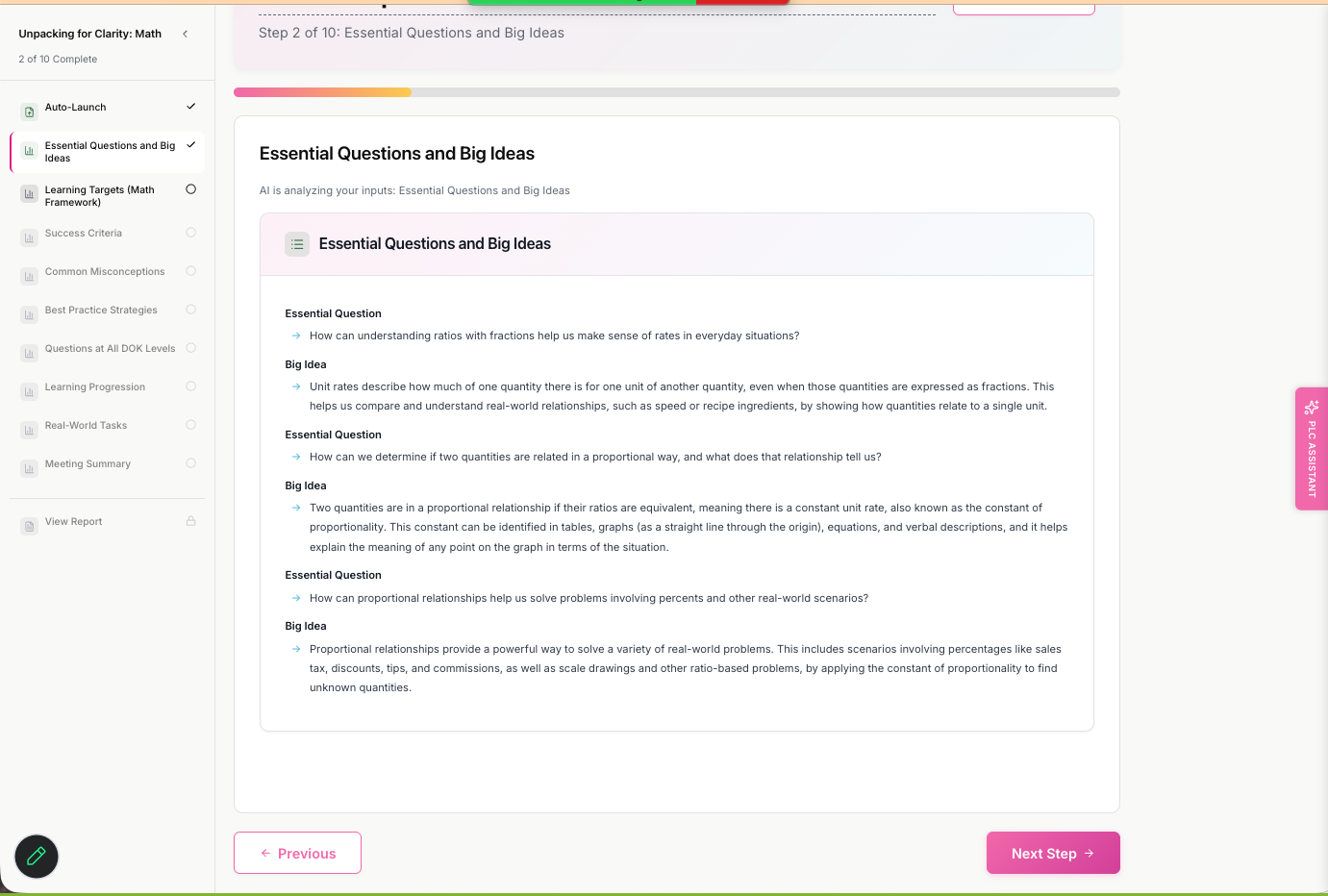
At its best, a math PLC is not just following a pacing guide—it is making sense of the math embedded in the standards. Teams start by carefully reading the standards for a unit and asking, “What is the real mathematical idea here? What does mastery look and sound like for our students?” From there, they align each cluster of standards to an essential question that gives the unit a throughline, such as “How can understanding ratios with fractions help us make sense of rates in everyday situations?” or “How can proportional relationships help us solve problems involving percents and other real‑world scenarios?”
This work moves standards from abstract codes on a document into living questions that students can actually grapple with. When a PLC agrees on big ideas like unit rates, proportionality, and percent reasoning—and how those ideas show up in tables, graphs, equations, and contexts—they create coherence for students across classrooms. Unpacking becomes the bridge between what the standards say and what students experience.
Surfacing Misconceptions Before They Show Up in Student Work
A powerful part of unpacking is naming the misconceptions before they derail learning. In ratios and proportional relationships, for example, students often assume any straight line on a graph is proportional, forgetting that a proportional graph must pass through the origin and maintain a constant ratio. Others might calculate a percent (like a discount or tax) but forget the final step of adding or subtracting that amount, revealing only partial understanding of the context.
When a PLC takes time to surface these predictable misunderstandings, they can design tasks, questions, and models that confront them head‑on. They can plan to emphasize the meaning of a point on a graph, or structure practice so students repeatedly explain why a relationship is or is not proportional. Instead of reacting to confusion after an assessment, teams are proactively teaching into the edges of students’ thinking.
From Standards to Targets and Success Criteria
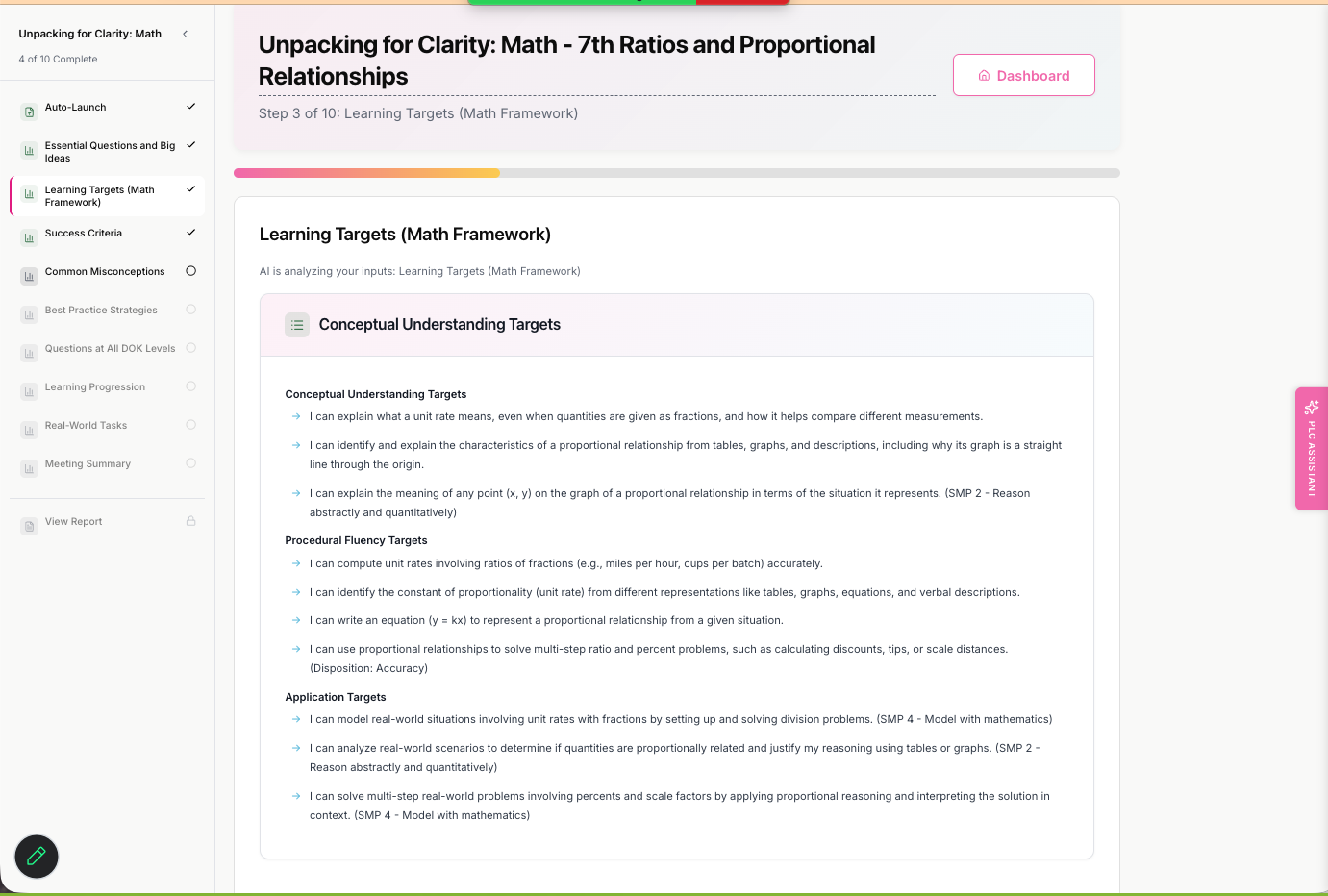
Unpacking is also the process of turning broad standards into clear learning targets and success criteria that students can use. In a 7th‑grade proportional relationships unit, for example, a PLC might name conceptual, procedural, and application targets such as:
- Conceptual: “I can explain what a unit rate means, even when quantities are fractions, and how it helps compare different measurements.”
- Procedural: “I can compute unit rates involving ratios of fractions accurately and write an equation to represent a proportional relationship.”
- Application: “I can solve multi‑step real‑world problems involving percents and scale factors and explain what my answer means in context.”
Each target then gets concrete success criteria students can see in their own work—like correctly labeling unit rates with appropriate units, identifying the constant of proportionality from multiple representations, or using tables and graphs to justify whether a relationship is truly proportional. When every teacher in the PLC is using the same targets and success criteria, students experience a consistent message about what counts as quality work.
Agreeing on Relevance and Real-World Application
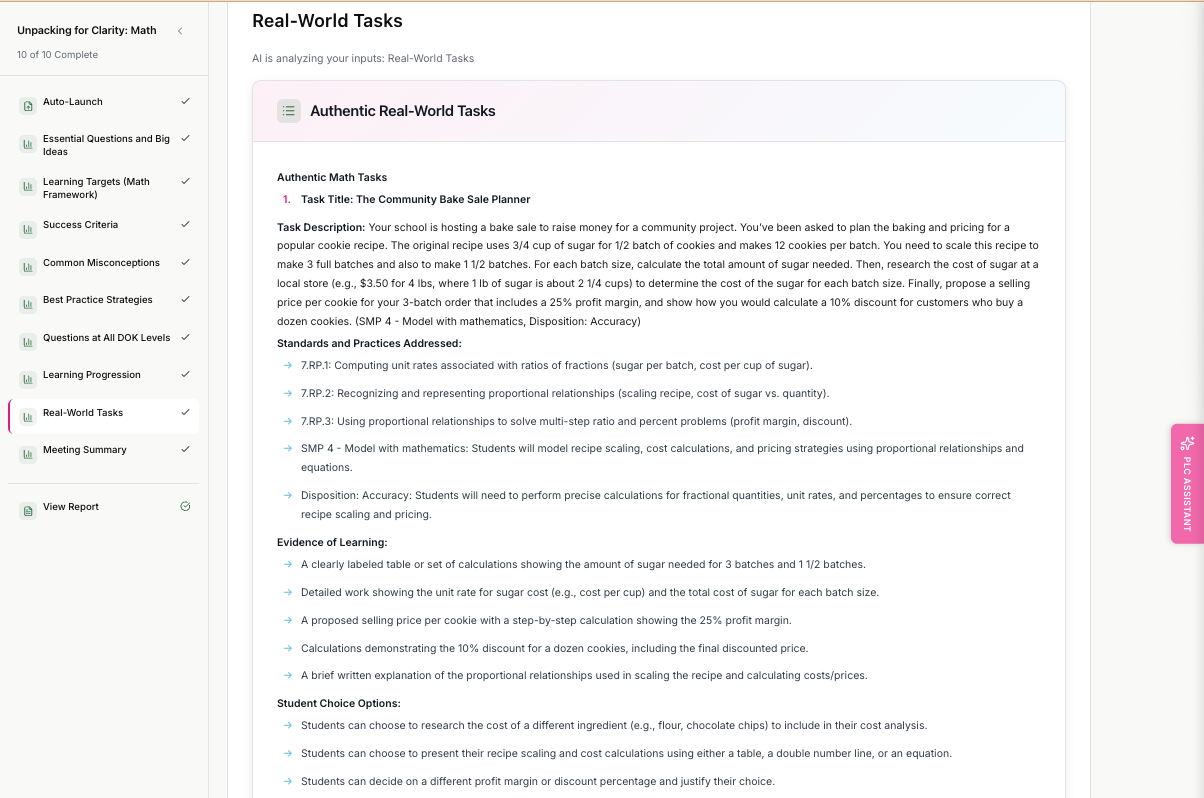
Unpacking also means agreeing on why this math matters. Essential questions like “How can proportional relationships help us solve problems involving percents and other real‑world scenarios?” push teams to anchor units in experiences students actually recognize—discounts, tips, recipes, speed, scale drawings, and more. A strong PLC doesn’t stop at “students can solve proportion problems”; it insists on “students can model real‑world situations, justify their reasoning, and interpret their solutions in context.”
When teams are on the same page about relevance, they select tasks that connect proportionality to students’ lives, not just to textbook items. They design learning progressions that move from simple unit rates to complex applications and even invite students to create their own real‑world proportional problems as a capstone. This is where math starts to feel like a powerful lens on the world, not just a school subject.
How the AI-PLC Agent Becomes the Vehicle for Unpacking
The challenge, of course, is time. Traditional PLCs often want to unpack at this level but get bogged down in sorting documents, rewriting targets, and debating language. This is where the AI‑PLC Agent app changes the game. The app is a secure, human‑centered platform built specifically for PLCs that automates the heavy lifting of unpacking so teams can focus on the thinking, not the typing.
Using protocols like Unpacking for Clarity: Math, the AI‑PLC Agent can rapidly generate essential questions, big ideas, conceptual/procedural/application targets, success criteria, common misconceptions, and even a learning progression for a given standard or unit—like the detailed map it produced for 7th‑grade ratios and proportional relationships. Check out how the AI PLC Agent works by clicking on each of the computer images below. Instead of spending whole meetings drafting language from scratch, PLCs can start from a high‑quality, research‑aligned draft and refine it based on their students and context.
WITH THE AI-PLC AGENT, DEEP UNPACKING BECOMES DOABLE
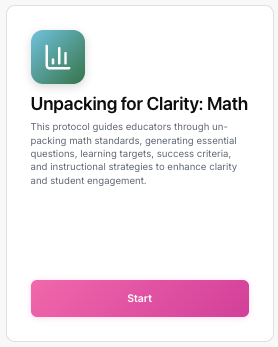
Run the Unpacking for Clarity: Math Protocol
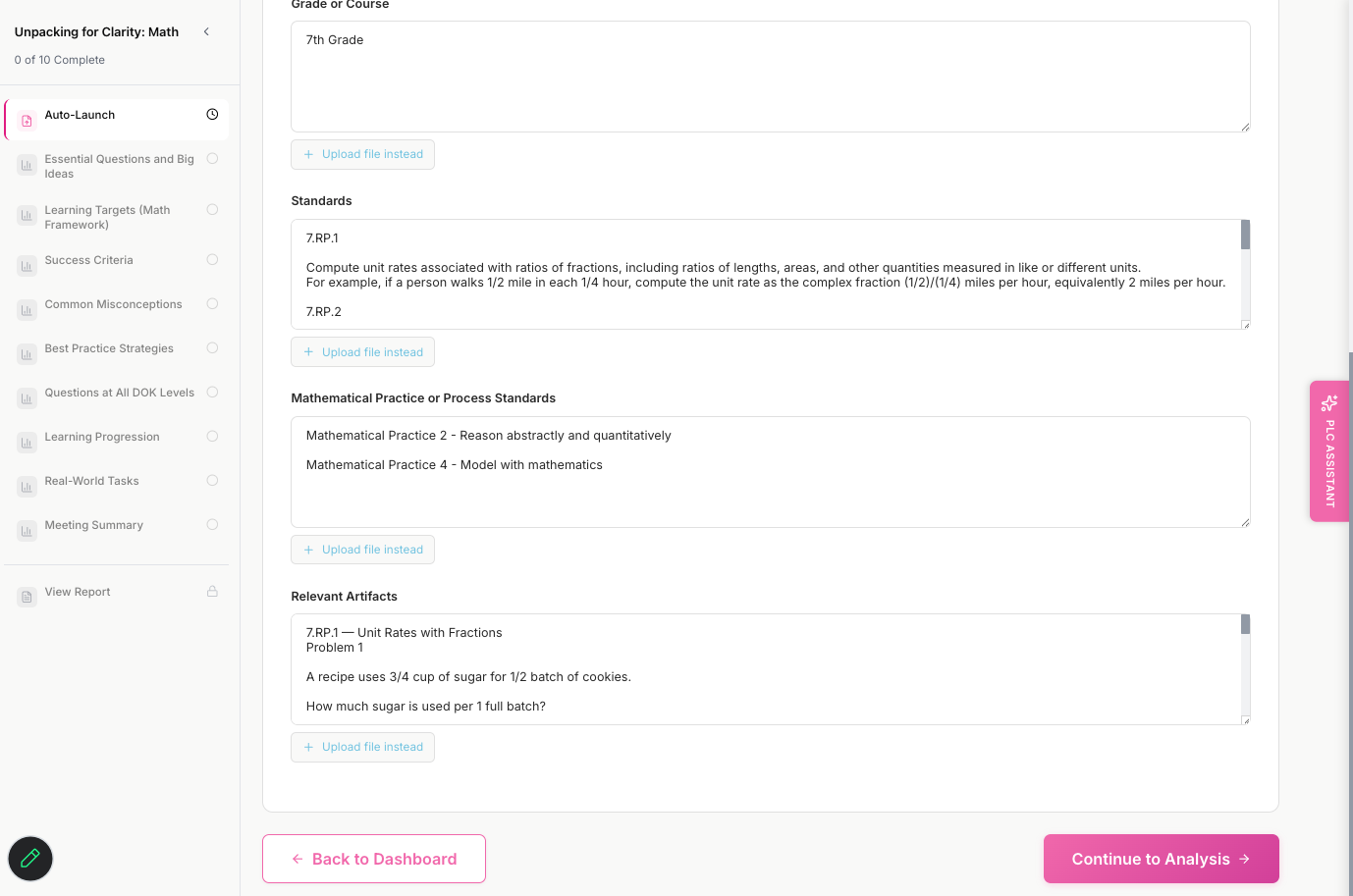
Follow the prompts and enter your state standards, math practices, and relevant artifacts
Receive Essential Questions and Big Ideas
Review the Output, follow the prompts, and receive Conceptual, Procedural, and Application Learning Targets
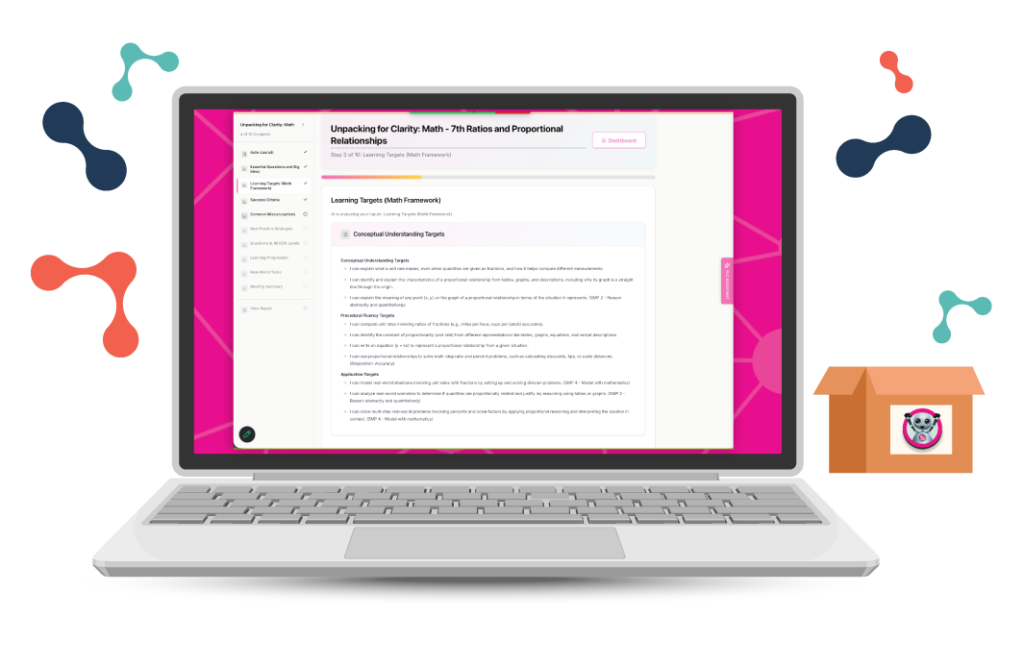
Review the Output, follow the prompts, and receive the following:
- Success Criteria
- Common Misconceptions
- Best Practice Strategies
- Questions at all DOK Levels
- Learning Progression
Review the outputs, follow the prompts and receive Real World Tasks:
Because the AI‑PLC Agent also creates mastery maps, analyzes patterns across classrooms, and surfaces equity checks, teams get a shared, trustworthy picture of what students know and need next—without hours of manual data wrangling. PLC conversations shift from “What does this standard even mean?” to “Now that we agree on the targets and common misconceptions, what high‑leverage strategies will we use, and how will we know if they worked?”
In this way, the AI‑PLC Agent becomes the tool that makes deep unpacking doable at scale: AI does the organizing and pattern‑finding, while educators do the sense‑making, deciding, and teaching together.
Check out the AI‑PLC Agent in action by attending one of the upcoming PLC Lab Sessions to experience the app in action!
- April 15 | PLC LAB: Motivating PLCs to Analyze Formative Data
- April 23 | PLC LAB: MTSS Strengthening Tier I
- May 13 | PLC LAB: Maximizing Time
- May 20 | PLC LAB: Focusing your PLC