
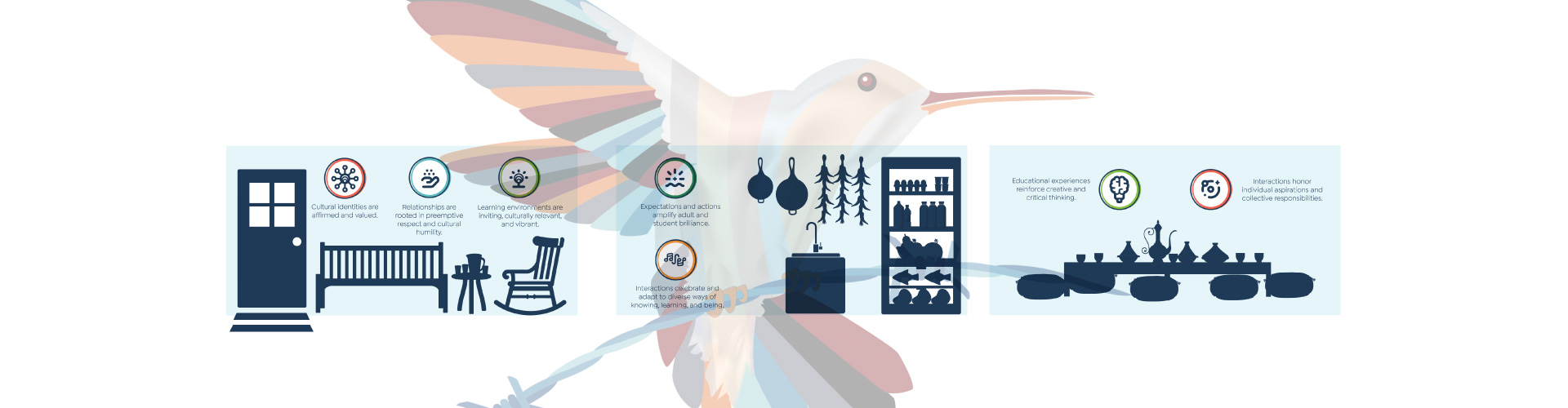
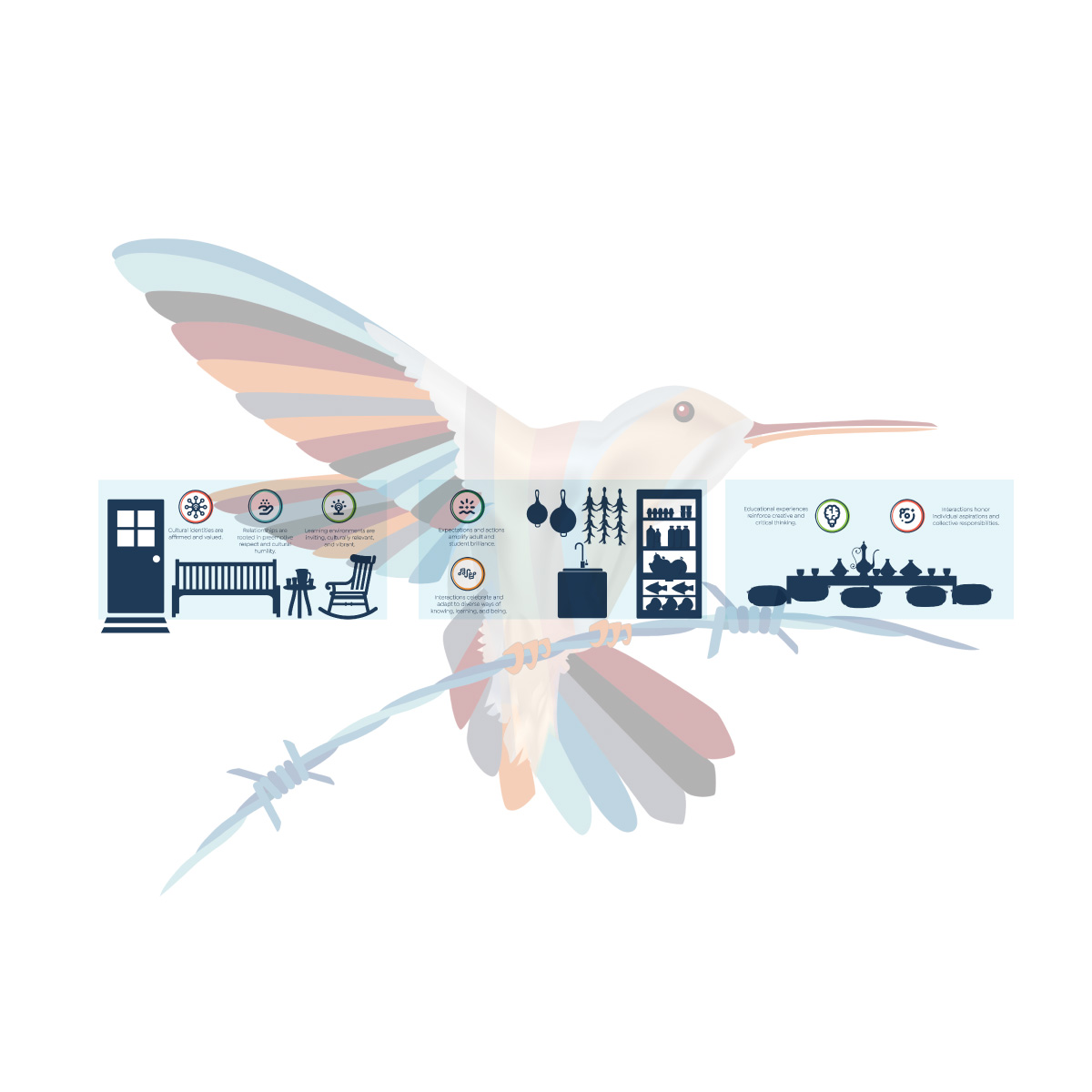
The House of Learning is a simple way to understand the YES Seven Commitments: the Front Porch shows whether students and families feel welcomed, the Kitchen shows whether their brilliance shapes rigorous teaching and learning, and the Table shows whether learning is connected to purpose, community, and stewardship.
Imagine a school as a living house—not just a building with classrooms, but a home where every hallway, every lesson, and every conversation either invites someone in or quietly shuts the door. On the Front Porch, students and families decide in the first five minutes of the day, “Do you really see me?” In the Kitchen, we are “cooking with” their brilliance, turning their diverse identities, perspectives, and lived experiences into the ingredients of rigorous learning. At the Table, we sit eye‑to‑eye with young people, asking together: “What are we learning for, and what kind of world are we building?”
The YES Seven Commitments of Culturally Responsive Practice are the blueprint of this House of Learning. They name what it looks like when identities are affirmed, relationships are rooted in humility, environments are vibrant, brilliance is amplified, diverse ways of knowing are honored, and students are invited into real creative and critical thinking in service of both their own aspirations and the well‑being of their communities. When adults and youth use these commitments as daily practice—not posters—they become the throughline that shifts outcomes: closing gaps, increasing belonging, and transforming “school as usual” into school as stewardship.
This is the heart of Youth Empowered Stewardship. YES is not a program we do to schools; it is an intergenerational process that helps school communities redesign their House of Learning from the inside out, with young people, educators, and families as co‑architects. The Seven Commitments sit at the center of that process—guiding our inquiry, our action research, and our creative resistance—so that every door we open, every routine we design, and every decision we make moves us closer to schools where every learner can say, “This house was built with me, not just for me.”
Front Porch: Belonging
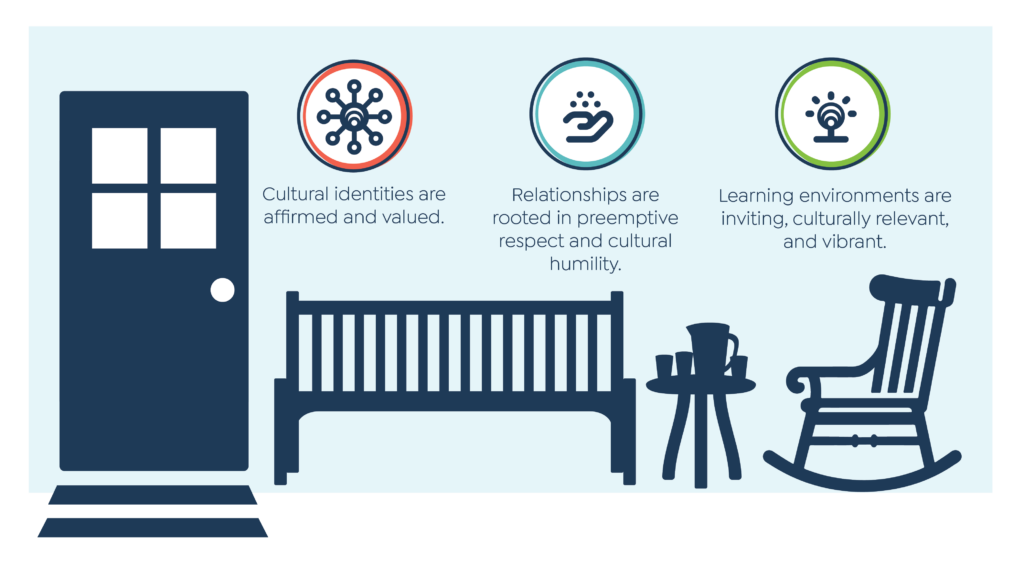
These are the invitation into the House of Learning—the way school feels when you first approach it.
| 1. Our cultural identities are affirmed and valued | 2. Our relationships are rooted in earned respect and cultural humility | 3. Our learning environments are inviting, culturally relevant, and vibrant |
|---|---|---|
| Porch question: “Do the bus ride, front office, hallways, and first five minutes of class tell me that who I am and where I come from belong here?” | Porch question: “Do adults earn my trust by listening, learning my story, and repairing harm, or do they expect respect without giving it?” | Porch question: “When I walk onto campus, does it look, sound, and feel like my community and many communities, not just one?” |
On the Front Porch, we decide if this is a place where we are seen, understood, and welcomed.
Kitchen: Brilliance
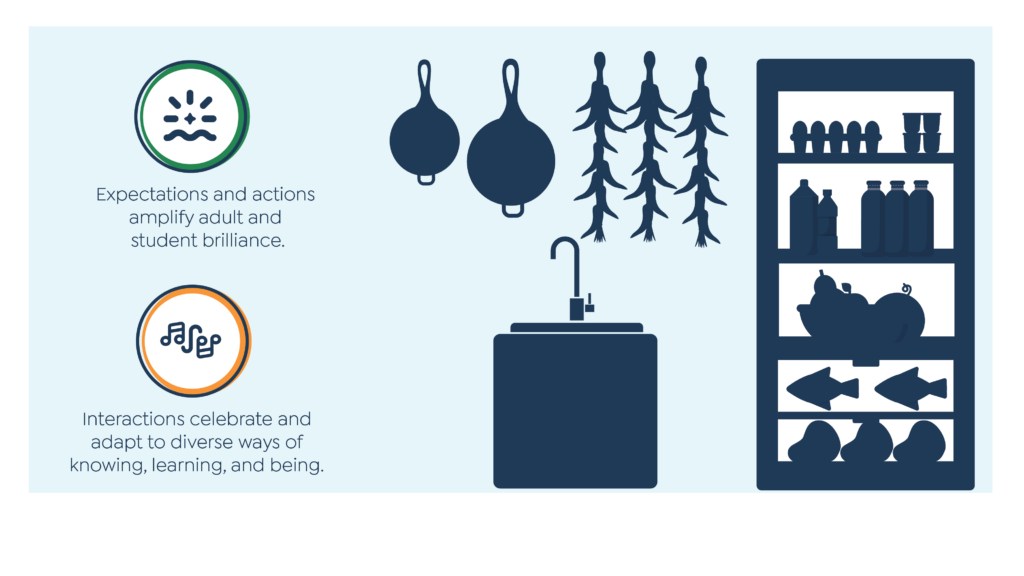 These are the “we cook together” commitments—how we turn daily teaching and learning into shared, rigorous work.
| 4. Our expectations and actions amplify adult and student brilliance | 5. Our interactions celebrate and adapt to diverse ways of knowing, learning, and being |
|---|---|
| Kitchen question: “Do my teachers design learning like a stocked kitchen, assuming I am brilliant and giving me real chances to show it?” | Kitchen question: “Can I ‘cook’ with my kind of genius here—my language, my ways of solving problems, my art, my community knowledge?” |
In the Kitchen, we don’t just “serve” curriculum; we co-create it with student brilliance as the primary ingredient.
Table: Stewardship
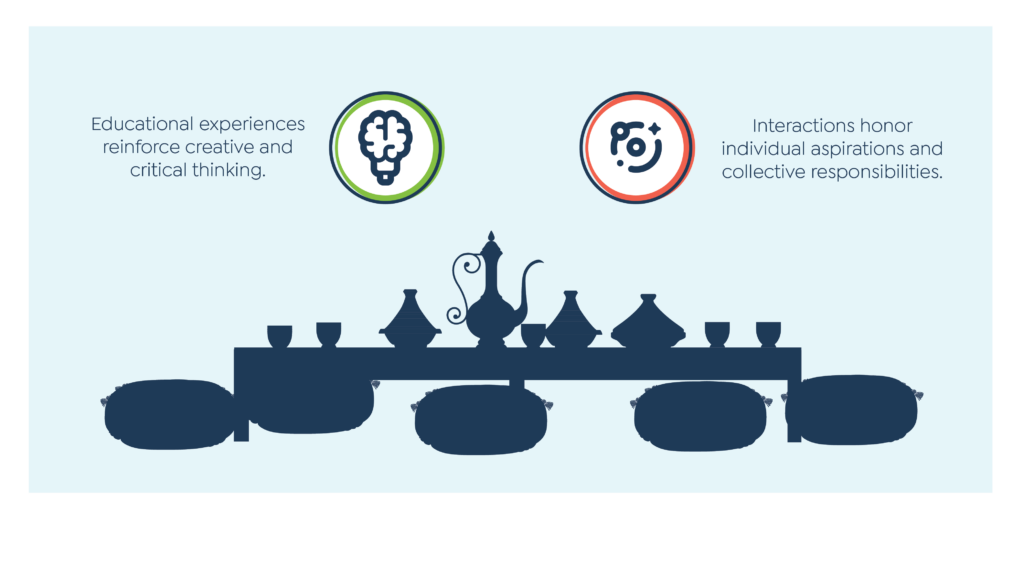
These are the “why school matters” commitments—the conversations about what learning is for.
| 6. Our educational experiences reinforce creative and critical thinking | 7. Our interactions honor individual aspirations and collective responsibilities |
|---|---|
| Table question: “Am I invited to think for myself, question things, and design solutions that matter in the real world?” | Table question: “Does school help me reach my goals and also prepare me to give back to my family, community, humanity, and the land?” |
At the Table, we define what it means to be an educated person in a democracy and practice using our learning in the service of something bigger than ourselves.
In Youth Empowered Stewardship, these Porch–Kitchen–Table commitments are the core of every inquiry cycle: students, educators, and families use them to notice gaps, co‑design new practices, and transform the whole House of Learning so more young people can say, “This house was built with me, not just for me.”
The question for every school community is simple: “Which part of the house are students asking us to redesign first?” Partner with the YES team to begin the redesign together!