You’ve tried the campaigns. The outreach. The intervention teams. The incentives. The mentoring programs.
And chronic absenteeism is still climbing.
This is not a failure of effort. School leaders across the country are working harder than ever to reconnect students to school. The investment is real. The urgency is real. The results, however, are often not keeping pace with the effort.
Ohio’s chronic absence rate exceeded 30 percent after the pandemic. Virginia saw rates nearly double. Colorado districts were watching nearly one in three students miss enough school to put them at risk academically. Schools have responded with urgency, creativity, and commitment. Yet for many districts, chronic absenteeism remains one of the most persistent challenges they face.
That gap deserves an honest explanation.
- What if the problem isn’t attendance?
- What if attendance is simply the symptom?
A Lesson Emerging from Two School Improvement Efforts
Over the past two years, we have had the opportunity to learn alongside schools participating in two powerful initiatives in the Pacific Northwest. In Oregon, TCC Executive Director of Impact Katie Smith has been leading a Freshman On Track cohort focused on helping schools use collaborative inquiry to improve ninth-grade success and graduation outcomes. In Washington, Benjie Howard and Patricia McDonald have been helping schools strengthen belonging, agency, and student leadership through Youth Empowered Stewardship (YES).
While these initiatives focus on different outcomes, they have revealed a remarkably similar lesson.
Students engage when they feel connected.
That lesson became unmistakably clear during a student interview from the YES initiative. When asked about their experience at school, one student offered a simple response:
I only come to school on YES days.
The statement lingered long after the interview ended. Not because the student was celebrating a program. Because they were describing a condition.
What the Student Was Really Telling Us
At first glance, the comment sounds like praise for a successful initiative. In reality, it was much more than that. The student was not simply telling adults what they enjoyed. They were revealing what was missing. One day each week provided something the other four days did not.
- Perhaps it was voice.
- Perhaps it was purpose.
- Perhaps it was meaningful relationships.
- Perhaps it was the opportunity to contribute to something larger than themselves.
Whatever it was, it mattered enough to influence whether the student showed up at all. The question is not why students enjoy YES days. The more important question is why they do not experience those same conditions every day.
When viewed through that lens, the student’s statement becomes less about attendance and more about engagement. It invites us to move beyond counting absences and begin examining the experiences students have when they are present.
Belonging Precedes Attendance
One of the clearest lessons emerging from both the Freshman On Track work and recent attendance research is that attendance is often a lagging indicator. By the time chronic absenteeism appears in a dashboard or data report, disengagement has frequently been building for weeks, months, or even years.
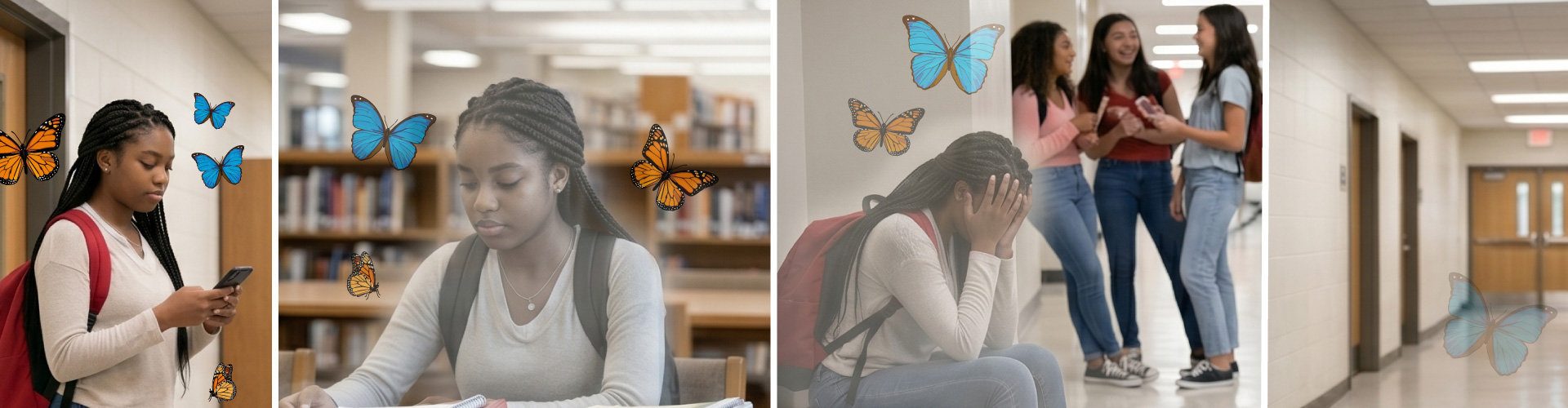
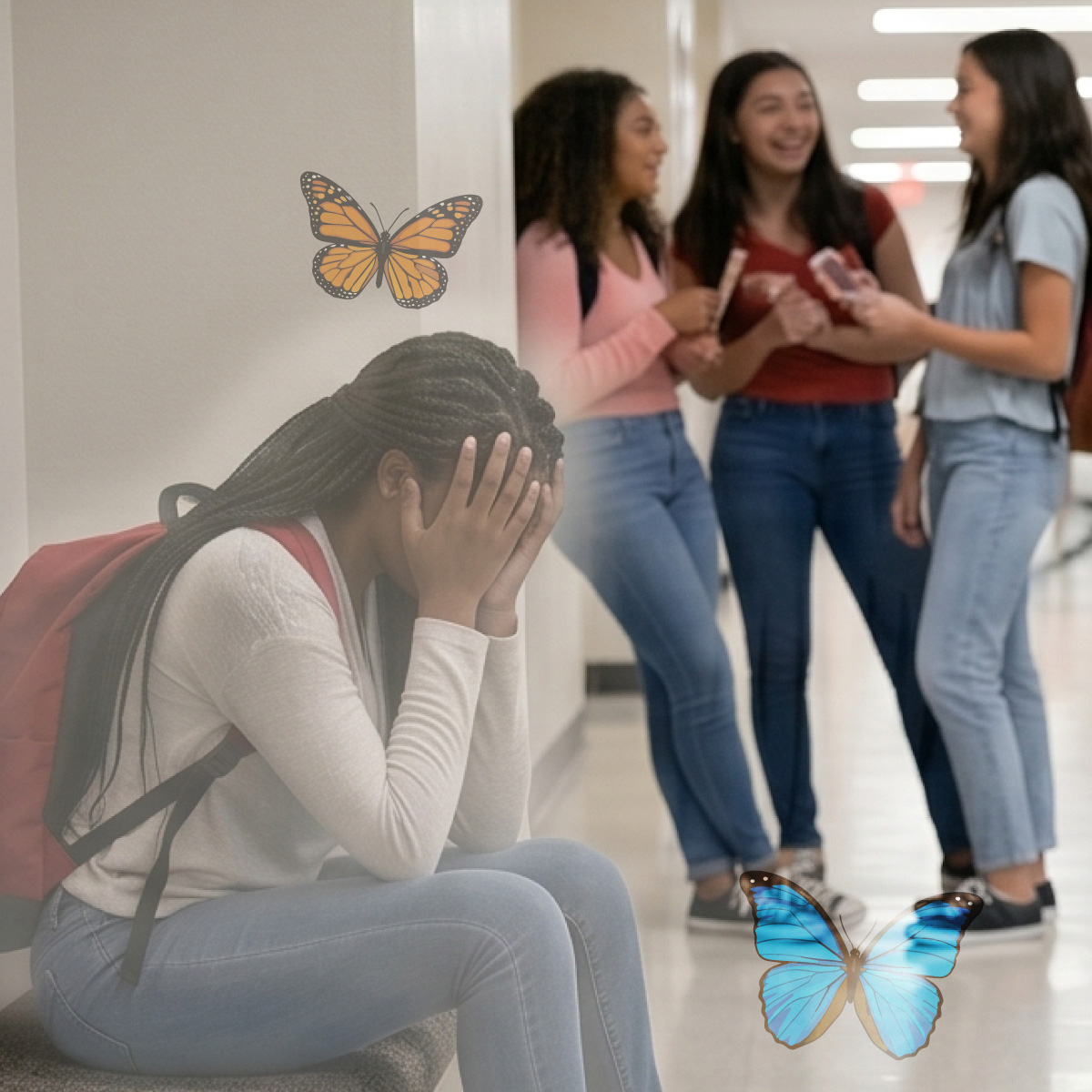
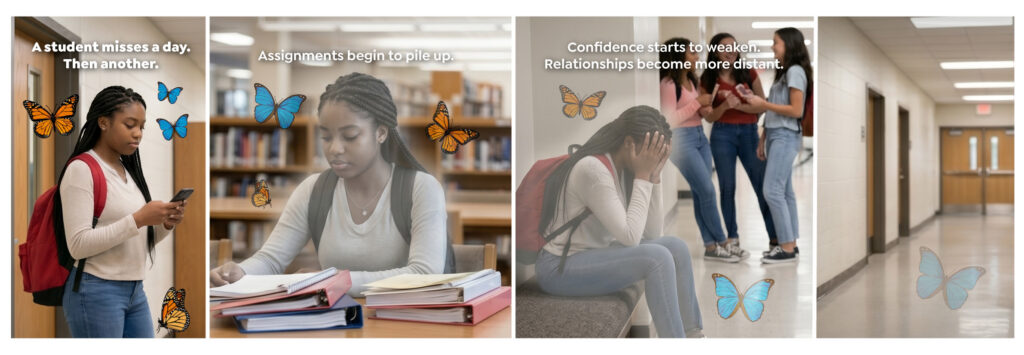
Researchers at the High Tech High Graduate School of Education describe what they call “butterfly students”—young people who slowly drift away from school through recurring patterns of absence that often remain unnoticed until they become significant.
Their work reminds us that absenteeism rarely begins with attendance itself. Instead, it begins with a gradual erosion of connection.
- A student misses a day.
- Then another.
- Assignments begin to pile up.
- Confidence starts to weaken.
- Relationships become more distant.
School feels less relevant, less welcoming, and less connected to a student’s sense of identity and purpose. Eventually attendance becomes the visible problem. But attendance is not where the problem started.
It is simply where the problem became measurable.
What Freshman On Track Teams Are Discovering
This understanding has been central to the Freshman On Track work. In Oregon, students who finish ninth grade on track are approximately twice as likely to graduate in four years as students who fall off track. Because of that predictive power, Freshman On Track has become one of the most important indicators schools monitor when trying to improve long-term student success.
What Katie Smith and participating schools have discovered, however, is that the metric itself is only the starting point.
When teams move beyond identifying who is off track and begin investigating why students are disengaging, they consistently uncover the same themes.
- Students describe feeling disconnected from adults.
- They struggle to navigate transitions.
- They feel unseen.
- They experience school as something being done to them rather than something they are helping create.
In other words, what initially appears to be an attendance problem often reveals itself as a belonging problem.
Belonging must be cultivated.
The most effective Freshman On Track teams do not stop at identifying which students are missing school. They dig deeper. They ask what students are experiencing, what barriers they face, and what conditions need to change.
This shift matters because sustainable improvement comes from improving the systems that support students
Students Are Asking for More Than Compliance
The same message emerges when listening to students involved in Youth Empowered Stewardship. Students consistently describe wanting adults who listen to their perspectives, opportunities to influence decisions that affect them, meaningful work connected to issues they care about, and authentic opportunities to contribute to their school community.
What they are asking for is not complicated.
- They want to matter.
- They want to know their voices carry weight.
- They want to see evidence that their ideas can lead to action.
This aligns closely with Karen Mapp and Eyal Bergman’s Dual Capacity-Building Framework for Family-School Partnerships. Their work reminds us that meaningful engagement—whether with students or families—is not built through compliance. It is built through trust, respect, partnership, and shared responsibility.
People become invested in communities where they feel valued.
Students are no different.
Attendance Improves When the Experience Improves
Across the country, schools making meaningful progress with attendance are discovering the same truth. The most promising efforts focus less on attendance enforcement and more on creating the conditions that foster connection.
They strengthen relationships.
They deepen belonging.
They increase student voice.
They invest in family partnerships.
They create opportunities for students to experience purpose and agency.
Attendance improves because the experience improves. Not the other way around. This distinction changes the questions we ask.
Instead of asking:
“Why weren’t you here?”
We begin asking:
“Tell me about your experience here.”
That simple shift moves us from monitoring to listening, from assumptions to understanding, and from fixing students to improving systems.
A Different Goal Entirely
The most important question facing school leaders today is not:
How do we get students to attend?
It is:
What would make students want to attend?
The student who said, “I only come to school on YES days,” was not asking for a better attendance policy. They were asking for a school that felt worth showing up for.
Every day. Not just once a week.
When students experience belonging, agency, purpose, and authentic partnership, attendance often follows. Not because adults demanded it, but because students see themselves as valued members of a community they want to be part of.
That may be the most important attendance lesson of all.
Three Things You Can Do Tomorrow
If chronic absenteeism is a challenge in your school or district, consider starting with these three actions:
1. Ask Students Why They Attend
Instead of focusing exclusively on students who are absent, interview students who consistently show up. Ask what makes school worth attending, where they feel connected, and when they experience belonging. Their answers often reveal the conditions that need to be expanded for everyone else.
2. Replace One Attendance Meeting with a Listening Session
Gather a small group of students and simply ask:
“Tell us about your experience at school.”
Listen for patterns. Listen for barriers. Listen for moments of connection and disconnection. Often the challenge is not attendance itself—it is the experience students are having when they are there.
3. Turn Student Voice into Student Leadership
Students are more likely to engage in schools they help shape. Move beyond surveys and feedback forms. Create opportunities for students to identify challenges, investigate root causes, and partner with adults to improve school culture. Voice matters most when it leads to action.
Want to Build a School Students Want to Attend?
Youth Empowered Stewardship (YES) helps schools move beyond collecting student voice and toward developing authentic student leadership. Through inquiry, partnership, and action, students become co-designers of school improvement rather than recipients of it.
The result is more than improved attendance. Schools strengthen belonging. Students develop agency. Communities build stewardship.
And together they create schools that students want to be part of.
Learn more about Youth Empowered Stewardship and discover how schools across the country are transforming student voice into meaningful change.
Sources & Further Reading
- Family connections, strong culture at Sanger High School. (Attendance Works, 2024a)
- Student well-being a top priority at Ramona High School. (Attendance Works, 2024)
- Colorado doubles down on reducing chronic absence with statewide support and local innovation. (Attendance Works & Colorado Department of Education, 2025)
- Ohio’s blueprint for beating chronic absence: A whole-system, whole-community approach. (Attendance Works & Ohio Department of Education and Workforce, 2025)
- Attendance Works celebrates the success of VA’s “ALL IN” campaign. (Attendance Works & Virginia Department of Education, 2025)
- The butterfly strategy: A powerful approach to chronic absenteeism. (Green, 2026)
- Dual capacity-building framework for family-school partnerships (Version 2). (Mapp & Bergman, 2019)
- What school-based interventions work to improve attendance in secondary school students with persistent absence? A systematic review. (Middleton et al., 2026)