Purpose, Pathways, & Future Readiness
How do I use my strengths to contribute to the world?

Connect learning to meaningful problems and future pathways.

Design projects that cultivate deep, rigorous learning.

Develop learner agency, adaptability, and professional thinking.

Prepare learners to contribute to work, community, and civic life.
When Learners Don’t See the Point
When learning feels disconnected from learners’ interests, futures, and communities, engagement can become compliance instead of purpose. Purpose, Pathways, and Future Readiness connects rigorous learning to authentic problems, meaningful audiences, career and CTE pathways, community experiences, and opportunities to contribute. Learners discover strengths, build agency, make informed choices, and understand how their learning matters beyond school, developing the confidence and capacity to shape what comes next.
Explore the pathways that help every learner discover purpose and prepare for a future of possibility.
Turn stakeholder perspectives into responsive plans that strengthen learning, belonging, agency, pathways, and community partnerships.
View PD OptionsHelp learners set goals, direct their growth, and use their knowledge, talents, and voices to contribute.
View PD OptionsHelp learners develop deep understanding and apply their learning to meaningful problems, audiences, and situations.
View PD OptionsMake curiosity, collaboration, reflection, perseverance, and purposeful action part of everyday learning.
View PD OptionsHelp learners understand their strengths, monitor growth, demonstrate technical expertise, and confidently pursue purposeful pathways.
View PD OptionsAct on Voice with Human-Centered Voice-to-Action
Human-Centered Voice-to-Action helps schools turn the perspectives of students, educators, families, employers, higher education partners, and community members into evidence for improvement. Through interviews, focus groups, empathy conversations, and a structured Voice-to-Analysis-to-Action process, teams identify patterns and design responsive plans that strengthen teaching, belonging, learner agency, career pathways, and community partnerships.
Educators Will Develop the Capacity To:
- Conduct meaningful stakeholder interviews and focus groups.
- Analyze qualitative evidence alongside student learning data.
- Identify patterns that strengthen learner agency, belonging, and future readiness.
- Integrate stakeholder voice into strategic planning and continuous improvement.
- Build school improvement efforts that reflect the aspirations of the communities they serve.
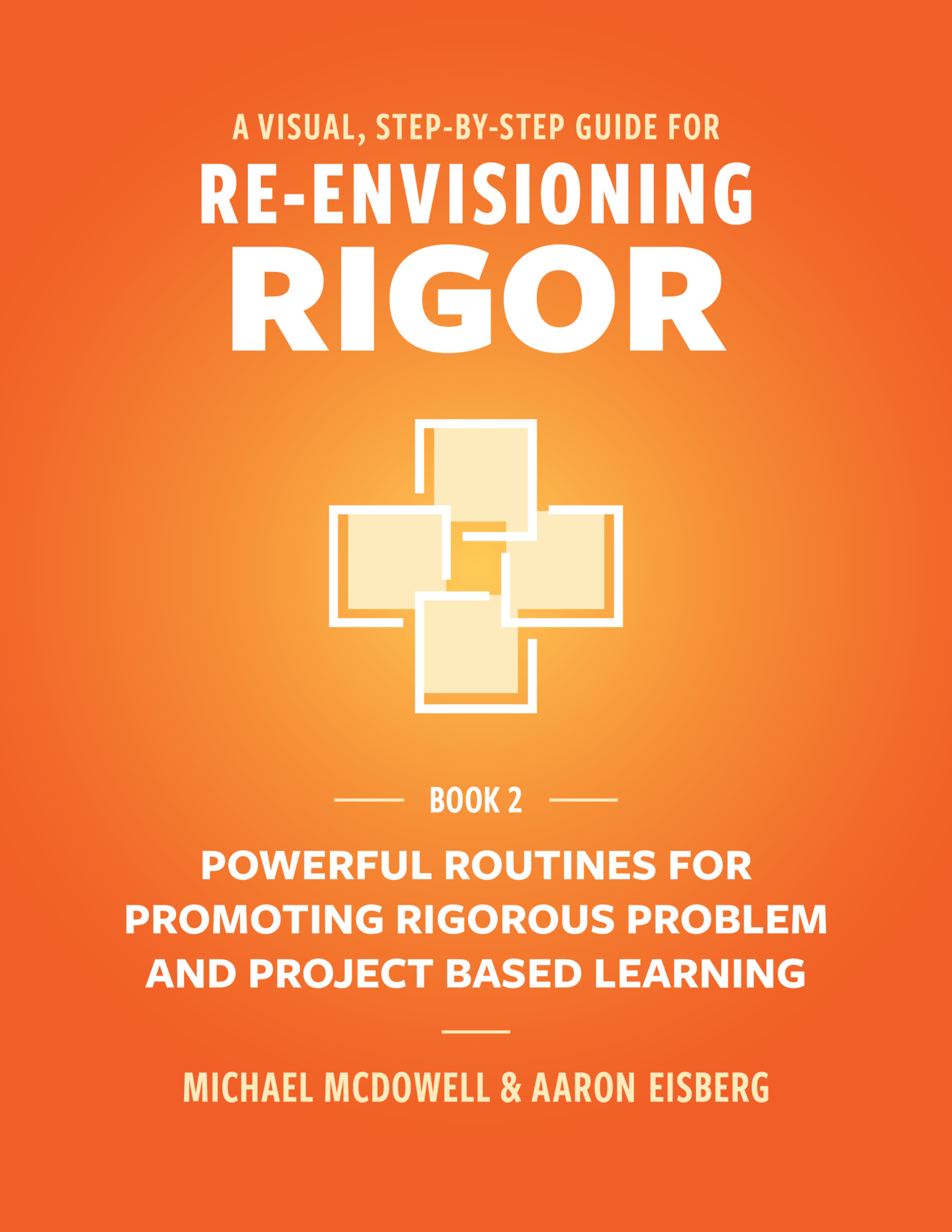
Re-Envisioning Rigor: Powerful Routines for Promoting Rigorous Problem- and Project-Based Learning
Michael McDowell and Aaron Eisberg
Cultivate Conditions for Agency and Stewardship
Building the Conditions for Agency and Stewardship helps schools align relationships, learner identity, belonging, metacognition, assessment, and authentic leadership opportunities. Learners set goals, monitor growth, reflect, revise, and increasingly direct their learning. As confidence and competence grow, agency becomes stewardship: learners use their knowledge, talents, and voices to contribute to their classrooms, schools, communities, and the world.
Educators Will Develop the Capacity To:
- Create the instructional and relational conditions that cultivate learner agency.
- Strengthen learner identity, belonging, and purpose through daily practice.
- Build assessment systems that develop ownership and self-direction.
- Empower learners to set goals, monitor progress, reflect, and revise.
- Foster stewardship by connecting learning to meaningful contribution.
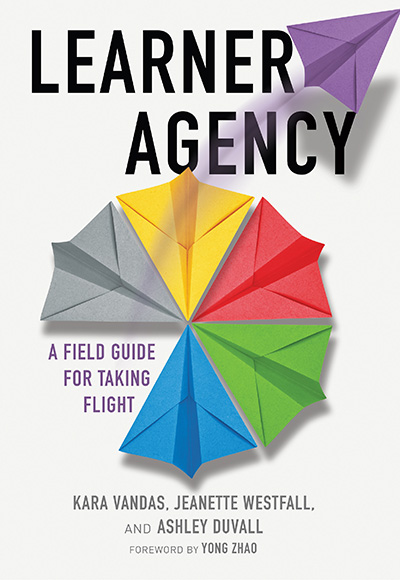
Learner Agency: A Field Guide for Taking Flight
Kara Vandas, Dr. Jeanette Westfall and Ashley Duvall
Create Real-World Learning with Re-Envisioning Rigor
Re-Envisioning Rigor for Real-World Learning helps educators connect rigorous academics to meaningful questions, challenges, audiences, and applications beyond school. Using the Surface-Deep-Transfer framework and transferable instructional practices, educators integrate inquiry, collaboration, project- and problem-based learning, and performance tasks into coherent experiences that build conceptual understanding, engagement, critical thinking, and authentic application.
Educators Will Develop the Capacity To:
- Design authentic learning experiences that connect rigorous academics to meaningful problems.
- Build coherent learning progressions using the Surface–Deep–Transfer framework.
- Integrate transferable instructional practices into every content area.
- Facilitate inquiry, collaboration, reflection, and authentic performance.
- Design engaging classrooms where learners understand why their learning matters.
Re-Envisioning Rigor: Powerful Routines for Promoting Rigorous Problem- and Project-Based Learning
Michael McDowell and Aaron Eisberg
Develop Habits for Real-World Learning
Habits for Real-World Learning helps schools make curiosity, collaboration, reflection, perseverance, and purposeful action part of everyday learning. Grounded in the science of habit formation, educators build consistent routines that sustain project-, problem-, and community-based learning, helping learners ask meaningful questions, solve authentic problems, improve their work, and apply learning beyond school.
Educators Will Develop the Capacity To:
- Build classroom cultures where authentic learning becomes a daily habit.
- Develop learner habits that strengthen inquiry, collaboration, and reflection.
- Sustain meaningful project- and problem-based learning over time.
- Connect learning to authentic audiences and community partnerships.
- Foster learner agency and stewardship through purposeful work.
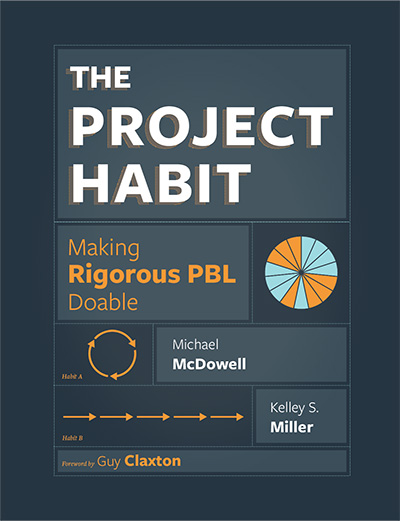
The Project Habit: Making Rigorous PBL Doable
Michael McDowell, EdD and Kelley S. Miller
Build Metacognitive Clarity in CTE
Metacognitive Clarity for CTE helps educators connect technical expertise and disciplinary learning with reflection, feedback, authentic performance, and learner agency. Through career-connected experiences and partnerships with industry, higher education, and community organizations, learners understand their strengths, monitor their growth, build portfolios, solve meaningful problems, and confidently pursue purposeful pathways beyond graduation.
Educators Will Develop the Capacity To:
- Design career-connected learning experiences that integrate technical expertise and learner agency.
- Connect disciplinary learning to authentic workplace and community experiences.
- Build learners’ metacognitive awareness through reflection, feedback, and portfolio development.
- Develop meaningful partnerships with industry, higher education, and community organizations.
- Prepare learners to confidently pursue purposeful pathways beyond graduation.
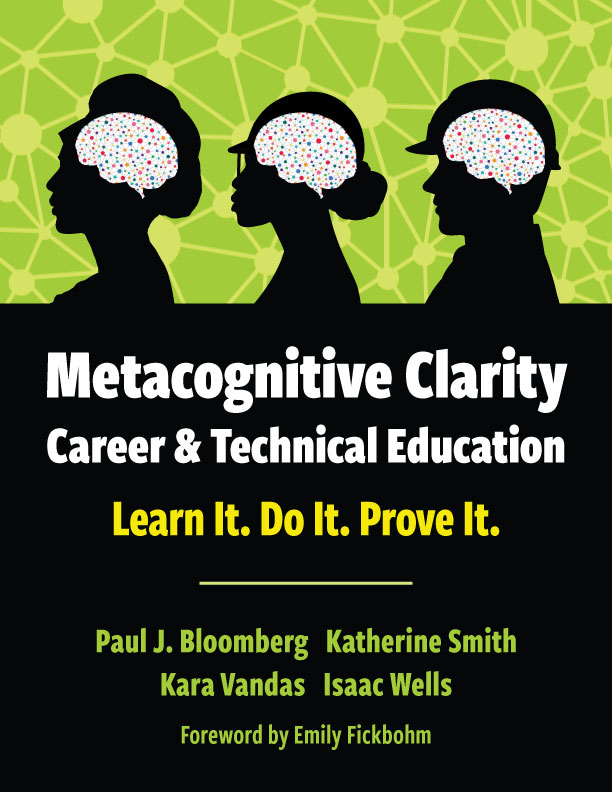
Metacognitive Clarity Career & Technical Education: Learn it. Do it. Prove it.
Paul J. Bloomberg, Katherine Smith, Kara Vandas and Isaac Wells
Resources
Meet the Pathway Team
Let's Connect
Complete the form below and we’ll be in touch to create a solution that addresses your needs and achieves your goals in learning spaces.
Prefer to talk on the phone? No problem! You can give us a call at: 619-432-2673
This form is on the "Let's Connect" Section on the Homepage
"*" indicates required fields