
Identity, Belonging, & Family Partnership
How do I belong to myself--and how do we belong to each other?

Strengthen identity, belonging, and trust.

Partner with families as co-creators of thriving schools.

Amplify learner voice to shape learning and school culture.

Cultivate stewardship, shared responsibility, and civic participation.
Strengthen Identity, Belonging, & Partnership
When learners feel disconnected, families are informed but not truly engaged, or voice is collected without influencing decisions, trust, attendance, behavior, and learning can suffer. Human-Centered MTSS makes identity, belonging, and partnership essential conditions for success. Learners, families, educators, and communities become active partners whose strengths and perspectives shape learning and improvement, creating communities where people know they matter, have a voice, and can meaningfully contribute.
Build the capacity of families and educators to partner as equal collaborators in learning, school improvement, and shared stewardship.
Develop Youth Empowered Stewards
Youth Empowered Stewardship intentionally begins with learners who are often the least connected, least heard, or least represented in traditional leadership opportunities. Through an intensive Tier 3 leadership experience, learners strengthen identity, confidence, agency, and purpose while using action research and authentic stewardship projects to improve their schools and communities. As leadership capacity grows, YES Ambassadors extend their impact through Tier 2 peer leadership and help develop sustainable Tier 1 practices that strengthen belonging, culture, and community for every learner.
Educators Will Develop the Capacity To:
- Develop learner identity, leadership, and agency.
- Create authentic leadership opportunities for historically marginalized learners.
- Build a tiered stewardship model that expands leadership opportunities across the school.
- Increase belonging, attendance, engagement, and school culture through meaningful contribution.
- Empower learners to become stewards of their schools and communities.
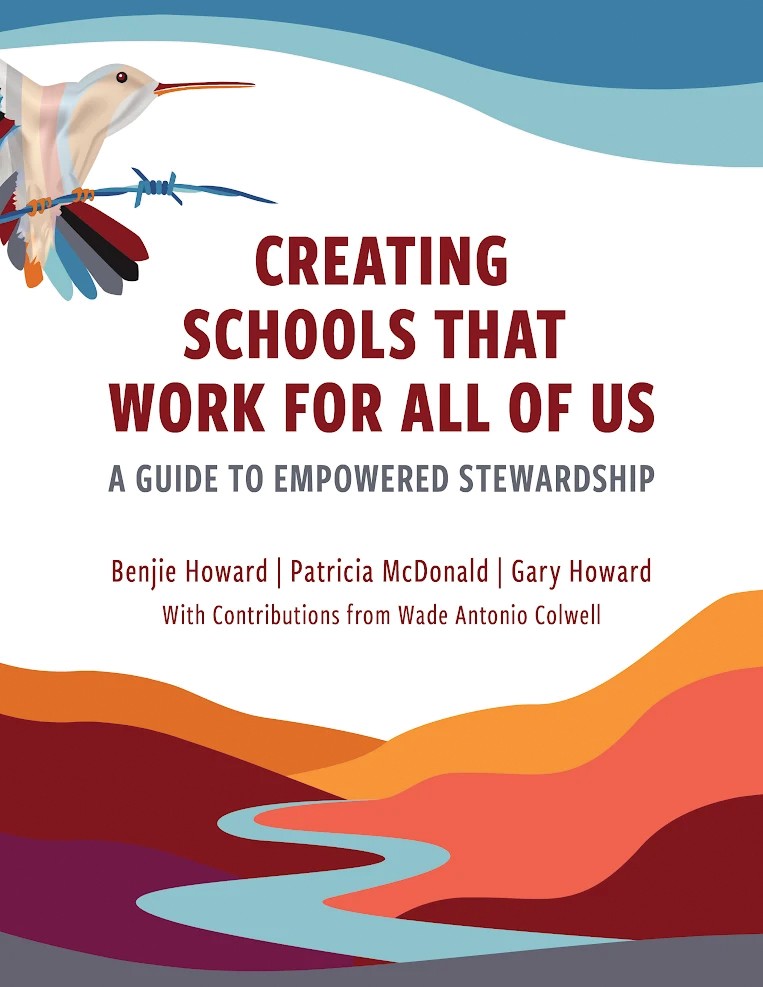
Creating Schools That Work for All of Us: A Guide to Empowered Stewardship
Benjie Howard, Patricia McDonald, Gary Howard and with contributions from Wade Antonio Colwell
Lead Intergenerational Inquiry
YES Intergenerational Inquiry brings students, families, educators, school leaders, and community members together as equal partners in semester- or year-long collaborative inquiry around meaningful problems of practice. Using Liberatory Design, empathy interviews, human-centered evidence, leading and lagging indicators, and Evidence–Analysis–Action cycles, teams investigate challenges, elevate diverse perspectives, and make shared decisions that strengthen learning, belonging, equity, and school culture.
Educators Will Develop the Capacity To:
- Lead intergenerational collaborative inquiry.
- Use Liberatory Design to investigate meaningful problems of practice.
- Gather both quantitative and human-centered evidence.
- Conduct empathy interviews that elevate learner and family voice.
- Facilitate semester- and year-long inquiry cycles.
- Build shared stewardship across students, families, educators, and community members.
Creating Schools That Work for All of Us: A Guide to Empowered Stewardship
Benjie Howard, Patricia McDonald, Gary Howard and with contributions from Wade Antonio Colwell
Amplify Learner Voice
Amplify Learner Voice helps educators make formative assessment a culturally responsive partnership with students. By drawing on learners’ identities, cultures, languages, experiences, and knowledge, educators gain more meaningful evidence and build stronger relationships. Students reflect, offer feedback, co-construct success, and take an active role in their growth, strengthening trust, belonging, agency, and learning.
Educators Will Develop the Capacity To:
- Design culturally responsive formative assessment practices.
- Build stronger relationships through learner-centered assessment.
- Recognize and leverage learners’ identities and funds of knowledge.
- Use learner voice as an essential source of instructional evidence.
- Strengthen learner agency through reflection, feedback, and shared ownership.
- Create classrooms where assessment deepens belonging, trust, and learning.
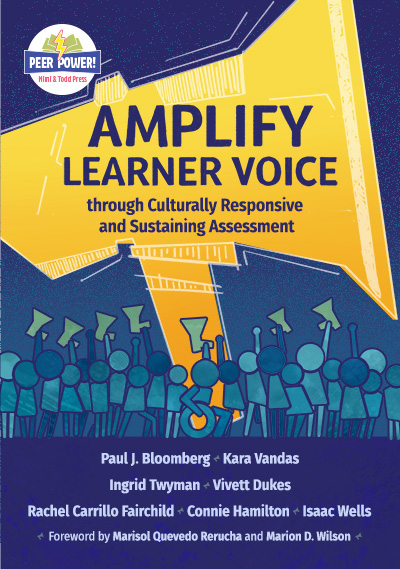
Amplify Learner Voice Through Culturally Responsive and Sustaining Assessment
Paul J. Bloomberg, Ed.D., Kara Vandas, Ingrid Twyman, Vivett Dukes, Rachel Carrillo Fairchild, Connie Hamilton and Isaac Wells
Strengthen YES Family Partnership
YES Family Partnership helps schools build the dual capacity of families and educators to work as equal partners in student learning and continuous school improvement. By strengthening capabilities, connections, confidence, and cognition, schools develop relational trust, elevate family voice and leadership, create meaningful two-way communication, and engage families in shared decision-making. Families, educators, students, and community members learn with one another and share responsibility for creating schools where every learner thrives.
Educators and Schools Will Develop the Capacity To:
- Build authentic partnerships among families, educators, students, and community members.
- Strengthen the capabilities, connections, confidence, and cognition of families and educators.
- Create welcoming school cultures grounded in trust, belonging, and shared responsibility.
- Elevate family voice in continuous improvement and school decision-making.
- Develop family leadership that extends from individual learners to schoolwide improvement.
- Sustain equitable family partnership practices that strengthen learner success, belonging, and well-being.
Creating Schools That Work for All of Us: A Guide to Empowered Stewardship
Benjie Howard, Patricia McDonald, Gary Howard and with contributions from Wade Antonio Colwell
Resources
Meet the Pathway Team
Complete the form below and we’ll be in touch to create a solution that addresses your needs and achieves your goals in learning spaces.
Prefer to talk on the phone? No problem! You can give us a call at: 619-432-2673
This form is on the "Let's Connect" Section on the Homepage
"*" indicates required fields