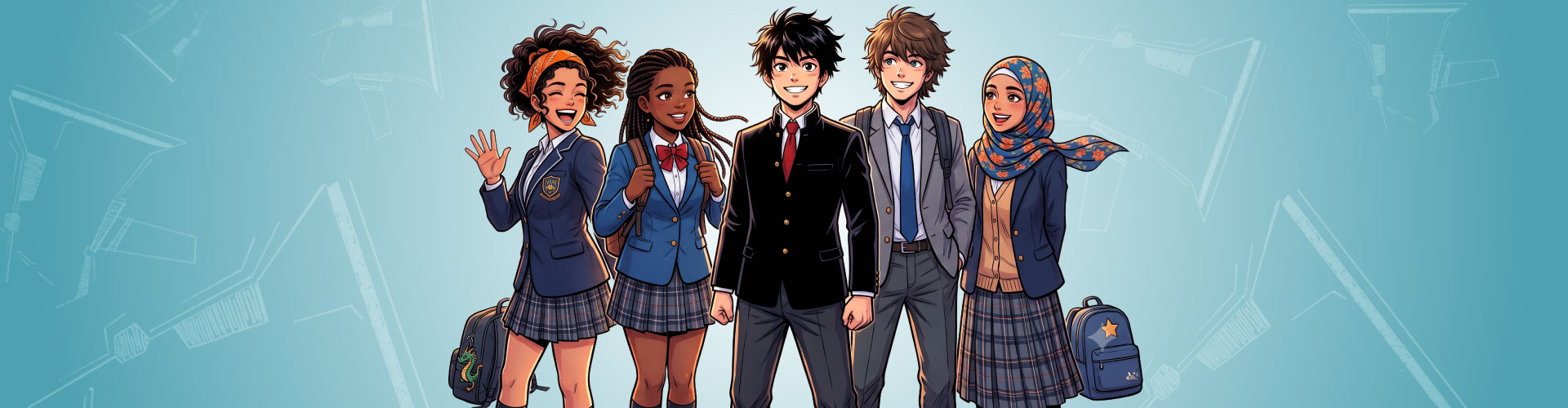

Over the past few months, I’ve been thinking a lot about the Profile of a Graduate work happening across New York State and our nation. I love how this framework invites schools to define, in community, the kind of humans we hope young people become—not just the content they master, but the dispositions they carry into the world.
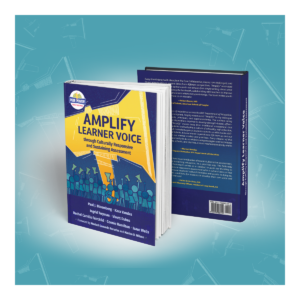 That word, dispositions, has been resonating deeply with me lately. In fact, my dear friends and co-authors Kara Vandas and Rachel Carrillo-Fairchild wrote about it in our book Amplify Learner Voice: Through Culturally Responsive and Sustaining Assessment. We explored how learning isn’t just about what students know; it’s about how they approach learning: their curiosity, resilience, empathy, and sense of justice.
When you pause long enough to really see students—their cultures, their languages, their lived experiences—you realize that assessment isn’t just about data points. It’s about developing habits of democracy.
🏛️ Dispositions Are the DNA of a Democratic Graduate Profile
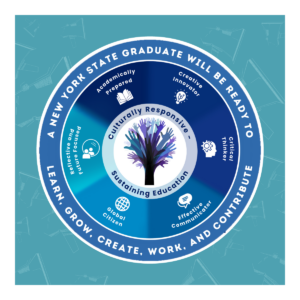 A true Profile of a Graduate doesn’t reduce readiness to a list of competencies. It’s a portrait of human potential.
When we talk about dispositions like agency, curiosity, and courage, we’re talking about the same capacities that sustain a democracy. In Amplify Learner Voice, Kara and I argue that culturally responsive assessment creates the conditions for those dispositions to grow—because it allows every learner to see themselves reflected in the learning process.
When learners set their own goals, self-assess, and reflect on their progress, they are doing the work of democracy in microcosm. They’re learning that their voice matters. That they can make meaning. That growth is communal, not competitive.
And that’s what the New York State Profile of a Graduate is really about—helping schools nurture graduates who are:
- Critical and creative thinkers
- Compassionate collaborators
- Culturally competent communicators
- Self-directed learners
- Civic stewards of justice
(New York State Education Department, 2023)
🧠 Culturally Responsive Assessment = Democratic Practice
Every time a student revises their work based on feedback, they are engaging in self-governance. Every time they identify a next step or name a strength, they are shaping their identity as an agent of change.
Culturally responsive and sustaining assessment is the practice ground for democracy. It’s where we learn to listen, self-reflect, challenge ideas respectfully, and find belonging in shared purpose.
This is what Kara and I meant when we wrote that assessment can either silence or amplify voice. The choice is ours—and it’s a moral one.
Clarity Is the Climb
At The Core Collaborative, we call this journey Metacognitive Clarity—the climb toward self-awareness and agency. It’s the process of helping learners plan, monitor, and evaluate their own growth with clarity and compassion.
That mountain 🗼️ becomes a metaphor for democracy itself—a collective climb where every voice counts and every learner has a hand in shaping the path forward.
When schools pair the Profile of a Graduate with Amplify Learner Voice, they’re building systems that honor both the individual and the collective—schools where justice, belonging, and intellectual freedom live at the heart of the work.
Democracy doesn’t begin at the voting booth. It begins when a young person’s voice is heard, honored, and used to shape their learning.
💙 The Call
If we truly want graduates who can sustain a democracy, we must allow them to practice democratic principles in their learning, reflection, and growth together.
Democracy doesn’t begin at the voting booth. It begins when a young person’s voice is heard, honored, and used to shape their learning.
Practical Ways to Cultivate Dispositional Strengths
Talking about dispositions like agency, empathy, and courage only matters if students get to practice them daily. Below are classroom routines that make these dispositions visible, actionable, and sustainable—especially when connected to culturally responsive assessment and metacognitive clarity.
🧭 1. Identity Maps: “Who Am I Becoming as a Learner?”
- Purpose: Build self-awareness, belonging, and agency.
- How: Invite students to create visual or written identity maps showing who they are as learners—interests, cultural assets, language strengths, and goals.
- Metacognitive tie-in: Reflect on which dispositions (curiosity, persistence, empathy, adaptability) help them thrive and how they show up in their learning stories.
💬 2. Feedback Circles for Courage & Connection
- Purpose: Strengthen empathy, voice, and constructive communication.
How: In small groups, learners share work-in-progress and give one glow ✨ (strength) and one grow 🌱 (next step) connected to success criteria.
Democracy tie-in: Students practice listening, respect, and feedback as shared governance—learning that collective improvement strengthens the community.
🧠 3. Goal-Setting with “Skill–Will–Thrill”
Purpose: Grow ownership, persistence, and curiosity.
How: Students write short learning goals using:
- Skill: What I’m learning
- Will: Why it matters to me
- Thrill: How I’ll know I’m growing or excited by it
- Tip: Revisit goals weekly (e.g., Monday–Wednesday–Friday reflection cycle). Connect reflections to dispositions like resilience or curiosity.
✊🏽 4. Justice Journals
- Purpose: Strengthen civic consciousness and critical empathy.
- How: Students reflect weekly on where they see fairness, voice, or justice (or the lack thereof) in their community or classroom.
- Connect: Ask, “What disposition would help you act on this?” Surfacing compassion, courage, or collaboration.
🧩 5. Peer-Led Learning Labs
- Purpose: Build collaboration, communication, and shared responsibility.
- How: Rotate “Learning Lab Leaders” who model metacognitive strategies—explaining how they used feedback, self-assessment, or revision to improve.
- Outcome: Builds efficacy and normalizes collective learning as a democratic act.
🌍 6. Portrait Conversations
Purpose: Align reflection with the Profile of a Graduate.
How: Invite learners to review their work and reflect:
- Which part of our Graduate Profile am I showing today?
- Which disposition am I growing next?”
- Link reflections to artifacts, journals, projects, or presentations—to make the invisible visible.
🗼️ 7. Reflection Rounds
Purpose: Anchor metacognitive clarity in daily routines.
How: Close each week with a reflection circle:
- When did I show persistence?
- When did I use empathy to understand another’s view?
- When did I take initiative?
- End with a class affirmation like, “We’re growing together.”
Final Thought
Dispositions aren’t taught through slides or rubrics—they’re lived in relationships, modeled through reflection, and strengthened by culturally responsive assessment.
When teachers design routines like these, they’re not just teaching skills; they’re building the muscle of democracy—helping every learner see that clarity, feedback, and justice live inside them.
Join the Metacognitive Clarity Movement
If this work resonates with you, we invite you to join the Metacognitive Clarity Movement—a growing community of educators who believe that clarity, reflection, and agency are the foundation of democratic learning.
Visit The Core Collaborative to learn how your team can begin the climb toward collective efficacy, deeper learning, and equity-centered assessment.
Together, we can build systems where every learner leads their own learning.
References
- Bloomberg, P. J., Vandas, K., Twyman, I., Dukes, V., Fairchild, R., Hamilton, C., & Wells, I. (2023). Amplify learner voice through culturally responsive and sustaining assessment. Mimi & Todd Press.
- New York State Education Department. (2023). Profile of a graduate: Defining the knowledge, skills, and dispositions for student success. https://www.nysed.gov/gradprofile