

Every principal and superintendent knows the feeling.
A graduation report lands on your desk and the questions begin immediately.
- Why did these students not graduate?
- What could we have done differently?
- Could we have seen this coming?
The hard truth is that by the time graduation data arrives, the opportunity to change the outcome has often passed. The students behind those numbers have already spent years struggling, disconnecting, or slowly slipping through the cracks. Graduation rates tell us what happened. They rarely tell us when it started.
That is why more schools are turning their attention to Freshman On Track.
Freshman On Track is one of the strongest predictors of whether a student will graduate on time. In Oregon, freshmen who finish their first year on track are approximately twice as likely to graduate in four years as students who fall off track. While graduation data looks backward, Freshman On Track looks forward. It gives schools an opportunity to identify students who need support while there is still time to make a difference.
Graduation Rates Are Outcome Data
School leaders need more than outcome data.
They need actionable data.
Graduation rates tell us whether students crossed the finish line. Freshman On Track helps us identify which students may never reach it without additional support.
The difference matters.
When schools wait until junior or senior year to address patterns of failure, absenteeism, or disengagement, they are often trying to solve problems that have been developing for years. Freshman On Track provides a much earlier signal. It shines a light on students who may be beginning to struggle academically, socially, behaviorally, or emotionally before those challenges become entrenched.
The question shifts from:
“Who didn’t graduate?”
to:
“Who needs support right now?”
That shift can change the trajectory of a student’s entire high school experience.
 The Leadership of Katie Smith
Over the past year, TCC Director of Impact Katie Smith has been leading a Freshman On Track cohort with high schools across Oregon.
What makes Katie’s work so powerful is that she has never positioned Freshman On Track as a compliance initiative or a data exercise. Instead, she has helped schools use Freshman On Track as a framework for collaborative inquiry and continuous improvement.
Under Katie’s leadership, teams have learned how to move beyond spreadsheets and dashboards to ask deeper questions about student success.
- What are students experiencing?
- What barriers are preventing success?
- What systems need to change?
- What support structures are missing?
Rather than simply identifying students who are off track, schools have learned how to investigate why students are falling off track and design solutions that address root causes rather than symptoms.
That distinction is where real improvement begins.
Different Schools. Different Challenges. Different Solutions.
One of the most compelling aspects of the cohort has been watching schools uncover very different challenges and respond with solutions tailored to their students and communities.
- At La Grande High School, the team discovered that some struggling students lacked consistent adult support and accountability. In response, they created a structured mentoring system that paired students with teacher mentors who met regularly with them to monitor progress, problem-solve challenges, and help students stay connected to their goals.
- At Weston-McEwen, the data pointed in a different direction. Student surveys suggested that many ninth graders felt disconnected during the transition to high school. The team focused on belonging and redesigned aspects of the freshman experience to help students feel welcomed, connected, and supported from the very beginning.
- At Elgin High School, leaders identified communication gaps with families as a significant contributor to attendance and performance concerns. Their work centered on creating stronger communication systems that helped families stay informed and engaged in supporting student success.
- At Irrigon, teams discovered that literacy challenges were contributing to course failures across multiple content areas. Rather than addressing failures one class at a time, they focused on strengthening writing expectations and supports schoolwide.
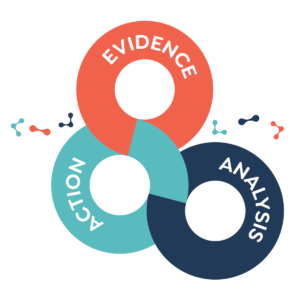
Different schools.
Different challenges.
Different solutions.
But the same process.
Evidence.
Analysis.
Action.
The Hidden Connection Between Attendance and Graduation
One of the most important lessons emerging from the cohort is that attendance, belonging, grades, and graduation are deeply interconnected.
Students rarely disengage overnight. Disengagement is usually a process. A student begins missing assignments. Attendance becomes inconsistent. Confidence starts to weaken. Relationships become more distant.
Eventually course failures begin to accumulate.
By the time graduation becomes a concern, the warning signs have often been present for months or even years. This is why Freshman On Track is so valuable. It helps schools identify those signals early enough to respond.
Rather than treating attendance, course failure, and behavior as separate issues, schools can examine how they interact and design more comprehensive supports.
Freshman On Track Is Really About Systems Improvement
One of the biggest misconceptions about Freshman On Track is that it is primarily about monitoring students. The strongest teams in Katie Smith’s cohort have demonstrated that it is really about improving systems. When schools consistently ask why students are struggling rather than simply identifying who is struggling, they begin uncovering patterns that can be addressed at the system level.
They strengthen mentoring structures. They improve transitions. They create better communication with families. They redesign support systems. They build stronger cultures of belonging. The goal is not to fix students.
The goal is to improve the conditions that help students succeed.
Three Questions for Your Leadership Team
As you prepare for the coming school year, consider these questions:
1. Do we know which freshmen are currently off track—and why?
Identifying students is only the first step. Understanding the story behind the data is where improvement begins.
2. What systems do we have for identifying disengagement before it becomes course failure or chronic absenteeism?
The earlier schools identify challenges, the greater their ability to change outcomes.
3. How often do we use student voice and family partnership to understand the experiences behind the numbers?
Data tells us what is happening. Students and families help us understand why.
The Best Time to Intervene Is Before Students Disappear
The most effective schools do not wait for graduation data to reveal a problem.
They build systems that help them identify challenges early, investigate root causes, and respond before students become disconnected from school.
That is what makes Freshman On Track such a powerful framework. It transforms data into action. It transforms concern into inquiry. And it transforms school improvement from a reactive process into a proactive one.
Ready to Strengthen Freshman Success?
Through her work with schools across Oregon, Katie Smith has demonstrated that Freshman On Track is far more than a metric. It is a proven process for helping schools identify barriers, strengthen systems, and increase the likelihood that students successfully navigate one of the most important transitions in their educational journey.
Because by the time students drop out, it is too late.
The best opportunity to change the outcome begins long before graduation day.