
Puzzle of Practice
By Benjie Howard and Jeneca Parker-Tongue
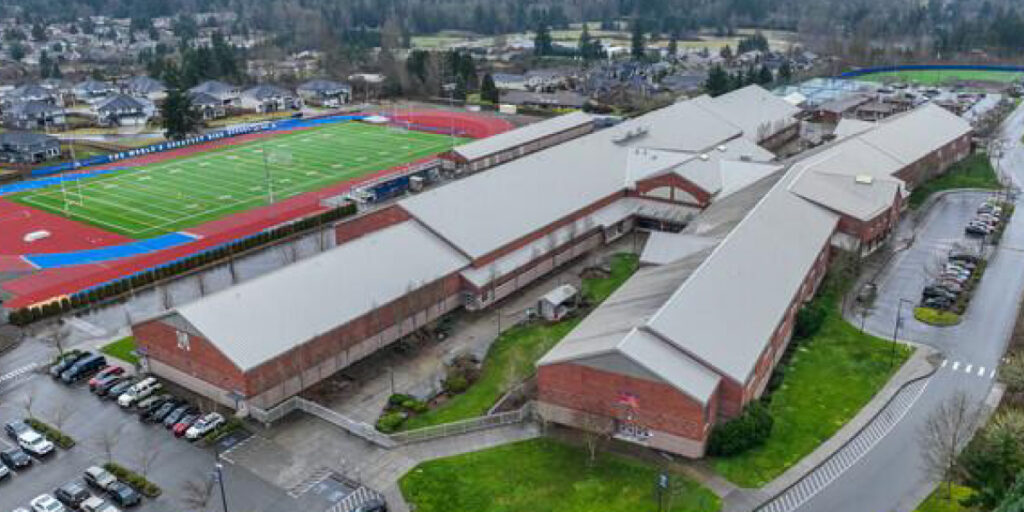
At Auburn Mountainview High School, stewardship began with listening – grounding action in students’ lived experiences and their understanding of what communities need to thrive. Through IMPACT Club, students named a clear challenge: students of color needed stronger representation, more empathetic spaces, and better access to academic support.
The work began by gathering student perception data. Students identified a lack of meaningful student-teacher relationships and a broader lack of cultural awareness in the building. These insights became the foundation of collective responsibility and informed action.
The guiding challenge was:
How do we strengthen representation, create more empathetic spaces, and improve access to academic support so students of color feel empowered and more likely to succeed academically?
The YES ambassadors saw a connection between cultural empowerment, cultural awareness, stewardship, care, knowledge, student ownership, and achievement. That connection became the heart of the work.
Collective Goal
The Theory of Action
If the school intentionally elevates student voice, builds belonging, and connects students to academic supports, then students of color will feel more empowered and more likely to succeed academically.
This theory reflected the IMPACT mission: cultivating a culture of excellence where students of color are empowered, empathetic spaces are the norm, and academic success is the standard.
It also reflected the vision of a school where support is constant, every voice is heard, and achievement is limitless.
The Design Approach
IMPACT Club translated the theory of action into three connected strategies: empowering students of color, creating empathetic spaces, and supporting academic success.
The design recognized that school climate, cultural awareness, and academic support are deeply connected. Students of color were not only looking for academic help. They were looking for a school environment where representation was visible, relationships were stronger, and success was supported through belonging.
The ambassador group itself reflected the diversity and complexity of the Auburn Mountainview community. It included students across cultural backgrounds, academic performance levels, and identities as scholars, artists, athletes, natural leaders, emerging leaders, public speakers, and behind-the-scenes stewards.
Collective Action
The IMPACT Club moved from theory to action by leading student-driven efforts that strengthened both belonging and academic success. Students elevated representation by supporting heritage month assemblies and creating historical posters highlighting people of color across campus. They amplified student voice by participating in staff meetings and providing input on school culture.
To build a more supportive environment, students launched an Acts of Kindness Campaign and organized a schoolwide charity event, creating spaces where peers felt seen and valued. They also focused on academic outcomes by leading an Academic and Attendance Initiative, expanding access to after-school tutoring, and conducting student interviews to identify barriers to success.
Together, these efforts increased visible representation, deepened staff understanding of student experiences, and reinforced the connection between a strong sense of belonging and improved academic engagement.
Collective Impact
The evidence for IMPACT Club falls into two clear categories: why the work is needed and what students have already begun building.
District and state data reinforce the need for this work:
- OSPI’s 2024–25 report card for Auburn Mountainview High School showed that 24.16% of students were “progressing” in English learner growth, while 2.24% were “proficient.”
- This points to a continuing need for targeted support, especially for students who need stronger access to academic language, belonging, and school-based supports.
- Statewide, OSPI reported that in 2025, 71% of students demonstrated foundational grade-level knowledge or above in ELA and 63% in math.
- OSPI also noted persistent opportunity and achievement gaps for historically underserved groups.
Together, these data points show why student voice, representation, belonging, and academic support cannot be treated as separate priorities.
At the school level, the early evidence of impact is visible in the structures students have helped create and lead.
Through IMPACT Club, students have:
- supported heritage month assemblies
- increased historical POC representation across campus
- brought student voice into staff meetings
- created empathetic spaces through kindness and charity efforts
- supported academic and attendance initiatives
- expanded access to tutoring
- conducted student interviews to improve school culture
Together, these actions show that IMPACT Club is responding to real equity and academic access needs while creating visible structures for stronger belonging, representation, student voice, and engagement.
The work is still developing, but the early indicators are clear: students are not waiting for adults to design belonging for them. They are helping build the conditions for belonging, cultural awareness, and academic success across the school.
Why YES Works
Youth Empowered Stewardship is not about adding a student club and hoping culture improves.
It is about creating structures where students help name the problem, shape the response, and build a more inclusive school community.
At Auburn Mountainview, IMPACT Club became a vehicle for student voice, cultural empowerment, empathetic space-building, and academic support. The work connected representation to relationships, belonging to achievement, and student leadership to schoolwide culture.
The case shows what becomes possible when students are not only invited to participate, but trusted to steward change.