
What happens when student voice moves beyond listening and becomes a creative response to the barriers students experience every day?
Schools are facing a critical equity inflection point right now. Educators are being called to deepen culturally responsive practices while authentically elevating student voices in a rapidly shifting climate. The YES approach confronts student-identified barriers to achievement, school climate, discipline, policy, student-teacher relationships, and attendance. YES is about telling the whole story and linking the quantitative data that drives school improvement plans with the qualitative stories students and families live every day. Using a structured collaborative inquiry cycle, YES pushes schools beyond “listening sessions” into action, turning empathy interviews, street-level data, and family stories into concrete, systemic shifts in access, belonging, and opportunity.
YES in Action
What YES Looks Like: From Start to End of Year in a School
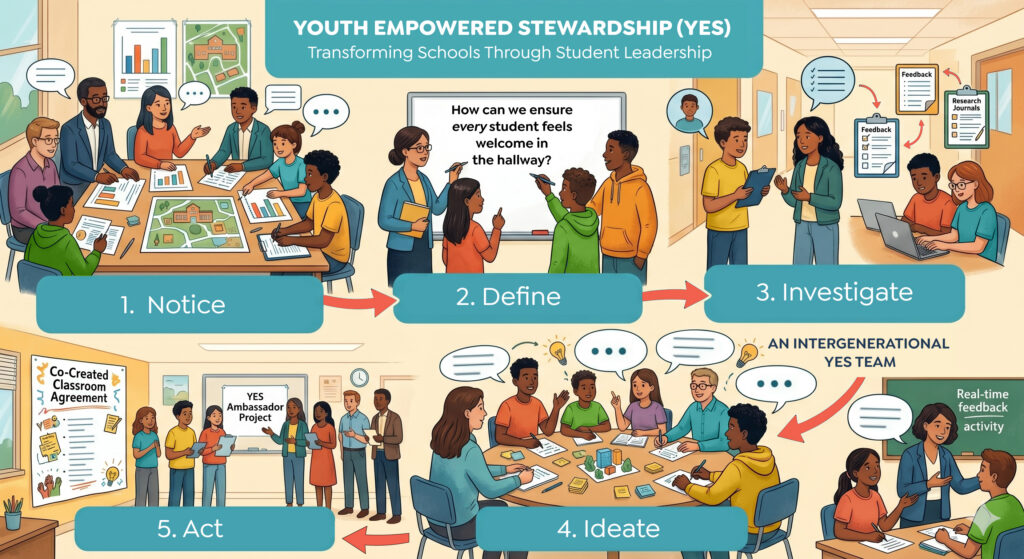
At the school level, a YES year is an all-in commitment to collaborative inquiry, intergenerational learning, and the 4 A’s: ALIGNMENT, ACCOUNTABILITY, ASSESSMENT, and ADVOCACY. Schools begin by examining the data they have and NOTICE an area of focus, then move to gather more data around what they have noticed. Through equity walks and EMPATHY data collection, school teams DEFINE a specific puzzle of practice as a sharp, student-centered question that demands a response this year, not next.
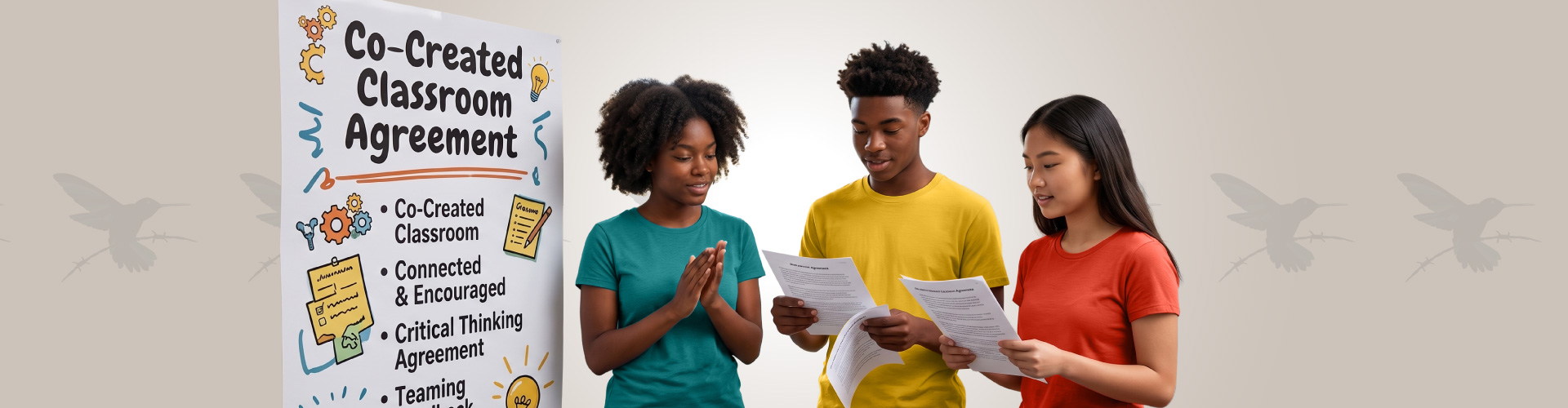
Throughout the year, students and equity team members engage in student-led action research to investigate that puzzle of practice, co-analyzing data and naming leverage points for change. Intergenerational YES teams collaboratively design and test concrete actions driven by what students say they need most, IDEATING what school must look and feel like when the puzzle of practice is taken seriously. This can include co-created classroom agreements, real-time shifts in instructional practice based on feedback from equity walks, and YES Ambassador projects designed to interrupt inequitable policies, practices, and resource patterns.
As students and adults learn together, their personal and professional transformation becomes an active engine for systemic transformation, shifting isolated “try it” efforts into shared routines, expectations, and structures that center student voice as a non-negotiable. By year’s end, equity teams systematically track these PROTOTYPED actions and EVALUATE their real-world impact on student belonging, academic success, and school culture, using that learning to decide what must be scaled, abandoned, or redesigned right away.
What YES Looks Like: From Start to End of Year in a District
At the district level, a YES year is intentionally designed so that every layer of the ecosystem moves in sync; student voice cannot be powerful if the surrounding system remains stagnant. Districts begin by examining their structural landscape and strategic goals to ensure ALIGNMENT, positioning YES as a core strategy rather than an elective add-on. Leaders then build shared ACCOUNTABILITY for equity commitments by regularly engaging leadership teams and explicitly tying YES to the five streams of professional learning.
Across the year, system-level leaders work side by side with site-based equity and YES teams to support the specific puzzles of practice emerging from schools. Roles such as Director of Instruction and Student Services, the Office of Equity, and the Youth Empowerment Specialist braid this work together so that student voice, student-led action research, and YES stewardship projects become central drivers of continuous improvement, not isolated projects that fade when the year ends. The professional learning adults experience through YES, co-inquiry with youth, disciplined reflection, and collective problem-solving, builds the capacity and urgency needed to sustain real systemic change.
By the end of the year, district leaders systematically track these efforts to make an evidence-based ASSESSMENT of progress, then leverage those insights for bold ADVOCACY. They use what they learn to press for immediate structural shifts in policy, practice, and resource allocation, ensuring that the lessons from YES do not stay in meeting notes but are embedded in how the system operates going forward.

Move From Collecting Voice to Acting On It!
Youth Empowered Stewardship (YES) is the only multi-generational pathway that activates and sustains authentic partnerships between adults and students, leading to a compelling, vibrant, and culturally responsive, and sustaining learning community.
TURN VOICE INTO ACTION