
Something important has happened in reading instruction over the past several years. Schools have invested heavily in the Science of Reading. Teachers know more about phonemic awareness, phonics, decoding, and the importance of explicit, systematic foundational-skills instruction. Students who might once have gone years without anyone identifying a decoding problem are increasingly receiving interventions designed specifically to address it.
That is progress, and we should be careful not to lose it.
Which is why New York’s preliminary 2026 reading results deserve our attention without becoming ammunition for another literacy war. Statewide proficiency in Grades 3–8 ELA fell from 53 percent in 2025 to 48 percent in 2026. There are important cautions around those numbers, including the statewide transition to computer-based testing, and a one-year decline cannot tell us what caused it. It certainly cannot establish that phonics, knowledge-building curricula, or the Science of Reading caused scores to fall.
I am interested in a different question. What if the results are an invitation to examine whether our implementation of the Science of Reading has sometimes become narrower than the science itself?
I keep thinking about students I meet in middle schools who have received intensive phonics intervention. Imagine a seventh grader who has completed Phonics for Reading. Their decoding is substantially more accurate than it was a year ago. They can attack unfamiliar words that once stopped them completely. Their phonics assessments show genuine progress, and everyone involved should celebrate that.
Then we put a seventh-grade science text in front of them.
They read 70 words correctly per minute. The reading is slow and effortful. Phrasing is weak. Sentences are broken into pieces that obscure meaning. So much cognitive energy is still being devoted to getting through the words that maintaining meaning across a paragraph is difficult.
Did the phonics intervention fail?
Not necessarily. It may have done exactly what it was designed to do.
The constraint may have moved.
That distinction matters enormously. A student should not graduate from reading intervention simply because they graduate from a phonics program. Program completion tells us what instruction the student has received. It does not tell us whether the student’s reading system is functioning well enough to independently navigate complex connected text.
The Bridge After Phonics
For some students, the next major constraint is fluency.
I don’t mean simply making students read faster. Fluency includes accuracy, appropriate rate, automaticity, phrasing, and prosody—the rhythm, expression, and meaningful grouping of words that signal that a reader is processing language rather than laboring through individual words. A student can become considerably more accurate at decoding while still reading so slowly and effortfully that comprehension remains fragile.
This matters because automaticity changes what the brain can devote attention to. Our seventh grader reading around 70 words correctly per minute has an enormous amount of cognitive work happening at the word level. They must decode the words, hold the beginning of a sentence in working memory while reaching the end, connect ideas across sentences, maintain meaning across paragraphs, and somehow monitor whether any of it makes sense.
Improving from 70 words per minute toward the fluent reading demanded by increasingly complex middle-school texts is not necessarily a two-week intervention. For some students, developing automaticity may require months of successful connected-text reading: teacher modeling, assisted reading, repeated reading, feedback, deliberate work on phrasing and prosody, and substantial opportunities to actually read.
This is where our MTSS systems can get into trouble. We sometimes behave as though the pathway looks like this:
Phonics intervention → program completed → student exits intervention.
A more useful pathway begins with a different question:
What is constraining this reader now?
| What We Find After Phonics Intervention | What It Suggests We Do Next |
|---|---|
| Decoding remains significantly weak | Continue or intensify foundational-skills intervention. |
| Decoding is increasingly accurate, but connected reading remains slow and effortful | Provide deliberate fluency and automaticity support. |
| Rate is improving, but phrasing and prosody remain weak | Use modeled, assisted, and repeated reading with explicit attention to meaningful phrasing. |
| Fluency is adequate, but comprehension remains weak | Investigate vocabulary, syntax, language comprehension, knowledge, and comprehension processes. |
| Reading is increasingly accurate, fluent, and meaningful | Rely primarily on strong Tier 1 instruction with appropriate progress monitoring. |
For students whose decoding has improved but whose connected-text reading remains labored, Tier 2 can become an important bridge. They may no longer require the same intensity of phonics intervention, but they still need deliberate fluency practice while participating fully in rich grade-level reading, discussion, vocabulary, knowledge building, writing, and disciplinary thinking.
That last point is crucial, because the Active View of Reading changes how we think about the entire pathway.
The Active View Asks Us to See the Whole Reader
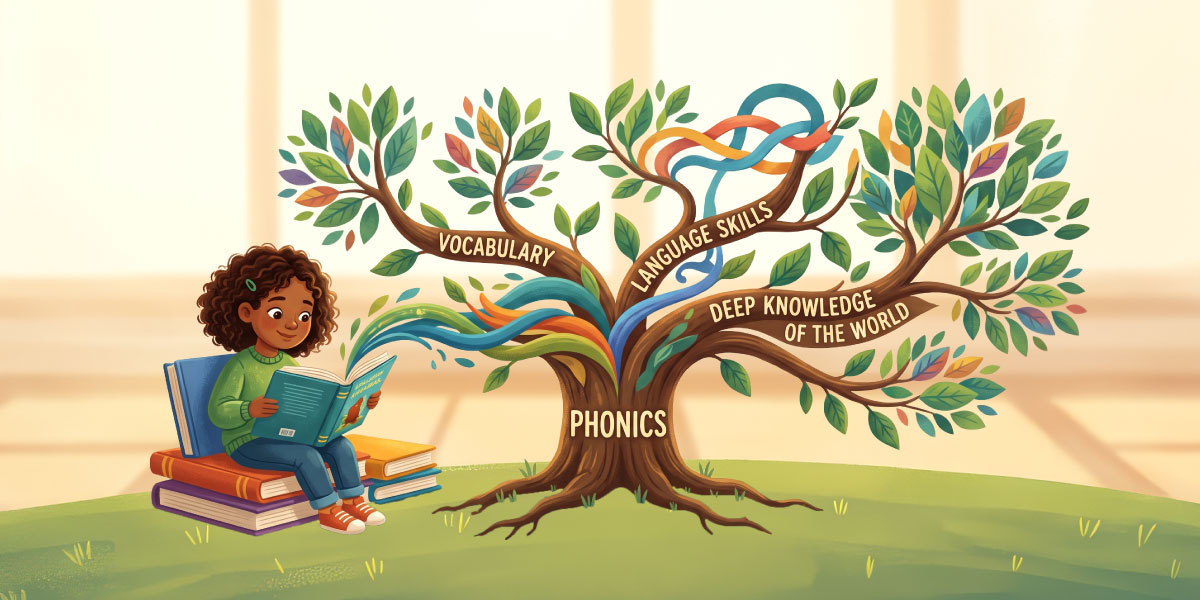
Nell Duke and Kelly Cartwright’s Active View of Reading is useful here because it resists the temptation to reduce reading to a sequence of boxes students move through. It recognizes word recognition and language comprehension while also identifying bridging processes and active self-regulatory processes that readers coordinate as they construct meaning (Duke & Cartwright, 2021).
The word I keep returning to is simultaneously.
A student receiving intensive phonics intervention should not spend six months developing decoding while vocabulary, oral language, knowledge, comprehension, discussion, and writing wait their turn. If decoding is the student’s greatest constraint, Tier 3 should target it with precision. At the same time, Tier 1 should continue immersing that student in rich language, vocabulary, knowledge, complex ideas, meaningful text, discussion, and writing.
The same principle applies when the constraint shifts toward fluency. We don’t finish phonics and then put everything else aside while we “do fluency.” We deliberately develop automaticity and prosody while vocabulary, morphology, syntax, knowledge, comprehension, and disciplinary thinking continue growing.
Intervention can be targeted. Reading development is simultaneous.
But the Active View pushes us even further, because reading is not something that simply happens once decoding becomes accurate and language comprehension is strong enough. Proficient readers actively manage the work of making meaning. They sustain attention, notice confusion, select strategies, monitor whether those strategies are working, revise interpretations, and persist when texts become difficult. Duke and Cartwright place this active self-regulation inside the reading process itself, not outside it as an optional enrichment for students who have already learned to read.
Think again about our seventh grader. As automaticity develops, more cognitive resources become available for meaning-making. But freeing those resources does not automatically teach the student what to do with them. A reader still has to notice, I don’t understand this. They have to decide whether to reread, slow down, examine the syntax, use morphology to unpack an unfamiliar word, draw on context, summarize what they have read so far, ask themselves a question, or revise an earlier interpretation. The important skill is not simply possessing a bag of reading strategies. It is recognizing what kind of problem is occurring and selecting an appropriate response.
That is metacognition.
In Metacognitive Clarity: Think Rigorously. Advance Democracy, we describe this kind of self-regulation through four recurring moves: Plan, Monitor, Evaluate, and Pivot (Bloomberg, Wells, & Adriaan, 2026). A reader plans by considering the text, the purpose, and what they already know. While reading, they monitor meaning and their own thinking. They evaluate whether their interpretation fits the evidence. When it doesn’t, they pivot—rereading, changing strategies, seeking another clue, or revising what they thought they understood.
Motivation belongs in this picture as well. Consider what years of reading difficulty may have taught our seventh grader about themselves. A student who has spent years struggling to get through text may have learned to avoid reading, wait for an adult to explain it, skim until someone supplies the answer, or simply conclude that reading is something other people are good at. A phonics assessment can show enormous improvement without capturing any of that history.
Improving decoding does not instantly erase years of frustration or dependence. Students need successful experiences with real text. They need to experience themselves becoming more fluent. They need meaningful reasons to read, opportunities to make choices and decisions as readers, and evidence that their effort is producing greater competence. Fluency practice cannot become a daily race against a stopwatch. Its purpose is to make reading increasingly available for meaning.
This is why I find the Active View so useful for MTSS. It keeps us from turning reading development into a relay race in which phonics hands the baton to fluency, fluency hands it to comprehension, and comprehension eventually hands it to some vague category called higher-order thinking. The systems are developing and interacting all along.
A student may have a primary instructional constraint at a particular moment. We should identify it and target it precisely. But we should never confuse the target of an intervention with the whole of the reader.
Finishing Phonics Is a Transition Point, Not a Finish Line
This changes what should happen when a student completes a program such as Phonics for Reading. We celebrate the progress, and then we reassess the reader.
Can the student decode unfamiliar multisyllabic words accurately and efficiently? What happens when those words appear inside connected text? What is the student’s oral-reading accuracy? How automatic is the reading? What does the phrasing sound like? Does the prosody suggest that the student is grouping language meaningfully? Can they sustain reading across a complex passage without losing the thread? When meaning breaks down, do they notice? And once they notice, do they know what to do?
Those questions tell us far more than program completion.
They also prevent us from making the opposite mistake: keeping a student in an intensive phonics intervention after phonics is no longer the primary constraint. If decoding has improved substantially but fluency remains fragile, the intervention should move with the reader. If fluency improves and comprehension remains weak, we investigate language, vocabulary, syntax, knowledge, disciplinary understanding, and self-regulation rather than simply prescribing more fluency practice.
A good MTSS system should be capable of changing as the reader changes.
What New York’s Scores Might Be Asking Us
It would be irresponsible to look at one year of New York assessment results and declare that phonics, knowledge-building curricula, or the Science of Reading caused the decline. The evidence does not support that conclusion, and the transition to computer-based testing complicates the interpretation further.
But it would be equally unwise to look away.
The preliminary results give us an opportunity to ask whether our implementation has become narrower than our understanding of reading itself. Have we built increasingly coherent pathways for students who need decoding intervention but less coherent pathways for what happens when decoding improves? Do we assess fluency as accuracy, rate, and prosody rather than WCPM alone? Are students getting enough successful connected-text reading to build automaticity and stamina? Are vocabulary, morphology, language comprehension, knowledge, disciplinary thinking, and metacognition developing alongside foundational skills? Do students know what to do when meaning breaks down? And when students complete a phonics program, do we actually know what is constraining their reading now?
Those questions matter regardless of what next year’s state scores show.
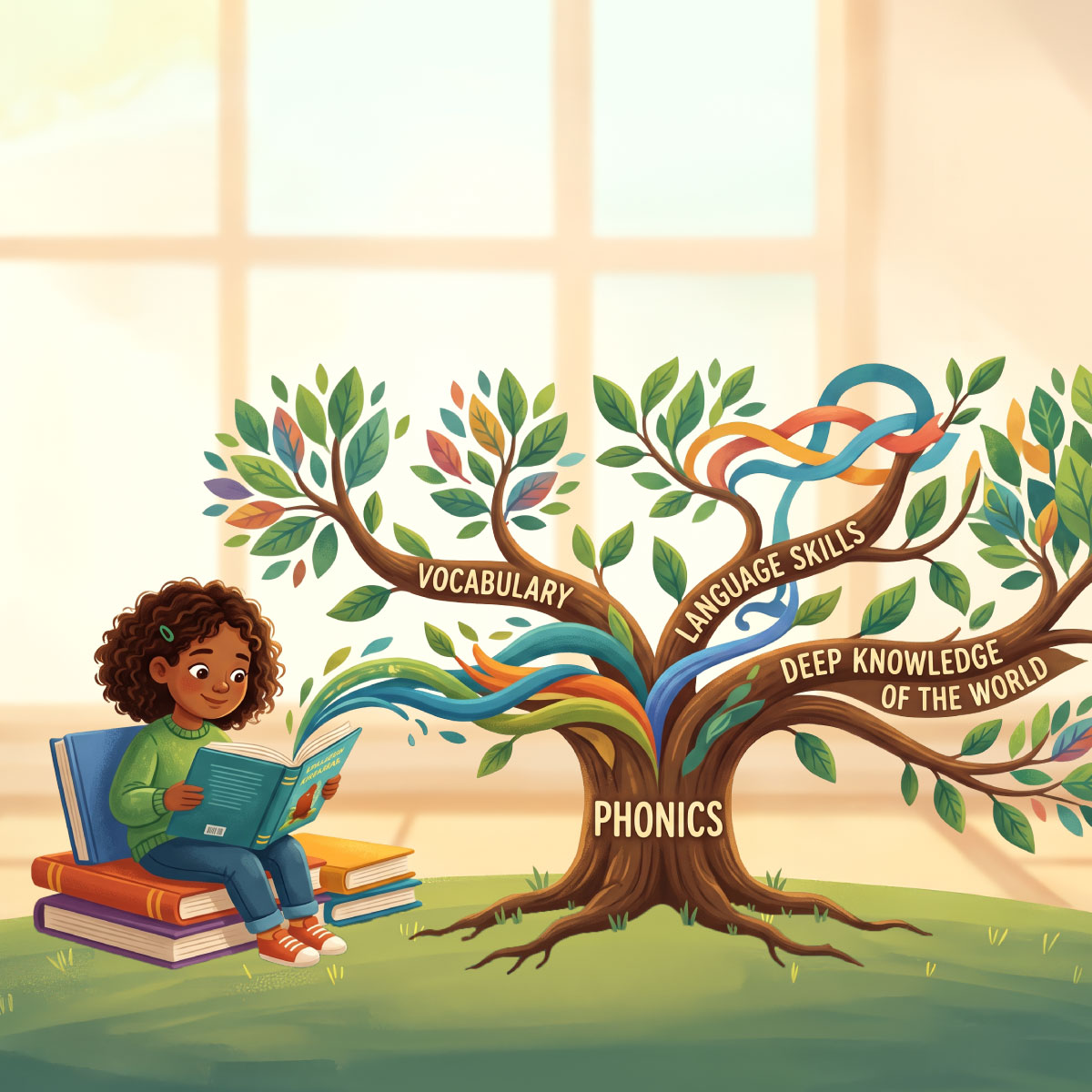
The next phase of the Science of Reading should not be a retreat from phonics. Students who cannot decode need explicit, systematic instruction, and schools should continue getting better at providing it. Nor should we retreat from knowledge building. Readers need vocabulary, language, and deep knowledge of the world.
What we need is a fuller implementation of what the reading science has been telling us.
We need intervention systems capable of targeting the student’s most pressing constraint without reducing the student to that constraint. We need to recognize that successful phonics intervention may reveal a fluency problem that was there all along. We need Tier 2 structures capable of providing the deliberate practice that develops automaticity, phrasing, and prosody. We need rich Tier 1 instruction developing vocabulary, language, knowledge, comprehension, discussion, writing, and disciplinary thinking throughout the entire process. And we need to explicitly develop the active processes that eventually allow students to manage all of this for themselves.
The goal was never to get students through phonics.
The goal is a reader who can open an unfamiliar text, read it with increasing fluency, construct meaning, recognize when that meaning breaks down, and know enough about themselves as a reader to do something about it.
Phonics is essential to that journey.
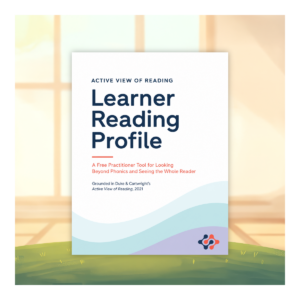
The Active View reminds us how much more of the journey there is.
References
Bloomberg, P., Wells, I., & Adriaan. (2026). Metacognitive Clarity: Think Rigorously. Advance Democracy.
Duke, N. K., & Cartwright, K. B. (2021). The Active View of Reading: Connecting the dots in reading research. Reading Research Quarterly, 56(S1), S29–S44.