We have all seen the learner who understands far more than their work suggests.
They begin a task and lose their place. They stare at a blank page even though they have plenty to say. They read the same paragraph three times and cannot hold onto the meaning. They rush through a math problem, miss one important detail, and realize afterward that they actually knew how to solve it.
And then we start attaching explanations to what we see.
They aren’t focused. They need to slow down. They need to get organized. They need to try harder. They aren’t independent enough.
But what if the learner isn’t the problem?
Neurodiversity invites us to begin with a different assumption: human beings do not all learn in the same way. Learners vary in how they attend, process language, manage working memory, regulate emotion, organize information, sustain effort, and make meaning. That variability isn’t an exception we need to accommodate after instruction has already been designed. Learner variability is the starting point.
That changes our work. Instead of asking how we can get more learners to fit the learning environment we created, we can ask how we might design learning environments that account for the learners who are actually in front of us.
Universal Design for Learning (UDL) gives us an important framework for doing exactly that. Rather than designing instruction for an imagined “average” learner and adding accommodations when some students struggle, UDL asks educators to anticipate variability from the beginning. We can create multiple pathways for learners to engage with content, access information, participate in learning, and demonstrate what they understand.
But there is another step that I think matters just as much.
Access is not the same as agency.
Ultimately, we want learners to understand themselves well enough to make increasingly intentional decisions about their own learning. That is where Metacognitive Clarity becomes so important.
From Access to Agency
UDL and Metacognitive Clarity are deeply complementary, but they do different work. UDL asks educators to design learning environments that anticipate learner variability. Metacognitive Clarity helps learners understand how they learn and what they can do when learning becomes difficult. One helps us create the conditions. The other helps learners increasingly navigate those conditions for themselves.
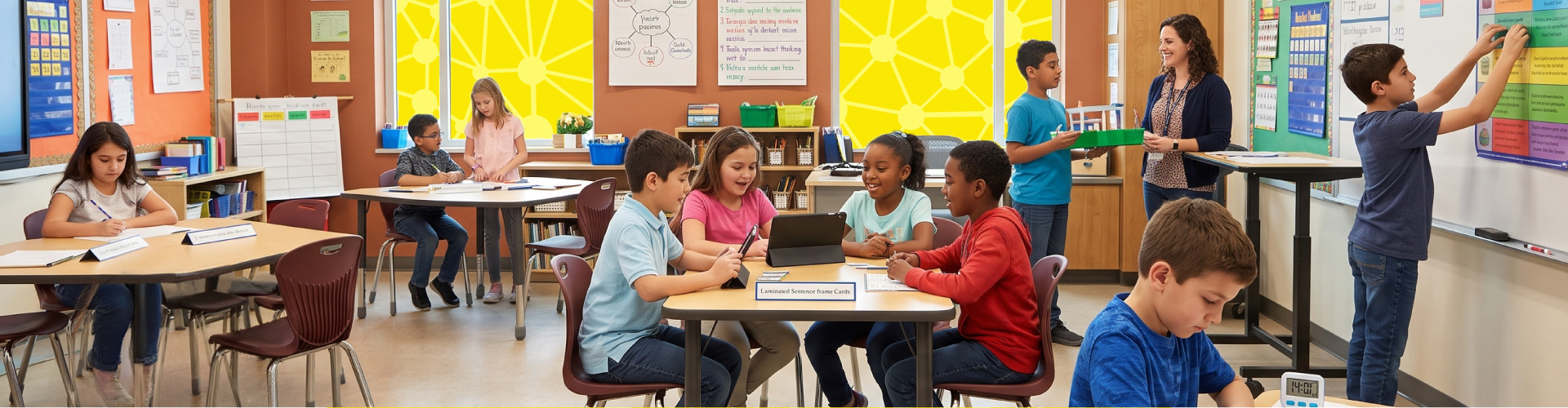
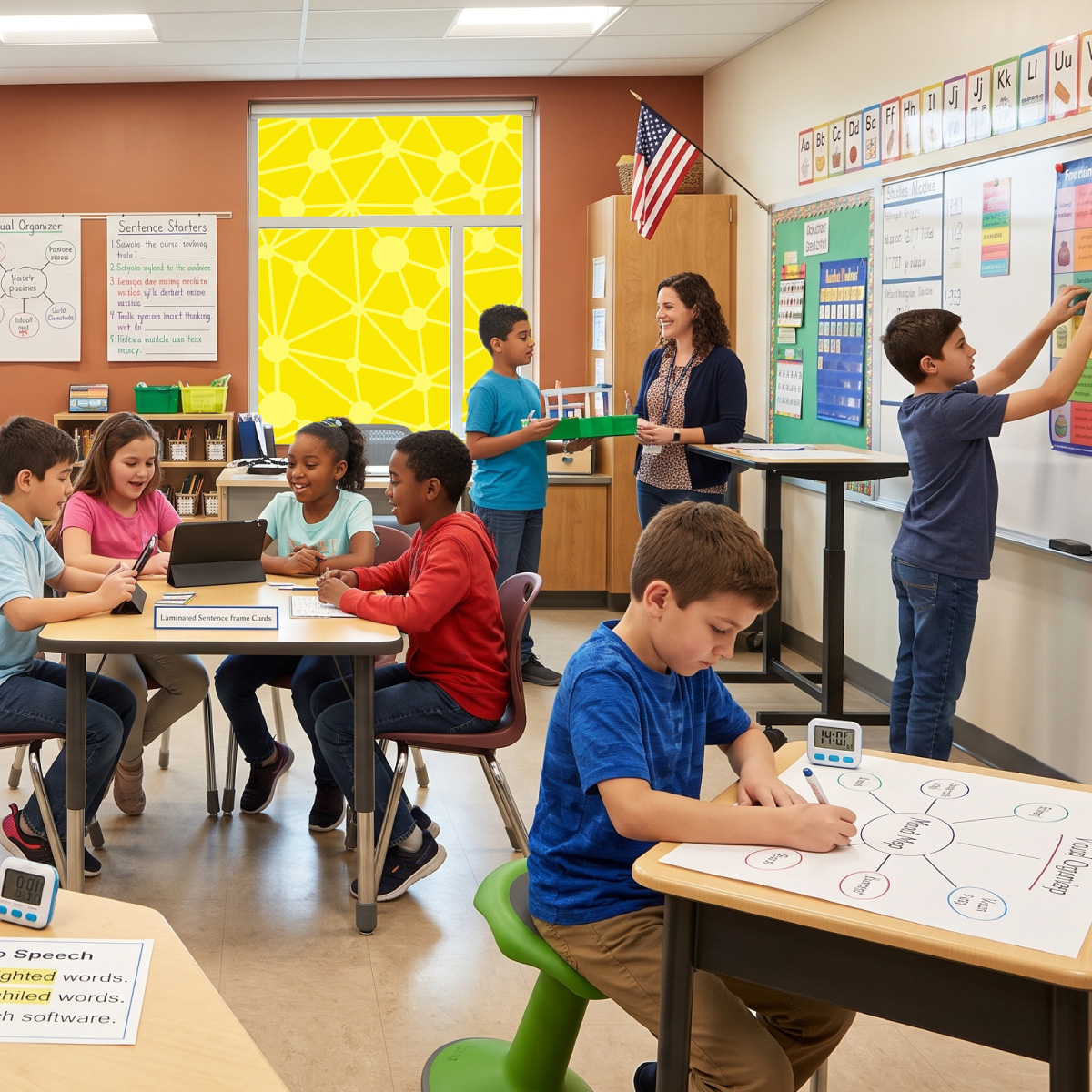
Imagine a classroom where students have access to audio, text-to-speech, visual organizers, worked examples, movement, timers, sentence frames, opportunities to talk through their thinking, and different ways to demonstrate understanding. Those options matter. For some learners, they can completely change access to a task.
But a learner can have ten tools available and still have no idea which one to choose.
The deeper goal is for a learner to recognize, I’m losing the meaning because there are several unfamiliar academic words in this section. Listening while I follow the text helps me maintain meaning. I’m going to use text-to-speech for this section and then paraphrase what I heard in my own words.
Something important has changed.
The learner isn’t simply receiving a support. The learner is becoming strategic.
This distinction matters for every student, but it can be especially important for neurodivergent learners who may experience adults making many decisions about their learning for them. The goal isn’t to fix the learner. It is to design for learner variability while helping learners understand themselves well enough to navigate that variability with increasing independence.
Notice. Name. Navigate.
This is where Metacognitive Clarity becomes practical. We can help learners develop three increasingly sophisticated habits: Notice, Name, and Navigate.
First, learners learn to notice what is happening. I’m losing my place. I understand the words but not the meaning. I have too many ideas and don’t know how to organize them. I’m rushing. I’m stuck and I’m starting to shut down. Noticing matters because it interrupts a conclusion students can reach very quickly: I’m just not good at this.
Next, learners learn to name what is happening and identify strategies that might help. I need to break this into smaller steps. I need to sketch the problem. I need to hear this section while I read it. I need to talk through my idea before I write. I need to look at the success criteria again. Naming gives learners a language for both the challenge they are experiencing and the strategies available to them.
Then they navigate. They choose what to do next, monitor whether it is working, and change course when it isn’t. Instead of waiting for the teacher to notice the problem and prescribe a solution, the learner begins participating in solving the problem.
Notice → Name → Navigate sounds simple. But think about the developmental shift underneath it. Over time, the adult is doing less of the regulating and the learner is doing more.
That is agency.
Choice Is Not the Same as Agency
This is also where I think we need to push our thinking about UDL.
A well-designed classroom might provide students with a range of tools: a timer, graphic organizer, text-to-speech, speech-to-text, visual schedule, worked example, movement opportunity, or collaborative partner. Providing those options is important. But we should be careful not to reduce UDL to a buffet of accommodations.
Choice is not the same as agency. Agency requires judgment.
If I tell a student to use a graphic organizer every time they write, I may have provided a useful scaffold. But if that student eventually learns to recognize that I have several ideas and can’t see how they connect. A graphic organizer would help me sort them before I start writing; we have accomplished something much bigger.
The student now owns the strategy.
That means learners need opportunities to try strategies, monitor their effectiveness, reflect on what happened, and gradually build knowledge about themselves as learners. It also means changing some of the questions we ask.
Instead of simply asking, Do you want to use the graphic organizer? We can ask, What is making this part difficult? What have you tried before when this happens? How will you know if that strategy is helping? What could you try if it doesn’t?
The tool matters. But knowing yourself as a learner matters even more.
Maybe “Try Harder” Is the Wrong Advice
Consider how often students hear directions such as focus, slow down, check your work, get organized, or try harder.
I understand why we say them. We can see what is going wrong and desperately want the learner to correct it. But these directions assume that students know how to do what we’re asking.
What exactly should a learner do to focus? How does someone get organized when organizing information is the very thing they find difficult? What does check your work mean if a student doesn’t know what they should be checking for?
For some learners, particularly those who experience differences in attention, executive functioning, language processing, or working memory, those instructions may provide almost no usable information.
Metacognitive clarity replaces vague reminders with visible, teachable strategies. Instead of saying get organized, we can model how to create a three-step plan. Instead of saying check your work, we can teach learners to compare a response against specific success criteria. Instead of saying focus, we can help learners recognize when their attention has drifted and develop strategies for re-engaging.
And instead of continually telling students to try harder, perhaps we need to teach them how to try differently.
That is a very different message about struggle. Difficulty no longer has to become evidence that a learner isn’t capable. It becomes information: Something about my current approach isn’t working yet. What could I change?
Making the Invisible Visible
The good news is that none of this requires another program.
Small routines embedded within everyday instruction can make the invisible work of learning visible. Plan–Do–Check, for example, asks students to pause before beginning a task. What is my goal? What are my first few steps? Where might I get stuck? Students then work their plan and finish by considering what worked, what didn’t, and what they might change next time.
Think-alouds accomplish something similar. When teachers briefly narrate their own decision-making—I’m noticing that I lost the author’s argument here, so I’m going back to the heading and asking myself what this section is mostly trying to explain—students get to observe something they rarely get to see: the invisible decisions experienced learners make while they are learning.
Visual schedules can externalize a multistep process so learners do not have to hold every direction in working memory. Success criteria give them something concrete against which to monitor their work. Timers can make time visible. Graphic organizers can make relationships between ideas visible.
These aren’t ways of making learning easier.
They make the pathway to rigorous learning more visible.
And as learners become more capable of navigating that pathway themselves, we can gradually fade the supports they no longer need.
What Happens When We Get Curious Instead?
Imagine a seventh grader who frequently begins writing without a plan. Ideas come quickly, but the learner loses track of the prompt, jumps between ideas, and often doesn’t finish.
We could say the student is disorganized.
Or we could get curious.
The teacher introduces a short Plan–Do–Check structure and models how to identify three ideas before beginning. The learner decides to use a timer to make the writing period more visible and creates a simple plan: I will plan three ideas, write for ten minutes, and then compare my strongest claim to the success criteria.
At the end, the learner reflects on whether the plan worked. The first few times, the teacher may need to prompt the process. Eventually, the learner begins initiating it independently.
Notice what changed. The learner didn’t suddenly become more compliant. The teacher didn’t find a clever way to make the student follow directions.
The learner became better at directing their own learning.
That is a much more ambitious goal.
Neurodiversity Changes the Question
There is a larger shift underneath all of this.
When we begin with deficits, our question tends to be: What’s wrong with this learner?
When we begin with learner variability, we become curious instead. What is this learner experiencing? What is the learning environment demanding? Where is the friction between the learner and the task? What options could increase access? What strategies could the learner develop? How can we help this learner understand what works for them?
Those questions do not lower expectations. In fact, I would argue the opposite. They give more learners a genuine opportunity to reach them.
They also change the relationship between students and the adults supporting them. Instead of continually doing something to or for learners, we increasingly design and problem-solve with them.
This matters within a human-centered system of support. Tier 1 should not require every learner to learn in precisely the same way before we decide who deserves something different. Strong universal instruction should anticipate variability from the beginning. Some learners will still need increasingly targeted Tier 2 and Tier 3 support, but across every level of support, learners can remain active participants in understanding their own learning.
The question isn’t simply, What support does this student need?
It is also, What is this learner learning about themselves through that support?
Students Shouldn’t Have to Audition for “Smart”
Something powerful happens when thinking becomes visible and strategies become normal.
Students stop having to prove that they are the kind of learner school has traditionally rewarded: the fast reader, the child who can hold five directions in working memory, the student who can sit still for long periods, the writer who can organize an idea before talking about it, or the learner who rarely needs to ask for help.
Instead, classrooms begin communicating a different message: There are many ways human beings learn. You can understand how you learn. You can develop strategies. You can evaluate whether those strategies are working. And you can change course when they aren’t.
Students stop auditioning for “smart” and start auditioning strategies.
Teachers become less like reminder machines and more like coaches of learning. Supports stop being markers of who is deficient and become tools learners can intentionally use. And neurodiversity stops being treated as a problem schools need to solve.
It becomes what it has always been: part of the natural variability of human learning.
UDL helps us design for that variability. Metacognitive Clarity helps learners understand and navigate it. Together, they help us move from simply providing access to developing something much more enduring.
Learners who can notice, name, and navigate their own learning.
Learners who know that getting stuck does not mean they cannot learn.
Learners who know themselves well enough to ask, What could I try next?
That is more than independence.
That is agency.
Continue the Work
Help learners understand how they learn.
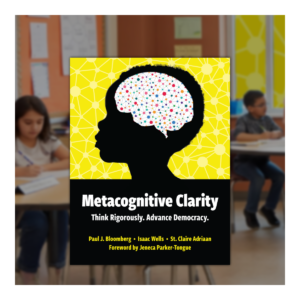
Explore Metacognitive Clarity: Think Rigorously. Advance Democracy. and practical ways to make the invisible work of learning visible so students can increasingly plan, monitor, reflect, and direct their own learning.
Design systems that respond to learner variability.
Explore the Connected Driver: Asset-Based, Rigorous, Coherent Systems of Support to see how learner agency, strong Tier 1 instruction, and responsive supports connect within a human-centered system.