
Collaboration is easy to praise and surprisingly difficult to practice.
Educators may meet regularly, share materials, coordinate pacing, and compare assessment results. These activities can help a team stay organized, but organization alone does not create deep professional learning.
Meaningful collaboration asks more of us.
It requires educators to make their thinking visible, open their practice to one another, and study the relationship between teaching and learning together. Instead of simply dividing the work, teachers combine their expertise to understand a shared problem and make stronger instructional decisions.

That kind of collaboration is at the heart of The Math PLC Tune-Up: 10 Indicators to Get Collaboration Back in Gear, a forthcoming book from Mimi & Todd Press. One of the practices explored in the book is the Math PLC Lab, a lesson-study-inspired approach that moves collaborative learning out of the meeting room and directly into the classroom.
Moving Collaboration Into the Classroom
A Math PLC Lab is a classroom-based form of collaborative inquiry inspired by lesson study.
In a traditional lesson study cycle, a team identifies an upcoming standard or instructional challenge, designs a lesson together, anticipates student strategies and misconceptions, observes the lesson, and then meets afterward to analyze what happened.
The Math PLC Lab builds on that process by bringing the team’s collaborative decision-making directly into the lesson.
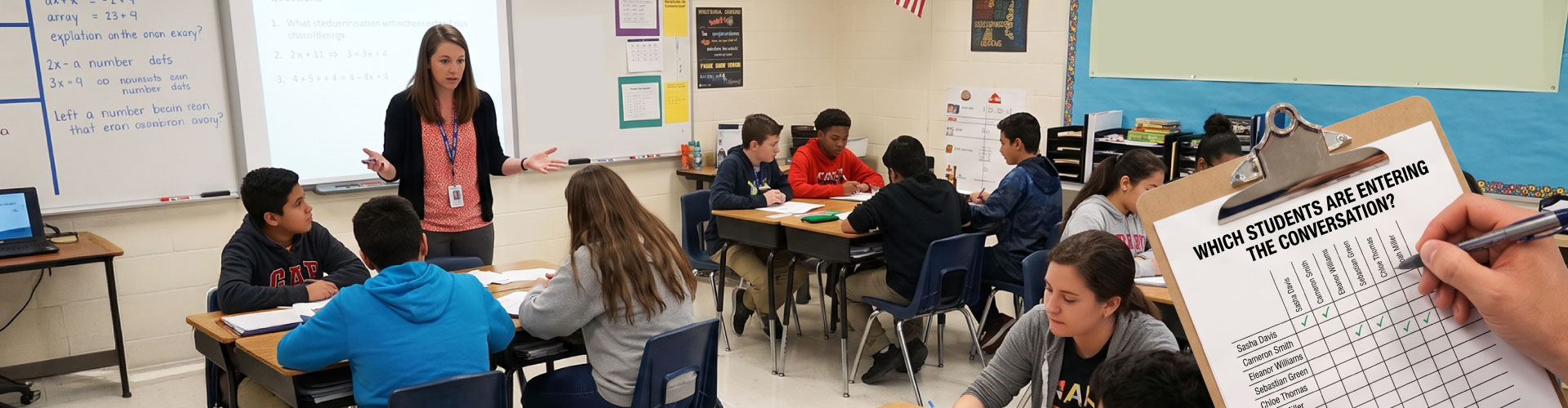
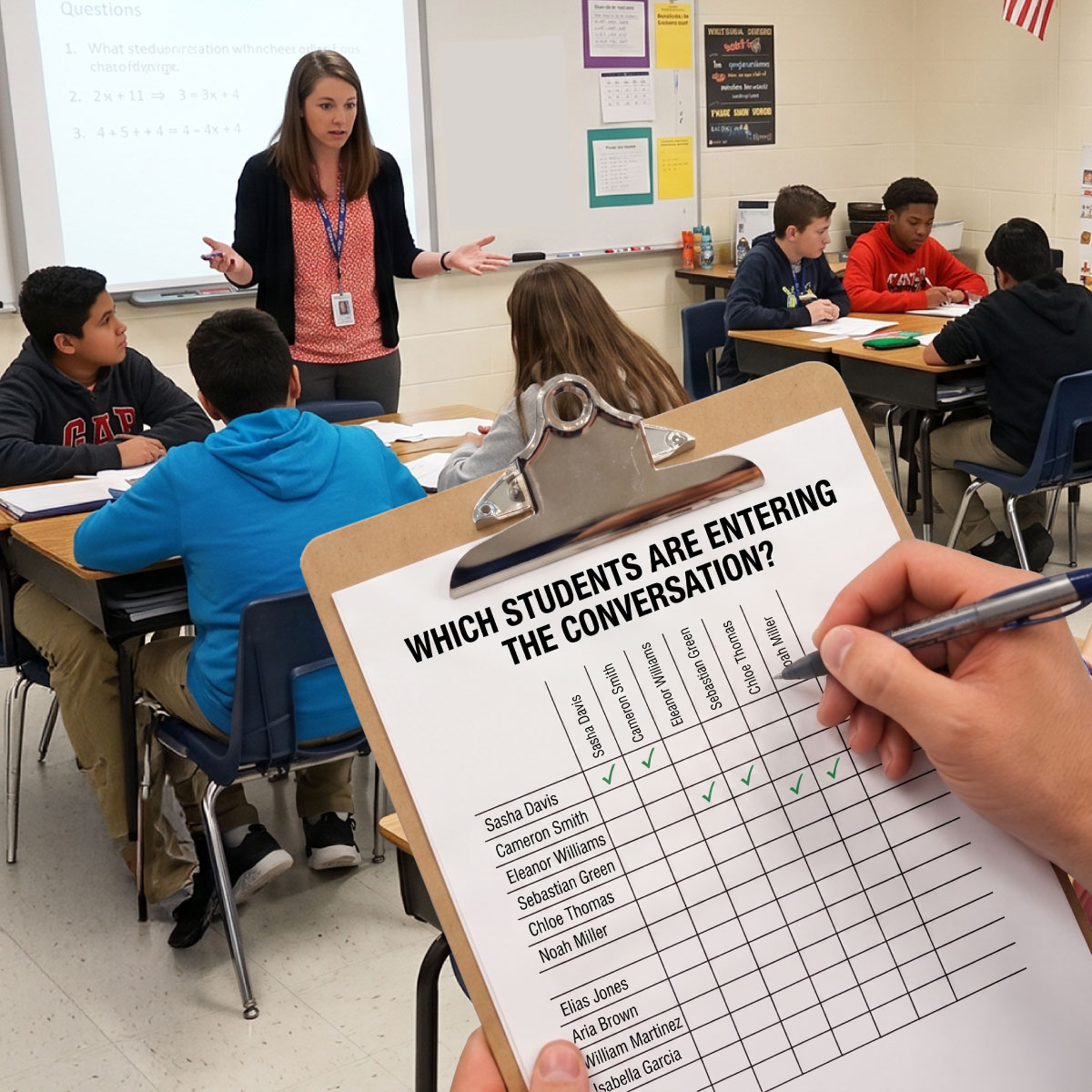
One teacher serves as the lesson facilitator while the other members of the PLC observe students. Their role is not to evaluate the teacher. It is to gather evidence about student learning.
- What are students saying?
- Which representations are they using?
- Where are they making connections?
- Where does their reasoning begin to break down?
- Which students are entering the conversation, and which students are still on the outside of it?
The team is not watching for whether the teacher followed the plan perfectly. They are studying how students respond to the mathematics.
That distinction changes everything.
Before the Lesson: Focus the Inquiry
A Math PLC Lab begins with a specific instructional focus.
The team might decide to study how students:
- explain their mathematical reasoning
- use multiple representations
- respond to an open-ended problem
- build on one another’s ideas
- move from a procedure toward conceptual understanding
The focus needs to be narrow enough that observers know what evidence to collect.
Team members then examine the mathematics together. They solve the task, consider different strategies, anticipate misconceptions, and discuss the questions students may ask.
This planning conversation strengthens the team’s collective Mathematics Knowledge for Teaching. Teachers are not only preparing an activity. They are studying the mathematics, the learners, and the instructional decisions that might connect the two.
During the Lesson: Huddle and Adjust
The most distinctive feature of the Math PLC Lab occurs during the lesson itself.
At planned or naturally occurring moments, the facilitator pauses and calls the team together for a brief huddle. Observers share what they have noticed about student thinking.
The team might ask:
- What do students appear to understand?
- What evidence supports that conclusion?
- Where are students getting stuck?
- Is the current task opening the mathematics or narrowing it?
- What instructional move should we make next?
The team then makes an in-the-moment decision. The facilitator might pose a new question, share a student representation, adjust the grouping, provide another model, or create more time for students to discuss their thinking.
The lesson continues, but it continues with the benefit of the entire team’s expertise.
This is collaboration in its most practical form. Teachers are not waiting until the next meeting to discuss what they could have done differently. They are learning, deciding, and responding together while the learning is still unfolding.
After the Lesson: Learn Forward
Following the lesson, the team debriefs the experience.
The conversation remains grounded in evidence. Observers share what students said, did, represented, and appeared to understand. The team identifies patterns, discusses questions that emerged, and considers which instructional moves supported learning.
The goal is not to declare the lesson a success or failure.
The goal is to learn from it.
A productive debrief might lead the team to revise the task, change the sequence of questions, introduce a representation earlier, or create more space for students to compare strategies.
Each insight becomes part of the team’s shared professional knowledge. Teachers leave with ideas they can apply in their own classrooms, and the lesson becomes stronger for the next group of students.
Collaboration Requires Trust
A Math PLC Lab also asks teachers to practice a vulnerable form of collaboration.
Teaching has traditionally been treated as private work. A teacher closes the classroom door, makes hundreds of decisions, and often reflects on those decisions alone.
Inviting colleagues into that space can feel risky, especially when classroom observation has historically been connected to evaluation.
For the lab to work, the team must establish a clear agreement: everyone is there to study learning, not judge the teacher.
The facilitator is not expected to deliver a flawless demonstration lesson. In fact, the most valuable moments may occur when students respond in an unexpected way and the team must think together about what to do next.
Trust allows educators to replace performance with inquiry.
Instead of asking, “Did I teach this correctly?” the team can ask, “What are we learning about how students make sense of this mathematics?”
Collaboration as Collective Responsibility
The Math PLC Lab illustrates why collaboration matters so much.
Collaboration does not mean that everyone teaches in exactly the same way. It does not eliminate professional judgment or individual expertise. It creates a structure through which those different perspectives can contribute to a stronger shared understanding.
- No single teacher has to notice everything.
- No single teacher has to solve every instructional challenge alone.
- No single classroom carries the entire responsibility for figuring out what students need.
The team shares responsibility for studying learning and improving its response.
Real collaboration is not measured by the number of meetings on the calendar, the amount of information shared, or the number of common documents produced. It becomes visible when educators use their collective expertise to make better decisions for learners than any one person could make alone.
A Math PLC Lab gives teams a concrete place to begin.
Choose one lesson.
Name one question about student learning.
Study the mathematics together.
Watch what students say and do.
Pause long enough to think.
Then decide what comes next, together.

Learn more about the Mimi & Todd Press’s forthcoming book, The Math PLC Tune-Up: 10 Indicators to Get Collaboration Back in Gear, and how it supports deeper learning in mathematics through collaboration.