
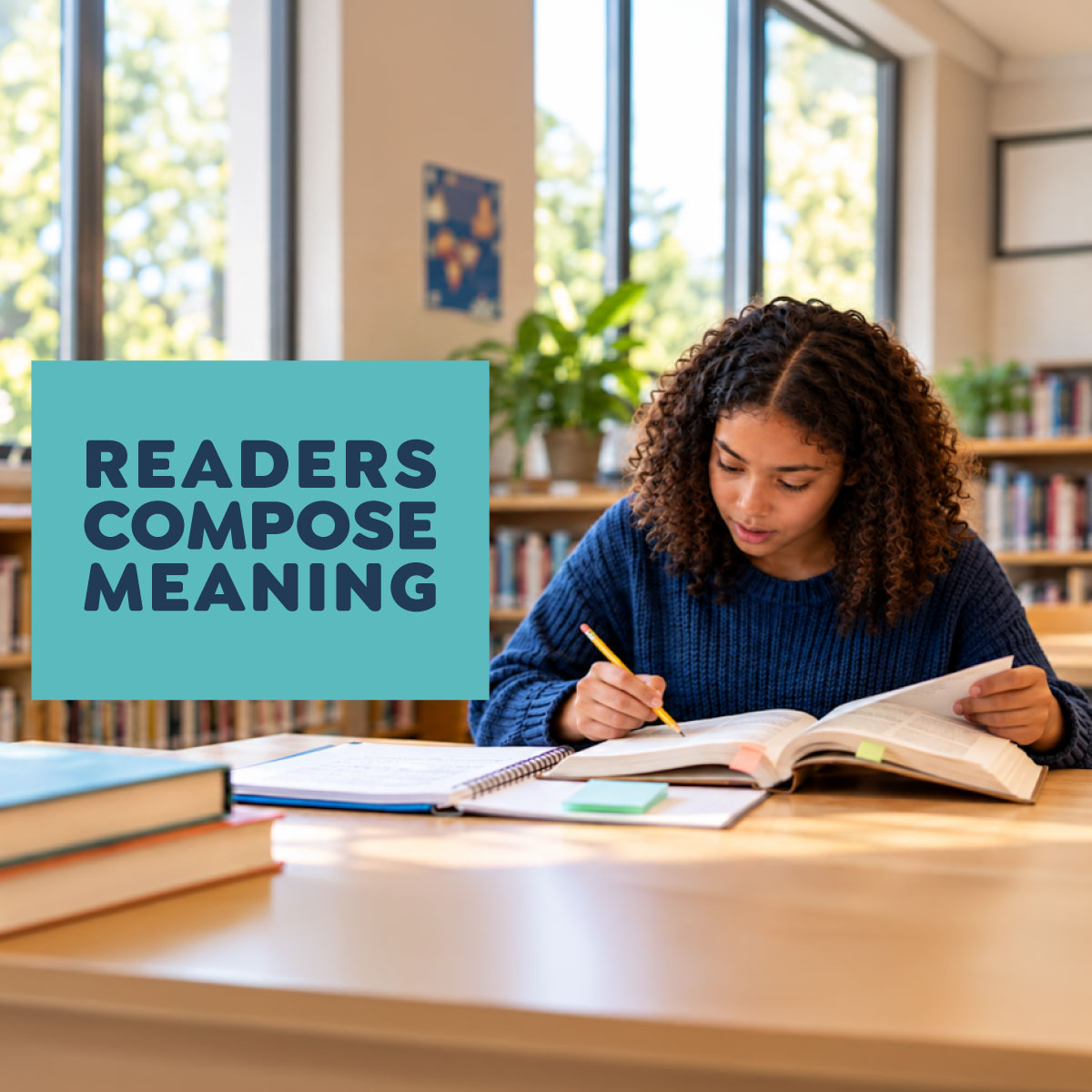
Writing is constantly hailed as a creative process. Reading deserves the same recognition.
Writers make decisions about words, structure, evidence, organization, tone, and purpose. Readers engage in an equally active process from the other side of the text. They connect words to ideas, test possible meanings, draw inferences, recognize patterns, monitor their understanding, and revise interpretations as they read.
Just as the writer composes the text, the reader composes an understanding of it.
That does not mean every interpretation is equally valid. Creative reading is disciplined by the text. Readers generate possibilities, but they must test those possibilities against the language, structure, evidence, and ideas the author provides.
Reading is creative problem-solving in pursuit of meaning.
A Brief Look at the Active View of Reading
The Simple View of Reading helped the field name two essential contributors to reading comprehension: word recognition and language comprehension. Both remain foundational.
The Active View of Reading, developed by Nell Duke and Kelly Cartwright, builds on that foundation and offers a fuller picture of what readers coordinate as they make meaning. It identifies four interconnected areas:
- Word recognition, including phonological awareness, phonics, decoding, and recognizing familiar words automatically.
- Language comprehension, including language structures, background and cultural knowledge, verbal reasoning, inference, and understanding how ideas work within a text.
- Bridging processes, including vocabulary, morphological awareness, and fluency, which help readers connect the words on the page with the meaning they are constructing.
- Active self-regulation, including motivation, engagement, executive function, strategy use, and the ability to monitor understanding and adjust when meaning becomes unclear.
These areas do not operate independently or unfold in a fixed sequence. Readers coordinate them, often simultaneously, in response to the text, the task, their purpose, and the knowledge and experiences they bring to the reading.
We have explored more of the research behind the model in Reading Science Recap: Edition 1 and The Science of Reading Isn’t Finished. Here, the Active View helps us examine something else: the creative work involved in coordinating these processes.
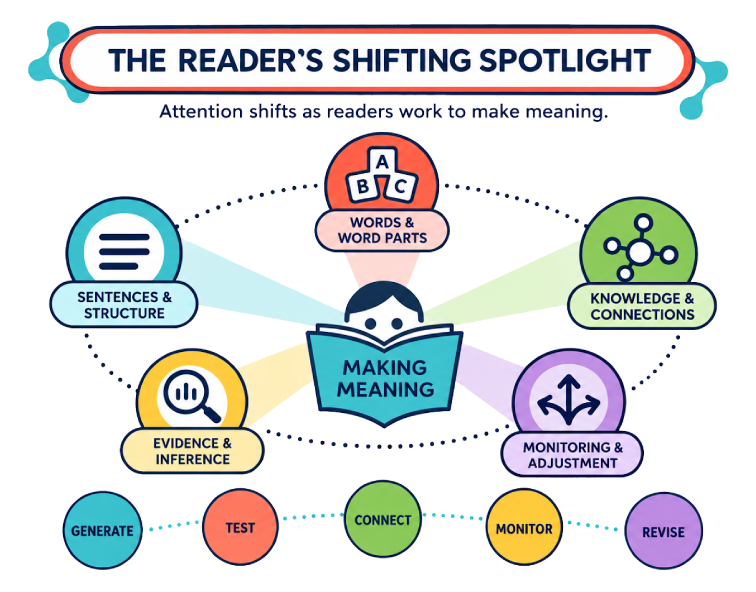
*Original illustration informed by the Active View of Reading (Duke & Cartwright, 2021).
Creativity Lives in the Coordination
Within the Active View, creativity lives in the coordination of the four areas. Readers draw upon the full system, but the energy they devote to each process shifts from moment to moment.
A reader may move easily through several sentences because most of the words are recognized automatically and the ideas connect with existing knowledge. Then an unfamiliar word interrupts the flow. Their attention shifts toward decoding, morphology, vocabulary, and context. They determine a possible meaning, test it within the sentence, and decide whether it fits the larger passage.
A complex sentence creates a different problem. The reader may need to slow down, examine the syntax, hold several ideas in working memory, and reconstruct the relationship among them. Rereading and/or paraphrasing becomes part of making meaning.
Several paragraphs later, the challenge may be connecting ideas across the text. The reader draws on background knowledge, recognizes a text structure, makes an inference, and determines whether a new detail extends, contrasts with, or complicates an earlier idea.
When evaluating evidence, the reader faces another set of decisions. Which details are relevant? Which evidence is strongest? How does it connect to the claim? Does it support the reader’s current interpretation, or does that interpretation need to change?
At still another point, the greatest demand may be self-regulation. The reader has to notice that meaning has become unclear, resist the urge to keep moving without understanding, and decide what to try next.
These shifts are often rapid and largely invisible. Readers generate possibilities, test them, connect ideas, monitor the results, and revise. They ask themselves, whether consciously or unconsciously:
- Does this possible word meaning fit the sentence?
- Does my interpretation account for the evidence?
- Did this paragraph change what I thought earlier?
- Do I need to reread, slow down, examine a word part, activate relevant knowledge, or try another approach?
Like other forms of creative problem-solving, reading involves a goal, constraints, incomplete information, possible pathways, feedback, and repeated adjustment. Readers build a provisional understanding and continue reshaping it as new language and ideas appear.
The text remains the same, but the reader’s work keeps changing.
Why the Shifting Matters
The processes in the Active View are always connected, but they do not place the same demands on a reader in every text or at every moment.
Automatic word recognition matters because it allows readers to direct more attention toward ideas and relationships. Vocabulary and knowledge matter because they shape what readers can understand and infer. Fluency matters because phrasing and expression carry meaning across words and sentences. Self-regulation matters because readers must recognize when their developing understanding no longer fits the text.
This also helps explain why reading difficulty cannot always be traced to one isolated skill. Two readers may misunderstand the same passage for different reasons. One may struggle to recognize key words. Another may read the words accurately but lack the knowledge needed to connect the ideas. A third may understand each sentence but fail to monitor whether those sentences form a coherent whole.
The Active View gives us a way to look more closely at that work. It invites us to ask which processes the reader is coordinating successfully, where the greatest demand is occurring, and what may help the reader continue constructing meaning.
Protecting the Creative Work of the Reader
Seeing reading as a creative act changes what instructional support should accomplish.
When a student gets stuck, it can be tempting to simplify the text, explain the difficult section, or provide the interpretation. Sometimes students need immediate support. When that becomes the default response, however, the teacher begins doing more of the meaning-making while the student has fewer opportunities to develop as an active reader.
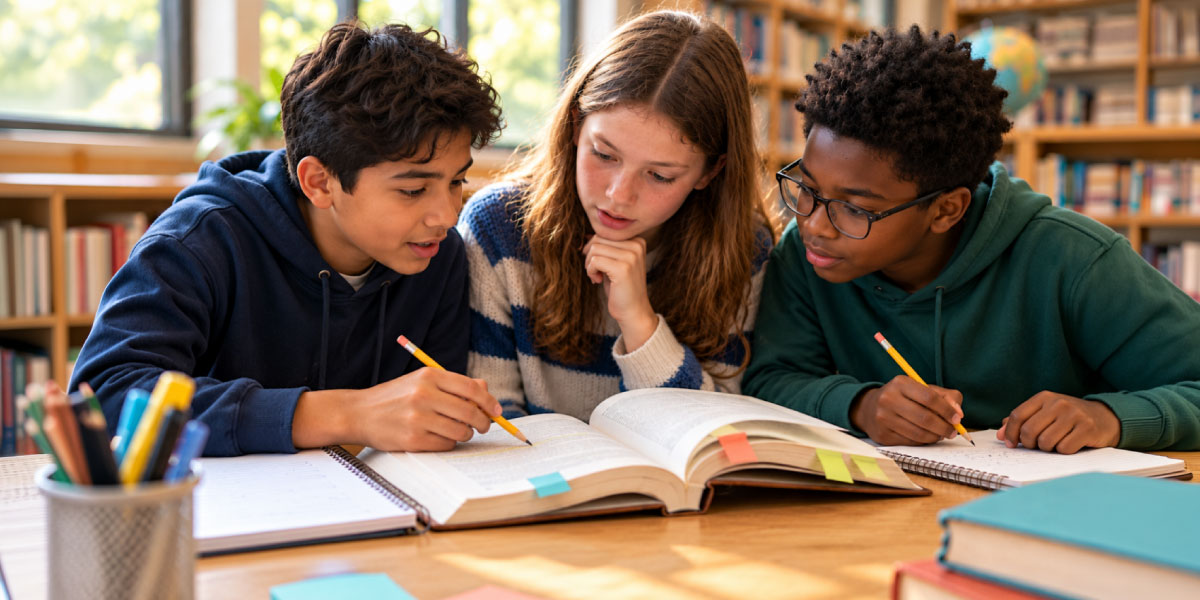
A stronger response begins by locating the point of friction. Where did meaning begin to break down? What was the reader already doing successfully? Which process requires greater attention or more explicit instruction? What should the student eventually be able to do independently with a new text?
The response might involve modeling how to examine meaningful word parts, unpack a complex sentence, connect ideas across paragraphs, evaluate possible evidence, or notice when an interpretation no longer makes sense. The teacher makes the process explicit, guides students as they practice it, and gradually returns the decision-making to them.
Explicit instruction expands the number of moves available to the reader. Its purpose is to help students recognize a problem, select a productive response, test their thinking against the text, and continue constructing meaning for themselves.
The clearest evidence of that learning is transfer. Can the student use the process independently when a new grade-level text presents a similar challenge?
Reading instruction should build knowledge and skill while protecting the student’s role as the meaning-maker. Readers encounter uncertainty, draw upon multiple resources, generate possibilities, test them against evidence, and change direction when necessary. As they develop expertise, they can become more creative in how they approach and interact with texts.