

Students who can explain what they have learned, how they learned it, and what they need to do next are developing capabilities that extend far beyond a single lesson. They become better able to direct their learning, recognize when they need to adjust their thinking, and apply what they know in new situations.
Summarizing and reflection work together to develop these capabilities. Summarizing requires students to retrieve important ideas, explain relationships, and organize their understanding. Metacognitive reflection helps them examine the thinking behind their summaries, recognize which strategies supported their learning, and determine what to do next.
Together, these practices strengthen both the learning itself and students’ understanding of how they learn.
The Thinking That Happens When Students Summarize
Consolidation helps students organize, strengthen, and retrieve important knowledge so they can explain and use it over time. Summarizing contributes to this process by requiring students to determine what matters, connect ideas, and communicate their understanding.
The thinking involved depends on what students are learning. A summary of a historical event might explain causes and consequences. In mathematics, students may explain the reasoning behind a solution or compare two strategies. In science, students might summarize how parts of a system interact and what happens when one part changes.
Each requires students to select essential information and communicate relationships accurately.
The process becomes even stronger when students retrieve information from memory, compare their explanations with evidence or success criteria, and revise their thinking. Returning to the learning later gives students opportunities to strengthen retention and use their understanding in different contexts.
These experiences contribute to learning at both surface and deep levels. Foundational knowledge provides the material students need to think with, while deeper understanding allows them to explain relationships, recognize patterns, and make connections. Transfer becomes possible when students can apply what they understand in unfamiliar situations.
Summarizing also creates an opportunity for reflection. Students have something concrete to examine: the ideas they selected, the relationships they explained, the strategies they used, and the changes they made as their understanding developed.
Connecting Summarizing to Metacognitive Clarity
Metacognitive reflection helps students become more deliberate about their learning. By examining their summaries, students can begin to recognize what they understand, where their thinking needs strengthening, and how their decisions influenced the quality of their work.
For example, students may recognize that they remembered important vocabulary but struggled to explain how ideas were related. Others might describe how comparing examples helped them organize their thinking or how reviewing success criteria prompted them to revise an explanation.
These observations create opportunities to plan, monitor, evaluate, and adjust learning.
In Metacognitive Clarity: Think Rigorously. Advance Democracy., we explore three interconnected elements that help students develop these capabilities: Purpose, Process, and Ownership.
Purpose helps students understand what they are learning, why the learning matters, and how important ideas connect to larger concepts and questions.
Process helps students recognize the strategies they use, monitor their effectiveness, and make adjustments when their understanding needs strengthening.
Ownership develops as students use evidence, feedback, and reflection to evaluate their progress and make decisions about their next steps.
These elements work together during summarizing and reflection. Students clarify what they are trying to explain, select strategies for organizing their thinking, examine the quality of their explanations, and determine what to improve.
Over time, this kind of reflection helps students develop a stronger understanding of themselves as learners and greater independence in how they approach challenging work.
Using Reflection to Guide the Next Step
Metacognitive reflection is most useful when students can do something with what they discover.
After summarizing, students might identify an important relationship they have not explained clearly. They may recognize that a strategy helped them remember information but did not yet help them understand the connections. Others may identify what they need to revisit before applying their learning to a new problem.
We can support this thinking through intentional reflection routines. The Student Evaluating Prompts Cards (K–12) from Metacognitive Clarity help students examine their progress toward a learning goal, evaluate the strategies they used, recognize what helped them persist, and determine how they might apply their learning in the future.
Teachers can select a prompt that fits the learning and use it during an exit ticket, learning journal, partner conversation, or student conference. The goal is to develop students’ ability to explain their thinking with increasing accuracy and independence, rather than simply complete another reflection assignment.
These reflections also provide teachers with valuable evidence.
A student who can identify essential ideas but struggles to explain their relationships may benefit from comparing examples, examining a model, or discussing the connections. A student who has developed an accurate explanation may be ready to apply the learning in an unfamiliar context. Their reflections can help educators understand which strategies supported their progress and where additional instruction may be needed.
Building Habits That Last
Reflection becomes increasingly powerful when students have regular opportunities to use what they learn about their thinking.
Returning to a summary several days later allows students to examine what they remember, how their understanding has developed, and whether they can apply it in a new context. Comparing their earlier and later thinking gives them evidence of their growth and opportunities to consider which strategies were effective.
As students become more skilled at summarizing and reflecting, they gain a stronger understanding of both the content and themselves as learners. They develop the language to explain their decisions, recognize productive strategies, and take greater responsibility for their progress.
Our goal is for students to carry these capabilities into increasingly complex learning, using what they know about their own thinking to approach challenges with greater clarity, confidence, and independence.
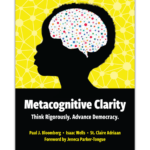
Explore additional strategies and classroom resources in Metacognitive Clarity: Think Rigorously. Advance Democracy., from Mimi & Todd Press.