
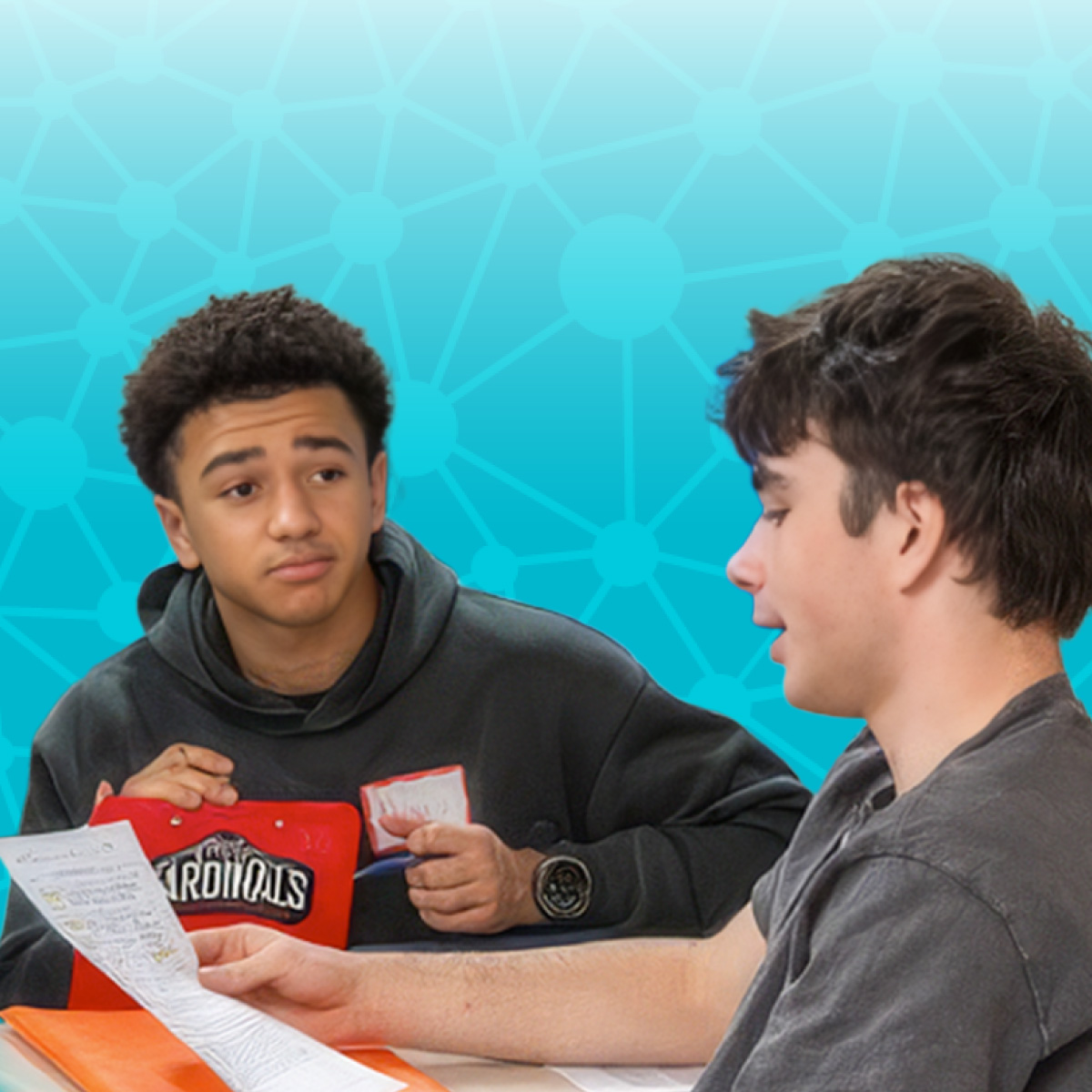
I can really pretend to learn and like not think at all and just be completely blank inside.
That was one student’s observation during a Student-Led Instructional Round at Orting High School in Washington. Other students immediately recognized the experience. They even had a name for it: “playing school.”
The students hadn’t visited a single classroom yet, but they had already identified something important about teaching and learning. Students can appear engaged, complete assignments, follow directions, and earn good grades without necessarily experiencing meaningful learning.
It was a powerful reminder of something I have believed throughout my career: If we want to understand how well our schools are working, we need to partner with the people experiencing them every day.
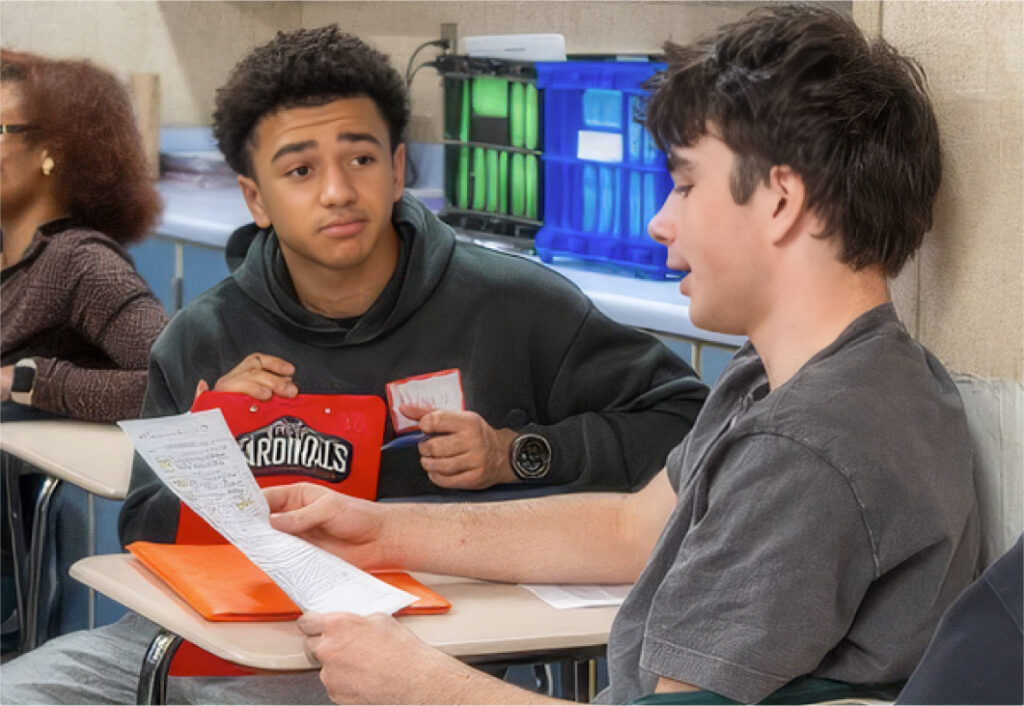
Dallas interviewing a Student During the Student-Led Round Process
Schools across the country are working to elevate student voice. We administer surveys, establish advisory committees, and invite students to school board meetings. These are important starting points, but they raise a more consequential question: Are students actually partners in school improvement, or are we simply asking them what they think?
This commitment is anchored in Orting School District’s 2023–2026 Strategic Plan. Under the leadership of Superintendent Ed Hatzenbeler and Dr. Aaron Lee, Executive Director of Teaching and Learning, the district operates on a clear theory of action: consistently engaging students in rigorous learning opportunities that build individual agency while honoring personal dignity. By embedding these values into everyday practice, Orting aims to ensure every student feels connected, inspired, and empowered for present and future success.
Over the past two years, our partnership with the Orting School District has demonstrated what becomes possible when student voice is connected to meaningful action, shared responsibility, and evidence of impact.
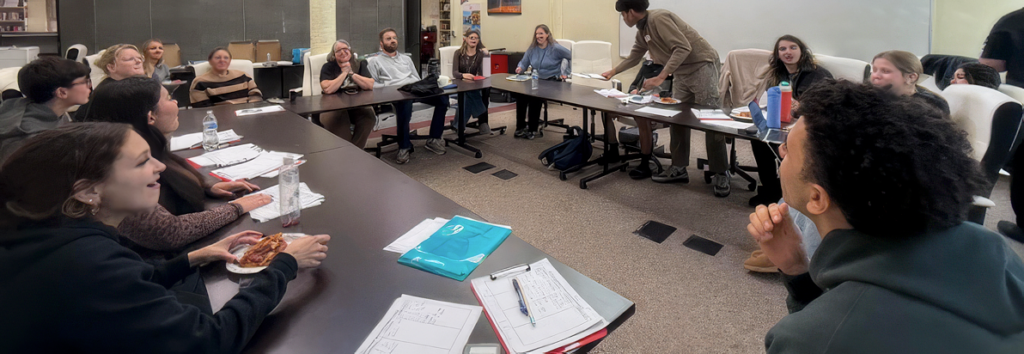
Student-Led Rounds at Orting High School
Academic Improvement and Student Agency Belong Together
Our work with Orting has focused on two interconnected priorities: improving academic outcomes and creating learning environments where students experience dignity, belonging, and meaningful agency. Over the past two years, we have seen encouraging progress.
According to Superintendent Ed Hatzenbeler, since the district began partnering with The Core Collaborative two years ago, average assessment scores have increased across all three core academic areas:
- English Language Arts: 7.3% increase
- Mathematics: 8.2% increase
- Science: 6.7% increase
These improvements reflect the collective commitment of Orting’s educators, students, and leaders to strengthening teaching and learning. While we cannot attribute these gains to any single strategy or partnership, they provide encouraging evidence of academic progress.
Yet Superintendent Hatzenbeler emphasizes that achievement data tell only part of the story. Equally important is what Shane Safir and Jamila Dugan call street data in their outstanding book, Street Data: A Next-Generation Model for Equity, Pedagogy, and School Transformation (2021).
Safir and Dugan challenge educators to look beyond traditional achievement measures and examine the lived experiences of students, particularly those whose perspectives are too often overlooked. Their work reminds us that some of the most important evidence about school improvement cannot be captured by standardized assessments alone.
Orting’s experience brings this idea to life. When students feel genuinely listened to, see their ideas valued, and experience meaningful influence over their learning environments, their connections with adults deepen, their engagement becomes more authentic, and their sense of personal agency grows.
This is why academic improvement and student agency should never be treated as competing priorities. Assessment data help us understand what students know and can do. Street data help us understand how students experience instruction, whether they feel connected and capable, and what conditions support or constrain their success.
When we bring these forms of evidence together, we move beyond simply measuring school improvement. We begin creating it with students.
That is what makes Orting’s approach so compelling. The district recognizes that students are more than test scores while maintaining a clear commitment to academic mastery and improvement.
Building a Student Voice Ecosystem
Rather than treating student voice as an isolated initiative, Orting is developing a connected ecosystem that creates opportunities for students to influence decisions at the classroom, school, and district levels.
Four structures make this possible.
- Student Board Representatives bring student perspectives directly into district governance, helping connect board priorities to the experiences of young people.
- Principal Advisory Committees provide opportunities for students and school leaders to examine academic and cultural priorities, identify concerns, and consider improvements together.
- Student Board Representative Advisory expands the conversation across schools and grade levels, recognizing that a few student leaders cannot represent every experience. Students help gather broader perspectives, including those that might otherwise go unheard.
- Student-Led Instructional Rounds bring student leadership directly into the instructional improvement process. Students help develop inquiry questions, gather classroom evidence, identify patterns, and recommend actions to strengthen teaching and learning.
These structures are connected by something essential: meaningful feedback loops. Students share their experiences, students and adults interpret the evidence together, they determine what needs to change, and they return to students to evaluate whether those changes made a difference.
Without that final step, student voice can easily become performative. We may have listened, but have we actually changed anything?
At Orting, the goal is not simply to hear students. It is to develop collective agency, the shared capacity of students and adults to make decisions, take action, examine impact, and improve their school community together.
When Students Begin to Lead the Inquiry
The evolution of Student-Led Instructional Rounds at Orting provides a particularly powerful example.
During the instructional round at Orting High School, students helped develop observation lenses focused on collaboration, curiosity, relevance, relationships, psychological safety, and learner identity. They examined what meaningful learning looked and felt like, gathering evidence rather than simply offering opinions about teachers or classrooms.
Their findings were revealing.
Students explained that collaboration depends on more than placing classmates in groups. Trust and relationships determine whether students feel comfortable asking questions, sharing unfinished ideas, or admitting confusion. They also examined how grades influence learner identity. As one student, Jaylen, observed, “No one wants to feel stupid.”
The students weren’t asking educators to lower expectations or remove academic challenge. They were helping us understand the human conditions that make challenging learning possible.
Then something even more important happened.
Students began questioning the inquiry process itself. Whose voices were missing? Were the students who struggled academically or felt disconnected from school adequately represented? How could the school gather more complete evidence?
They proposed additional focus groups, anonymous surveys, expanded observations, and opportunities for students to help facilitate future rounds. Think about that progression. Students began by helping adults study learning. By the end, they were helping us reconsider how the school should study itself.
That is the difference between student participation and student leadership.
 A Decade of Learning from Students
I also want to recognize my colleague and coauthor, Joanne Buckheit, who began implementing Student-Led Instructional Rounds in her own school approximately a decade ago. Joanne understood early on that students possess knowledge about instruction that adults simply cannot access through observation and achievement data alone.
Her pioneering work helped establish the foundation for what we are seeing in schools today, including Orting’s growing student leadership.
Joanne and I are now bringing these experiences together in our forthcoming Mimi & Todd Press book, Student-Led Rounds: Democracy in Action. Orting is a major case study, alongside schools in New Jersey, New York, and Hawaiʻi.
We are especially honored that Orting student leaders Carly Castro and Dallas Guy are contributing authors. Their experiences help illustrate how students can move from providing feedback to exercising meaningful influence over instructional improvement.
The book is about more than a process for observing classrooms. It is about dignity, learner identity, shared inquiry, and the democratic possibilities that emerge when students are recognized as capable partners in school improvement.
What Can Other Districts Learn from Orting?
Orting’s experience offers an important lesson: You don’t need another initiative to elevate student voice. You need to connect students to the improvement priorities you already have.
If literacy achievement is a priority, how might students help us understand their reading experiences? If mathematics proficiency needs to improve, what can students tell us about their opportunities to reason, make mistakes, and receive meaningful feedback? If belonging or attendance is a concern, how might students help identify the conditions that influence whether their peers feel connected to school?
Most importantly, how will students know that their participation made a difference?
This November, I have the privilege of presenting alongside Carly Castro, Dallas Guy, and Renee Martin at the Washington State School Directors’ Association conference. Our session, From the Boardroom to the Classroom: Elevating Student Voice for Meaningful Impact, will share Orting’s journey and provide practical strategies for building authentic student partnerships.
What excites me most is that the students will help lead the presentation. They are not simply there to tell adults how much they appreciate being heard. They are there to share what they have learned about leadership, improvement, and the responsibility that comes with having a meaningful voice.
Orting’s story reminds us that school improvement is not something we should simply do for students. It is something we can accomplish with them. And when students become genuine partners in understanding problems, shaping solutions, and evaluating impact, we do more than improve schools.
We help young people experience democracy in action.
Interested in building a student voice ecosystem in your district? Learn how The Core Collaborative supports Student-Led Instructional Rounds, student advisory structures through focus groups, and human-centered school improvement at thecorecollaborative.com.
Reference
Safir, S., & Dugan, J. (2021). Street data: A next-generation model for equity, pedagogy, and school transformation. Corwin.