
 Schools have never had more data. We have assessment data, attendance data, behavior data, graduation data, engagement data, and increasingly sophisticated dashboards designed to help educators understand what is happening across a school system. All of this evidence matters. It helps us identify patterns, monitor progress, recognize inequities, and determine where additional support may be needed.
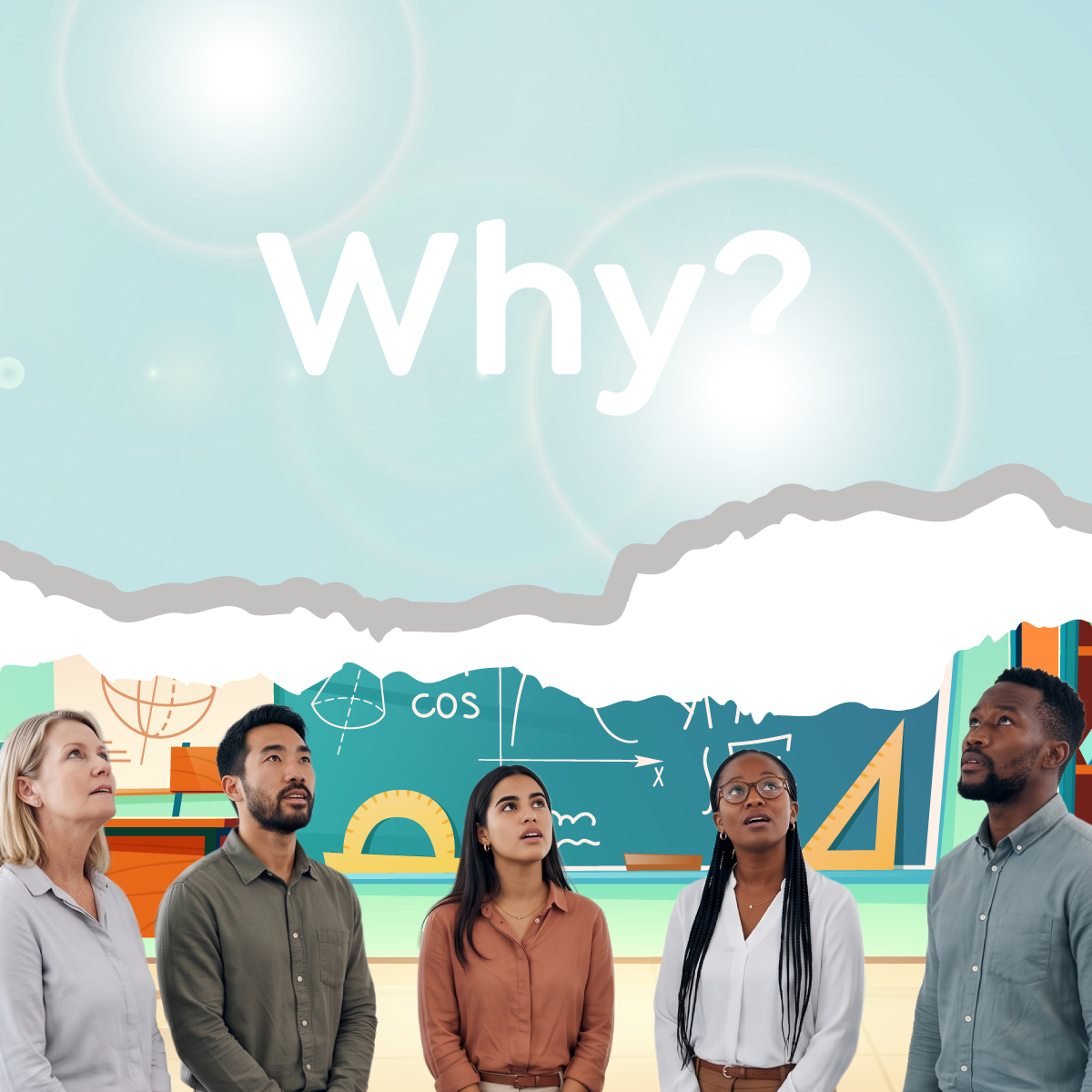
But most of our data is much better at telling us what is happening than why it is happening.
We can see that a student is chronically absent, but an attendance report cannot tell us what it feels like for that student to walk into school each morning. We can identify that students are struggling in mathematics, but a proficiency rate cannot explain how they experience instruction or where they begin to lose confidence. We can see that enrollment in a career pathway is low, but the numbers alone cannot tell us whether students understand the pathway, see themselves in it, or believe it connects to a future they value.
Those answers often live somewhere else. They live in the experiences of students, educators, families, graduates, employers, higher education partners, and community members.
If we want to understand the conditions shaping learner success, belonging, engagement, agency, and future readiness, we have to get much better at listening.
What If We Treated Voice as Evidence?
In education, we have sometimes created an unintended hierarchy of evidence. Quantitative measures are treated as the “real data,” while interviews, focus groups, observations, and lived experiences are considered supplementary. We might survey students, invite families to a listening session, or ask teachers for feedback, but when it is time to make decisions, we often return almost exclusively to the numbers.
Human-centered improvement challenges that distinction.
A student explaining why she stopped participating in mathematics is evidence. A teacher describing the conditions that make collaborative learning difficult is evidence. A family explaining why school communication feels inaccessible is evidence. An employer identifying the habits young people need when they enter the workplace is evidence. A graduate reflecting on what school prepared him for—and what it did not—is evidence.
One conversation does not tell us what to change. But when perspectives are gathered intentionally, examined for patterns, and connected with other sources of evidence, they can reveal dimensions of a problem that traditional measures cannot.
Quantitative evidence helps us see the pattern. Human-centered evidence helps us understand the experience behind the pattern.
We need both.
Moving From Voice to Action
Listening, however, is not enough. Schools can become very good at collecting stakeholder voice without allowing that voice to influence what happens next. We administer surveys, organize focus groups, conduct empathy interviews, create advisory committees, and invite people to share their experiences. Then the findings sometimes end up in a presentation, report, or strategic planning document without producing meaningful change.
Over time, voice without action can become another form of disengagement. If we repeatedly ask people to tell us about their experiences but nothing changes as a result, we should not be surprised when they eventually stop participating.
Human-Centered Voice-to-Action™ is designed to close that gap through a simple improvement process:
VOICE → ANALYSIS → ACTION
| Phase | What We Do | Questions We Explore | What It Produces |
|---|---|---|---|
| VOICE | Listen deeply through interviews, focus groups, empathy conversations, surveys, and community engagement. | What are people experiencing? What strengths, barriers, and possibilities are they helping us see? | Qualitative evidence grounded in lived experience. |
| ANALYSIS | Examine perspectives alongside student learning and system evidence. | What patterns are emerging? Whose experiences differ? What confirms or challenges what we believed? | Deeper understanding of strengths, needs, conditions, and possible root causes. |
| ACTION | Translate findings into a small number of meaningful priorities and improvements. | What should we protect, strengthen, redesign, or stop? What should we try next? | Actionable priorities, improvement plans, and shared responsibility for implementation. |
The power is not in any one phase. Listening without analysis can leave us with disconnected stories. Analysis without action can produce another report. Action without listening can result in adults designing solutions based on assumptions rather than experience.
We need the entire cycle.
The Questions Matter
Human-centered listening is not simply another way to ask people whether they are satisfied with their school. The purpose is to understand experiences, uncover conditions, identify strengths, and discover possibilities that may not be visible in traditional data.
That means the questions matter.
Different members of a school community experience the system from different vantage points. Students can tell us what learning and belonging feel like from inside the classroom. Educators can help us understand the instructional and organizational conditions shaping those experiences. Families bring deep knowledge about their children, communities, aspirations, and interactions with the school. Graduates can help us understand what mattered once they left. Employers, higher education partners, and community organizations can help us examine whether the experiences we create are preparing young people for the lives they hope to lead.
Rather than asking every stakeholder the same questions, Human-Centered Voice-to-Action™ intentionally listens for different kinds of evidence.
| Whose Voice? | What We Want to Understand | Examples of Questions We Might Ask |
|---|---|---|
| Students | Learning, belonging, agency, support, identity, purpose, and future aspirations | When do you feel most successful as a learner? When do you feel like you belong here? What makes learning meaningful? When do you have meaningful choices? What do you wish adults understood about being a student here? |
| Educators | Instructional strengths, learner needs, barriers, professional conditions, and opportunities for improvement | When do you see students most engaged? What conditions help you do your best teaching? Where are students encountering barriers? What is working that we should protect or expand? |
| Families | Learner strengths, aspirations, communication, access, trust, and partnership | When does your child feel most successful or connected? What are your hopes for your child's future? What helps you feel like a genuine partner? What makes the school system difficult to navigate? |
| Graduates & Alumni | Preparation, transition, relevance, and what mattered after leaving school | What prepared you well for life after graduation? What do you wish you had been better prepared for? Which learning experiences have mattered most? |
| Employers & Higher Education Partners | Future-ready knowledge, skills, dispositions, opportunities, and gaps in preparation | What distinguishes young people who are ready to succeed? What kinds of thinking and communication matter most? Where are young people well prepared? Where do you see gaps? |
| Community Partners | Community assets, needs, opportunities, partnerships, and shared responsibility | What strengths and opportunities already exist in our community? Where could schools and community organizations work more closely together? What experiences would help young people contribute to their communities? |
These questions are not designed to produce a score. They are designed to produce understanding.
Human-centered listening also depends on what happens after the first question. Tell me more about that. What made that experience different? Can you give me an example? When does that happen? What do you think would make it better?
Often, the most important insight does n ot come from the first question. It comes from what we are curious enough to ask next.
Across stakeholder groups, we are listening for patterns around a common set of conditions: learning, belonging, identity, agency, purpose, opportunity, relationships, and future readiness.
The goal is not to collect hundreds of comments. It is to understand the experiences underneath the outcomes.
That is when voice becomes more than feedback.
It becomes evidence for improvement.
Instead of asking why students will not ask for help, we can investigate what happens in a classroom that makes it feel safe—or unsafe—to say, I don’t understand.
Students Should Be Partners in Understanding the System
This is particularly important when we think about student voice. Students may be the most measured people in a school system and among the least involved in interpreting what those measurements mean. We assess them, track their progress, group them, design interventions for them, and create improvement plans intended to support them. Yet we do not always ask students to help us understand the system they experience every day.
Human-centered improvement changes that relationship.
Instead of asking only why students are not motivated, we can investigate what makes learning meaningful enough for them to invest in it. Instead of simply asking why students are absent, we can explore the conditions that make students want to come to school. Instead of asking why students will not ask for help, we can investigate what happens in a classroom that makes it feel safe—or unsafe—to say, I don’t understand.
The difference may appear subtle, but it changes where we look for the solution. We move away from locating the problem entirely within the learner and begin examining the interaction between the learner and the system.
Students become partners in helping us understand that system.
Listening Beyond the School Walls
The same principle extends beyond students. If schools are preparing young people for lives, careers, communities, and opportunities that extend beyond graduation, then the perspectives of families, graduates, employers, higher education partners, and community organizations matter as well.
These voices allow us to ask bigger questions. What knowledge and competencies do young people need? What kinds of thinking, communication, collaboration, and problem-solving matter beyond school? Where are graduates thriving? Where are they encountering barriers? What opportunities already exist within the community that could become part of students’ learning experiences?
This becomes particularly powerful when schools are developing or revisiting a Portrait of a Graduate. A Portrait of a Graduate should be more than a collection of competencies selected by a leadership team and placed on a poster. At its best, it represents a community’s shared aspirations for its young people.
Imagine asking students, families, educators, graduates, employers, higher education partners, and community members one deceptively simple question:
What should every young person leave our schools knowing, believing, and being able to do?
Then listen for the ideas that appear again and again.
Those patterns can help a community develop a shared vision of learner success that is grounded not simply in what schools believe students need, but in what an entire community hopes its young people will become.
Listening Can Change the Problem We Think We Are Solving
Perhaps the greatest value of human-centered listening is that it can challenge our initial interpretation of a problem.
A school might believe it has an attendance problem and discover that students are describing a belonging problem. Leaders might believe they have a family engagement problem and learn that families are describing a communication and access problem. A district might assume students are uninterested in career pathways and discover that students simply do not understand how those pathways connect to the futures they imagine for themselves.
A school might see declining mathematics performance and immediately begin searching for a new intervention. Listening to students and teachers might reveal something different: students have experienced years of struggle, have stopped seeing themselves as capable mathematicians, and rarely experience opportunities to explain their thinking or experience success.
The numbers identified the problem. The people helped us understand it. The first explanation is not always the right explanation. That is why listening should not occur after an improvement plan has already been developed. It should be part of how we understand the problem in the first place.
Human-Centered Voice-to-Action™ brings qualitative evidence together with student learning, attendance, behavioral, engagement, and other system evidence so improvement teams can develop a more complete picture of what is happening and why. From there, teams can identify a smaller number of meaningful priorities, design responses, study their impact, and continue listening as the system improves.
Improvement With People, Not to People
Ultimately, Human-Centered Voice-to-Action™ asks us to shift the question from “What does our data say about people?” to “What can we understand when we examine the evidence with people?”
That shift changes the nature of school improvement. Students, educators, families, and community members are no longer simply recipients of decisions or sources of information. They become partners in understanding the system and imagining what it could become.
Their experiences do not replace achievement data, attendance data, behavioral evidence, or other measures of student success. They help us understand those measures more deeply. When quantitative and qualitative evidence come together, we begin to see patterns we might otherwise miss, question assumptions we have taken for granted, recognize strengths traditional measures do not capture, and identify possibilities that might never emerge from a dashboard.
And sometimes, after listening deeply enough, we discover something even more important:
→ The problem we thought we needed to solve wasn’t actually the problem.
That is the promise of Human-Centered Voice-to-Action™.
→ Listen deeply. See clearly. Improve together.
Because meaningful school improvement should not happen to people; it should happen with them.